
Licence refused for Skelton store owner accused of ‘putting profit over public safety’
Councillors have refused a new alcohol licence for a shopkeeper accused of “putting profit over the safety of the public”.
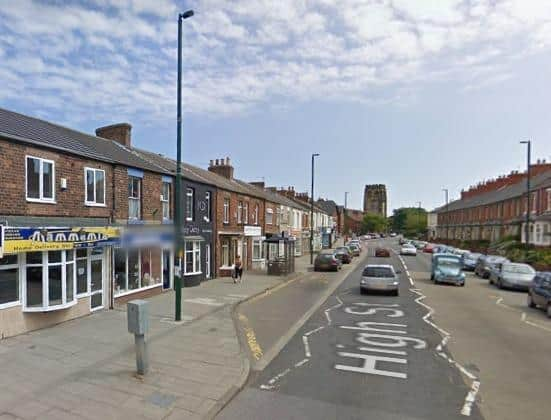
Omar Amini told a licensing panel meeting he planned to move his existing shop ‘Skelton Superstore’ in Skelton High Street into premises next door.
He had applied for a licence to supply alcohol between 8am and 11pm Monday to Sunday – his existing hours – but Cleveland Police and Redcar and Cleveland’s trading standards service objected, along with a number of local residents.
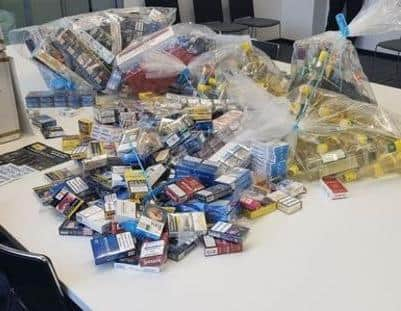
PC Lorraine Chambers, of Cleveland Police’s licensing unit, described how a covert test purchase conducted in November last year led to a trading standards officer being sold counterfeit Lambert and Butler cigarettes.

A further visit took place a day later with police in attendance.
This time a small number of Marlboro and Lambert and Butler cigarettes were found on Mr Amini’s person which were counterfeit or intended for the Polish market, contravening UK regulations.
Meanwhile, in December a council environmental health officer witnessed a “young appearing female” in the shop buying alcohol with no ID being requested to determine her age.
The meeting also heard of breaches of Mr Amini’s existing licence in April this year when he was found selling single cans of beer and also alcohol above 6.5% in terms of several strong cider brands, contrary to previous conditions imposed.
A return visit by police a month later found that “everything had been rectified”, although PC Lorraine Chambers said Mr Amini had been aggressive and suggested he had failed to take on advice.
In her statement, PC Chambers, of Cleveland Police’s licensing unit, said: “It would be fair to assume that these have not been isolated incidents.
“The premises licence holder has demonstrated that he is clearly putting profit over the safety of the public along with failing to protect children from harm.”
The licensing panel, chaired by Councillor Stuart Smith, had postponed a previous hearing after it was determined Iranian-born Mr Amini needed a translator in order to make representations.
His licence application said staff would be fully trained to prevent crime and disorder and check for appropriate ID.
A record would be kept of any individuals refused alcohol which could be inspected by the police and others, and the premises would be fitted with cameras.
Mr Amini said he adhered to licensing guidelines and he “always” challenged customers suspected of being under age.
Mr Amini described how he wished to move from one premises to the other because a main entrance was unsuitable for the likes of wheelchair users and people with pushchairs.
He said the existing premises would be closed for business purposes and he planned to live in the accommodation above.
The applicant explained that the test purchases were an “accident” and the items found on him were for his own personal use and bought from a shop in Middlesbrough.
He also said his English was “good enough” to interact with customers and challenge them if necessary.
‘Enticing children with sweets’
Intelligence reports provided for the panel in order to make its decision said children in school uniform had entered the premises in order to buy vapes and energy drinks, which Mr Amini said “did not happen”.
Staff were also said to be “enticing children with sweets, including from the back alley”, although the applicant said there was no proof of this.
Councillor Ursula Earl, who objected to the licence application, said residents had raised concerns about groups of children congregating outside the existing store.
Mr Amini said this was outside of his control and some were eating takeaway.
Cllr Earl said the store was a “magnet” for children and anti-social behaviour and also complained of two bright coloured advertising boards outside which previously promoted the sale of alcohol and “pop” together.
She said from submitted plans the new premises would be “longer and larger than the convenience store…and therefore has the potential to become even busier and have more neon signage and display boards”.
A couple living nearby on the High Street complained in a written representation that “vape pick ups” from the store were “annoying” and listed late-night disturbances such as “doors slamming, people shouting, horn beeps, booster exhausts [and] thumping music whilst cars tick over”.
Dozens of local residents also “strongly objected” to the new alcohol licence in a petition.
Redcar and Cleveland Council’s trading standards service said it had several negative interactions with Mr Amini who displayed a “lack of honesty, integrity and diligence showing a blatant disregard for legal and fair trading practices”.
Its comment said: “The granting of an additional premises licence which is a very privileged position to be in for a business, due to the potential increase in revenue, would cause harm to the health and wellbeing of young people along with the wider community.
“In turn this may well attract further criminality, leading to increased issues in the local area for members of the general public and other law abiding traders.”
Peter Kirkman, from the trading standards service, said there had been an ongoing criminal investigation and the applicant had refused a simple caution when it was offered to him since he was content for matters to be heard at court instead.
Mr Amini, who had been issued with a community protection warning, was responsible for a well-documented non-compliance of trading standards laws and had a disregard for public safety, he said.
The panel’s refusal to grant a licence was based on the contravening of four licensing objectives they had to consider, namely the prevention of crime and disorder; public safety; prevention of public nuisance and protecting children from harm.