
Need for consultants to apply for Government grants 'stupid tax on innovation', says top entrepreneur
Pioneering British businesses are facing a "tax on innovation” because of a reliance on consultants to help win Government funding, a leading technology entrepreneur has said.
Dr Ewan Kirk, who founded investment management firm Cantab Capital Partners and is now chairman of VC fund Deeptech Labs and a Royal Society Entrepreneur in Residence for the University of Cambridge's maths department, is calling for the reform of the Government’s Innovate UK agency.
He told The Yorkshire Post that it is “almost impossible” for small businesses to make successful applications for funding without getting third-party help.
Dr Kirk also called for the agency’s funding model to be rethought and said it should look to take stakes in promising businesses.
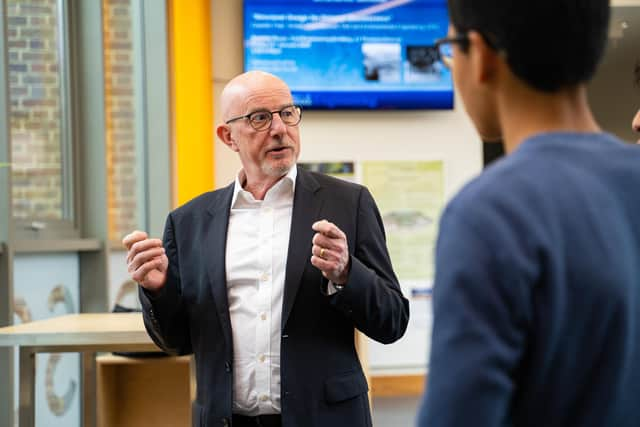

"Innovate UK spends a lot of money on innovation, over £2bn every year. But it tends to operate through grants but why wouldn’t you take some equity as well because that makes it clear the country will get a direct return from investing in innovation.
"Applying for Innovate UK grants is a baroque and difficult process,” he said.
"Just as a test I tried to work out if I was somebody with a high-tech idea in Aberystwyth how would I get an Innovate UK grant and it is almost impossible to work out. That’s not good.
"There’s a whole bunch of consultants that will help you do that in return for some of the money Innovate UK gives you which is just a stupid tax on innovation.”
Dr Kirk made a similar call in a recent paper he published with Progressive Britain. In it, he listed the reform of Innovate UK as one of five key policy changes that could help Labour better support innovation and technology and drive economic growth.
He told The Yorkshire Post: "In the contacts I have with people in Government about going for growth, they are not just making that up, they really do care about that.
"They are making some steps towards that, some of which are easy like changing planning laws and digitising government. The trouble is there isn’t some big lever in the Treasury marked growth that you just pull and it starts.
"There are things that can be done at the margin, reforming R&D tax credits for example.
"At the moment it is very opaque what is fundable by R&D tax credits – firms put in an application and maybe you get funded, maybe you don’t.
"It should be very clearly specified what is appropriate and there should be some measure of working out what the return for the taxpayer is.”
A Government spokesperson said: “Innovate UK supported 50,000 innovators delivering projects last year – more than ever before – and application and assessment processes are kept under review to ensure funding goes to the most promising applications, while minimising the burden on business."
Dr Kirk’s Progressive Britain paper also argues that entrepreneurial skills should be taught in schools as a way of boosting economic growth.
The paper states: “Starting a business does not, and should not, need university-level research or expertise, but all too often these students believe that it does.
"Students must leave secondary school with the necessary skills and knowledge to start a business – such as registering a company, getting a bank account and starting to trade.
"This includes practical course content but can also go far beyond these important but distracting tasks. We should be educating students about the actual entrepreneurial opportunities that are out there.”