
North Yorkshire’s hopes for £85bn boost dashed as officials confirm ‘AI Growth Zone’ bid rejected but Drax data centre plan pushes forward
North Yorkshire's bid to become an 'AI growth zone' – which officials believed could provide an £85bn boost to the county's economy – has been rejected by the Government, those behind the bid have confirmed.

The bid’s rejection, which was first reported by The Times, has now been confirmed to The Yorkshire Post by the York and North Yorkshire Combined Authority.
The authority launched the scheme in partnership with North Yorkshire Council, the University of York, and power station operator Drax.
Integral to the region’s bid was Drax’s plan to build a large-scale data centre at its Selby site.
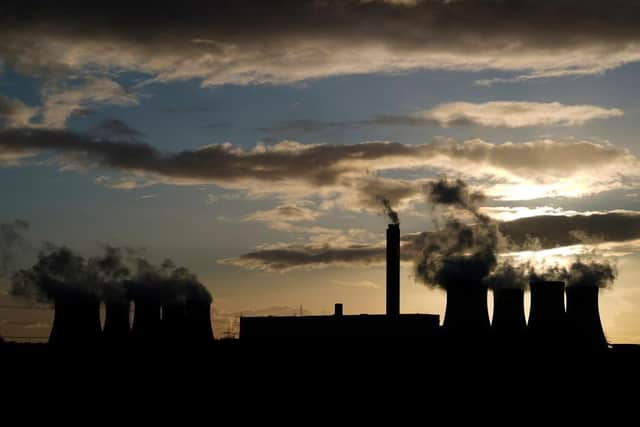

The company has said it still intends to go ahead with its plans for the data centre, and will submit a planning application for the first phase of the scheme “in the coming months”.
Both the Combined Authority and the Government declined to answer questions on why the decision to reject the bid had been made, or when the Authority was first notified of the choice.
A York and North Yorkshire Combined Authority spokesperson said: “York and North Yorkshire Combined Authority submitted a proposal for an AI Growth Zone last year which was not successful.
“The Combined Authority is committed to driving growth in the region through opportunities including mayoral development zones in Scarborough, Selby and York.”
Plans for the Government’s AI Growth Zones were first announced by Keir Starmer in January of last year. The scheme will see the creation of dedicated zones across the country where reforms to planning rules and energy access are put in place to speed up the building of data centres.
Culham, in Oxfordshire was previously named as the first location to be given the status.
Asked on the reasons for the North Yorkshire bid’s rejection, a Government spokesperson said: “AI Growth Zone proposals must meet published criteria - including credible plans for energy delivery, environmental considerations, and local economic benefit.
“All bids are assessed on their individual merits."
In guidance issued in June last year, the Government said that each bid would be assessed on the criteria of technical feasibility, delivery feasibility, local impact and the level of government support requested.
Those behind the bid previously said it could allow North Yorkshire to capture a 15 per cent share of the UKs AI economic growth by 2035, adding that it could help to protect 3,500 jobs in the North of England and “unlock growth of circa £85bn, across the whole of Yorkshire and Humber region”.
Speaking on the bid’s rejection, North Yorkshire Council’s leader, Cllr Carl Les, added: “While we were disappointed that the York and North Yorkshire Combined Authority’s bid for an AI Growth Zone was not successful, we remain convinced that the region has the assets, ambition and partnerships needed to play a leading role in the future development of beneficial artificial intelligence.”
Drax told The Yorkshire Post that it intends to forge ahead with its bid to build a data centre at its North Yorkshire site, adding that its plans “never relied” on the AI Growth Zone bid.
A spokesperson for Drax said: “Drax Power Station is uniquely positioned to support data centre developers through our site’s existing infrastructure, grid connections, and this is recognised in our new support agreement with the government.
“Drax plans to submit its first phase 100 MW front-of-metre data centre to the planning authorities in the coming months and its successful progress could enable a data centre to come online before the end of this decade.”