
'One size fits all approach to under-16 energy drinks ban could cost jobs'
The Government’s proposed ban on high-caffeine energy drinks for under-16s could have a major impact on jobs and consumer choice, according to the CEO of the trade body for the automated food and beverage industry.

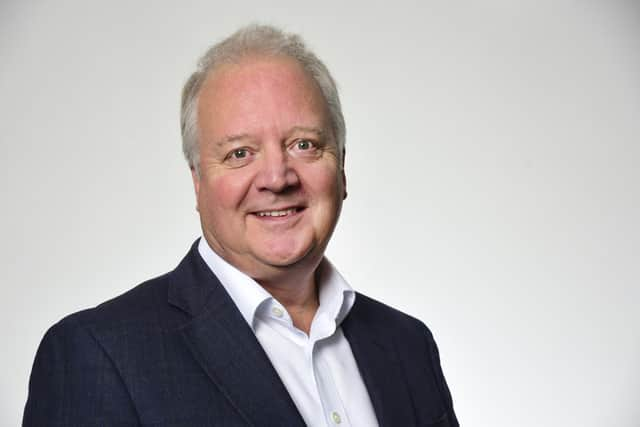
David Llewellyn, Chief Executive of the Wetherby-based Automatic Vending Association (AVA), said the industry believes a “one size fits all” approach to implementing the ban could unfairly penalise businesses who are doing the right thing. The not-for-profit organisation, which was founded 90 years ago, lobbies on behalf of a sector which has more than 24,500 direct employees in the UK.
Every year, UK consumers spend around £3.7 billion in almost half a million refreshment vending machines. Mr Llewellyn, who has worked in the sector for more than a quarter of a century, believes it has always been underestimated, and while the rest of retail has been struggling with customer demands, vending and automated retail has been quietly growing by investing in technology.
“Vending is a small shop,’’ he said. “And in a shop, you’ve got to sell what people want. Consumer tastes are changing continuously. We’re seeing more and more of a drive towards ‘better for you’ products, with different ranges of products; coffee machines that can do ranges of different beans, oat milk and almond milk, as well as standard milk. All of this is part of the changes that we’ve seen in vending over the time I’ve been involved.

“We’re moving away from large floor standing traditional vending machines. It’s about sophisticated tabletop coffee machines that can offer a range of barista style coffees and making it more attractive for people who are coming into work so they stay there. If you’re in an office building, you don’t want the same stuff in the vending machine all the time.
“It’s a very friendly environment to work in,’’ he added. “People may be in competition, with different manufacturers and different operators, but people are very open and welcoming. They do say that once you get into vending, you can never escape!”
AVA does, however, see a cloud on the horizon. It is “deeply concerned” about the Government’s proposal to ban energy drink sales from all vending machines, regardless of the buyer’s age.
AVA said it has been engaging with the Department of Health and Social Care to explain that more than 80 per cent of vending machines are in closed, controlled environments; places that under-16s cannot access.
Despite acknowledging this, AVA claims the Government’s consultation shows a clear preference for a blanket ban, “simply for ease of enforcement”, which it describes as ignoring the damage this would cause to the industry.
Although AVA supports measures to protect young people’s health, a one-size-fits-all approach is “unjustified, disproportionate, and harmful to legitimate businesses”. The impact could be huge, leading to an estimated £43m in lost turnover, according to AVA, which it believes will threaten jobs and investment.
Mr Llewellyn said: “What they’ve totally missed is that over 80 per cent of (vending) machines are in workplaces. So they’re in warehouses and offices..where there are no 15-year-olds, so it’s a real sledgehammer to crack a nut.
“We have a voluntary guideline, where if it’s in a setting such as a leisure centre, our members do not put energy drinks in those machines. So it’s already very difficult for under-16s to buy energy drinks through vending equipment.”
“Scotland did a similar exercise about four years ago. We submitted to their consultation, had long discussions with them, and they decided that the voluntary restrictions were sufficient,’’ he said.
In response, a Department of Health and Social Care spokesperson said: “This government committed to raising the healthiest generation of children ever, to provide them with a better and more prosperous future. We have consulted on banning the sale of high-caffeine energy drinks to children under 16 years due to the negative impact on children's physical and mental health. We are carefully considering the responses and will update in due course.”
The spokesman stressed that the Soft Drinks Industry Levy is “globally recognised as a transformative health intervention”. The average sugar content of soft drinks in its scope fell 47 per cent between 2015 and 2024.
"Changes to the Soft Drinks Industry Levy were announced in the 2025 Autumn Budget – a reduction in the sugar level at which the lower rate of the levy applies from 5g to 4.5g sugar per 100ml; and the removal of the exemption for pre-packed milk and milk-substitute drinks.”
"The 10 Year Health Plan announced that all large food businesses will be mandated to report against standardised metrics on healthier food sales by the end of this Parliament. This will set full transparency and accountability around the food and drink that businesses are selling and to encourage healthier products.”
AVA has, however, welcomed the Government’s announcement of the UK deposit return scheme, named ‘Exchange for Change’. Mr Llewellyn said a number of countries, including Germany, have been running a scheme similar to this for many years. Each time a consumer buys a drink included in the scheme, a deposit will be added to the purchase price.
The consumer gets the deposit back when they return the empty container. Mr Llewellyn said the sector was still dealing with a large swathe of issues which could affect the industry, including the Employment Rights Act, the living wage, and global issues, like the war in the Middle East.
“People take vending machines for granted,’’ he said. “The loss of vending machines has an economic consequence, but people don’t always think about that.”