
Pacific ocean rowers turn boat into floating farm with help from Home Harvest

It’s a dilemma that has tested the ingenuity of sailors since the earliest days of exploration.
How do you maintain a healthy diet while hundreds of miles from land? A pair of ocean rowers turned their boat into a floating farm using technology created in Yorkshire to grow their own salad in less than eight days from seed to harvest. Limited to rehydrated rations, Jess Rowe and Miriam Payne turned to in-home growing technology to provide them with a ready supply of fresh, nutrient-dense, leafy greens to supplement their diet.
The solution was provided by the team at Home Harvest, based in Sancton, East Yorkshire, who have been developing an in-home farming device that creates the perfect growing environment to produce salad quickly and reliably.
The Home Harvest team adapted their home growing technology from a mains powered in-home farm, to a solar powered one that could be attached to the boat, and was capable of withstanding 30-foot waves, storms, freezing nights and boiling hot days. In less than three months they had designed, engineered and installed the first in-home growing device on an ocean rowing boat. The floating farm was a success with the rowers able to grow a regular crop of vegetables, including radish and cabbage across their six-month unsupported challenge from Peru to Australia.
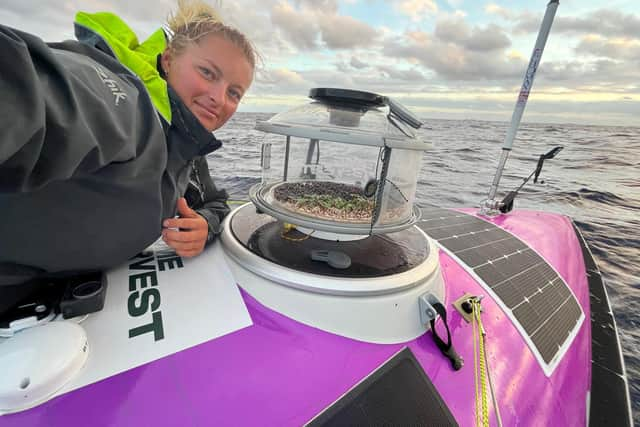

Ms Payne, aged 25, one half of the Seas the Day Ocean Rowing Team said: “In order to take on the challenge we needed to hit about 5000 calories per day. Dehydrated food and snack packs would get us most of the way there, but there really is no substitute for fresh food which is difficult, if not impossible, to come by on our 8000-mile row.”
Home Harvest, which was founded by agricultural entrepreneur Andrew Johnson and digital innovator Hedley Aylott, plans to launch its first two products for the consumer market next year. Its products have already attracted interest from other groups planning expeditions to remote places, including Antarctica.
Mr Johnson said that Ms Rowe and Ms Payne were inspirational characters, adding: "They are the engines of the boat and eating fresh greens during six months at sea made it more likely they would have better physical and mental health. Other explorers have seen what we have achieved and made contact with us."
Mr Aylott said the current methods of food production are unsustainable, due to factors including land erosion, energy and water usage.
He added: “It was about adapting our principles and our engineering to fit a boat."