
Parts of West Yorkshire could rival Salford Quays, Turner & Townsend roundtable is told

Parts of Leeds and Bradford could rival Salford Quays once major transport infrastructure schemes are completed across West Yorkshire, a major business event was told.
The comments were made at a roundtable hosted by The Yorkshire Post and Turner & Townsend which brought together leaders from across Yorkshire to discuss how they can work together to form policies which transform the region’s economy.
Simon Warburton, Executive Director for Transport at West Yorkshire Combined Authority (WYCA), said there was a “huge opportunity” for the private and public sectors to focus their efforts around a number of infrastructure investments.
WYCA is exploring a range of mass transit options; new forms of transport that could transform the region’s public transport network. Mr Warburton told the roundtable that mass transit would allow new developments driven by the improved connectivity.
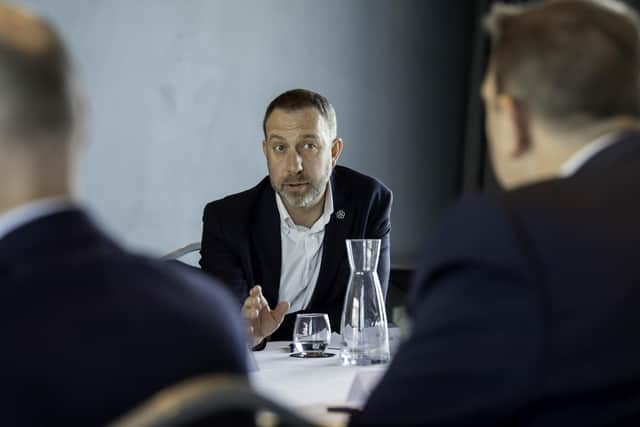

He added: "The big challenge now is how do we go about capitalising on that ribbon of opportunity that is presented by mass transit coming along.
"Here in Leeds, for example, we are making a very positive statement that the city is growing, and is growing to the south.”
Mr Warburton, who had previously been involved in devising transport policy in Greater Manchester, said the regeneration of Salford Quays, which is now home to a thriving media sector, illustrated how securing the right infrastructure can drive development.
"For Salford Quays we should read Leeds south bank and Bradford southern gateway. The conditions are the same. But it doesn't stop there because we have rail investment taking place around the (West Yorkshire) conurbation as well.”
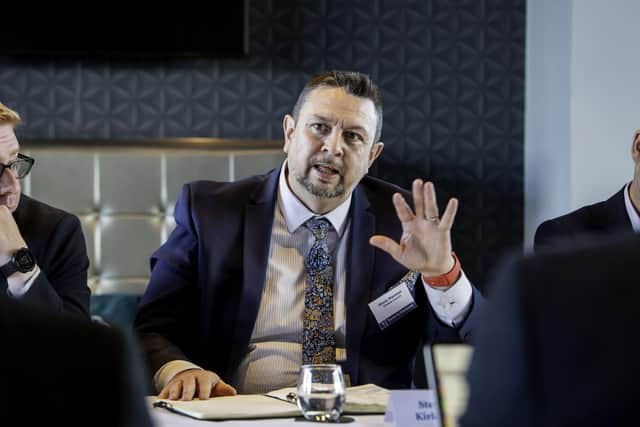
He said Steve Mawson, the chief executive of Kirklees Council, and his colleagues were focused on the opportunities the Transpennine Route Upgrade, a multi-billion-pound programme of railway improvements, could offer Huddersfield town centre.
He added: "Huddersfield will be placed within a matter of minutes from Manchester and Leeds. The opportunities to be able to retain a new generation of talent is terrific.
"What's needed is the right kind of housing clustered around Huddersfield Railway Station. Once we get Huddersfield underway, Dewsbury has got immense potential with beautiful Victorian architecture around the railway station.”
He said that when people questioned whether it made sense to think about a city region in West Yorkshire, he responded by asking them to look at the rail corridors.

He added: "Talent comes into our centres on a daily basis through railway corridors."
Steve Mawson, the chief executive of Kirklees Council, told the roundtable he had held a “fantastic meeting” with the Kirklees 100 earlier in the week, which is a partnership between Kirklees Council, Huddersfield University and the 3M Buckley Innovation Centre.
He added: "It highlighted the ingenuity of business. This Government recognises the role of local government in place shaping. We've got to be daring and push forward on big projects.
"We are investing £250m in Huddersfield town centre and blueprints for other towns and villages. One of the things that is really difficult is planning for the long term and putting resources aside..while you're trying to work out how you're going to make ends meet in the short term.
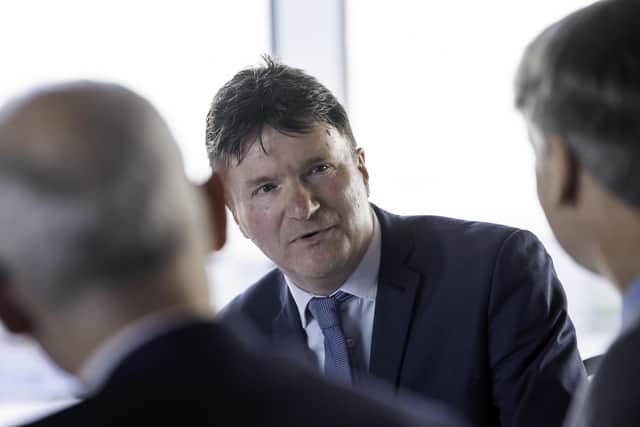
"One of our roles in local Government is to problem solve; how we tackle the planning inefficiencies in the system and how we get a local plan that bring certainty to a place.
"It's about making sure our communities are listened to. We've an amazing programme on town centres but we're not yet there.”
He said he had been talking recently to an entrepreneur who had a business in Dewsbury, which was attracting international visitors.
He added: "But they are also concerned about a town centre that looks depleted, which is why we are tackling regeneration and perception. We have to be aware of those issues and be brave enough to tackle them. The challenge is not just getting businesses into our town centres but getting them to stay there."
Charles Maltby the programme director of Huddersfield Unlimited, an organisation which aims to promote the town as a place to live and work, said: "Things are only achieved when people work together. Partnerships and collaborations are key. Having the right transport infrastructure so people can get around and be able to partner with one another to move projects forwards is essential."
However, he said the transport network for local travel is not as good as it should be.
He added: "I was brought up in South Yorkshire in the days of the 'red republic' when bus fares were 2p for children.
"It was 2p for buses from one side of the Rotherham area to the other. The buses were every few minutes and they were full.
"What is today's equivalent so we can do something similar? Where I now live, which is a more rural area, there is no real alternative to the car, buses are so infrequent.
"Getting transport sorted is key. We've got the fantastic Transpennine Rail Upgrade underway with Huddersfield sitting right in the middle of the line, so there's a huge opportunity for the east west movements that people need to do as these occur much more frequently than north south.
"But it needs more to be fully effective. There needs to be local transport for people who don't live five minutes walk/cycle from the railway line.
"However hard you keep shaking the money tree there comes a point where it stops shedding anything, so how can we do something to implement effective public transport without it costing more and more money and taking too many years to deliver?”
"It does seem incredible how much things cost these days especially in the civic sector.
"Business, incentivised appropriately, might offer some alternatives or at least a different way of looking at transport.
"If there's a will and there's a desire, some bureaucracy removed and planning going through quickly, then some of those private investments will see a results horizon that's measured in months and not decades and the public will benefit from access to a more comprehensive travel infrastructure. "
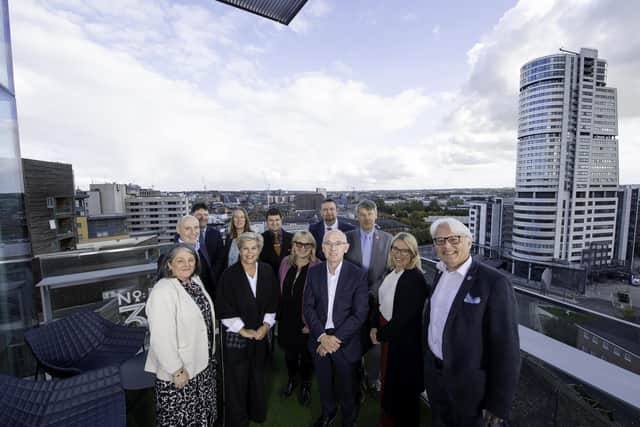
This is the first in a series of articles about the roundtable, which was held at the DoubleTree by Hilton Hotel, Leeds, and chaired by Greg Wright, the deputy business editor of The Yorkshire Post.