
Party conference season proves you can't rely on politicians to change your finances: Sarah Coles
We’re emerging from party conference season and digesting what the bold pledges might mean for us. It has been a strange one, because only Labour has the power to implement anything right now, and they’ve said major change has to wait until after a General Election.
So all we really have are ideas that may or may not be introduced four years down the track by whoever gets into power. However, there are still several things we can learn from what we’ve heard over the past couple of weeks.
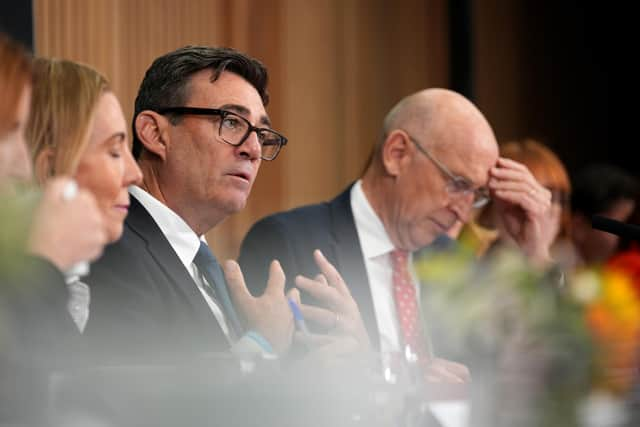
There have been plenty of money-related policies floated at the various conferences. Andy Burnham notably announced free social care at the point of use, funded in part by a move from the state pension triple lock to a double lock of inflation and 2.5% - with a mechanism to ensure it also keeps up with wages. Meanwhile, Reform suggested raising the income tax personal allowance - financed through spending cuts, and the Conservatives said they would end the £100,000 earnings cliff edge for childcare support and make changes to inheritance tax.
We don’t know which – if any – of these will see the light of day, but it’s a useful reminder that change is a constant. When we’re planning our finances, it’s easy to assume that the current rules are always going to stay put, so it’s useful to bear in mind that we need to build enough flexibility into our plans to adapt to changes. Take the triple lock, for example, if you are wholly relying on specific levels of state pension increases to do more of the heavy lifting later in retirement, it’s worth building a robust Plan B, and thinking about upping your private pension contributions.

By the same token, you can’t rely on policies changing quickly to fill the holes in your finances.
Social care is a classic example of this, because if we stopped thinking about planning for the future every time a politician promised things were going to change, we would have been left high and dry over the past couple of decades.
Similarly, given how far away the general election is, if the Conservative Party was elected, and delivered on its pledge to remove the £100,000 earnings threshold for childcare support at its first Budget, today’s two-year-olds could be in school and have already aged out of the system. It means we can hope for the best, but we need to plan on the basis that if nothing changes, we have the emergency savings and financial support from our loved ones to make ends meet.
And the lessons that conference season holds aren’t just from the policy suggestions themselves. Unfunded promises by political parties go down notoriously badly, because they’re seen as hollow gestures that would fall apart on contact with reality.
It’s not something we tend to think about in our own lives, but all of the promises we make ourselves start out as unfunded – we’ll go travelling, or retire early, or get a new car. It’s only when we put a plan in place to plough more money into our savings, investments or pensions, that these stand a chance of becoming a reality.
Politicians find it difficult to promise they’ll fund their promises with new money in the same kind of way. So instead, one lot of spending is traded off against another. It’s something we do all the time, but not necessarily consciously, so it can help to think of the trade-offs you’re making in your own finances.
We need to commit to our priorities, and cut spending on the things we value less. By making this an active decision, we can avoid running out of money for the things that really matter – whether that’s the spending we get the most out of, or saving and investing for our goals later in life.
Finally, party conference season is all about making a statement of intent.
Of course, it helps if there’s a realistic prospect of election, but it’s also a chance for parties to make it clear who they are and what direction they want to move in. It’s not something that crops up often for most people, because they’re too busy getting on with living their lives. However, it can help to think about the direction of travel for our finances.
Are we building up debts or paying them down? Are we struggling to make ends meet or planning for the future? And are we happy with the direction we’re heading in? You don’t need to turn your finances around tomorrow, but it helps to know where you want to be in three years, ten years or 20 years, so you can start to make sensible plans around how you’ll get there.
Least popular chancellors
The 2022 mini-Budget achieved Hall of Infamy status almost as soon as Kwasi Kwarteng retook his seat, as the bond market tanked and the pound plunged. He was out of a job within a month, and most of the measures he announced were reversed, and yet he has been voted only the second least successful Chancellor of the past five – after Rachel Reeves.
In a new survey by AJ Bell, Reeves was named as the least successful chancellor of the past five, chosen by 26% of people. She was ahead of Kwasi Kwarteng, chosen by 22%, and Rishi Sunak was in third place with 7%.
One of the least popular moves Reeves made was restricting the winter fuel payment from 2024/25 to those receiving Pension Credit. It was the first major announcement she made after the election, and the change affected vast swathes of state pensioners – taking a universal benefit for 10.8 million people to a far smaller benefit for 1.5 million.
For pensioners on relatively modest incomes, still reeling from the cost-of-living crisis, this was a bitter blow. It didn’t help that while energy prices had come down from the peak, they were still high by historic standards. It affected households on lower incomes, including those who qualified for Pension Credit but didn’t claim it, who felt this was money they couldn’t afford to lose, leaving some of them wrestling with difficult decisions about heating their home and eating.
The policy was changed in time for winter 2025/26, so that everyone would receive the benefit, but those with incomes over £35,000 would repay it through self-assessment or PAYE. However, the impact of cutting such a vital benefit for retirees at such a difficult time wasn’t forgotten. That’s why it’s not a major surprise that 43% of people aged 65 and over named Reeves as the least successful Chancellor.
Meanwhile, Rishi Sunak was a long way out in front of all the other Chancellors when it came to being voted the most successful. He was chosen by 26% of people. Jeremy Hunt and Rachel Reeves were in joint second place at 8%.
This is likely to owe something to the fact that one of the things Sunak is most remembered for is the pandemic furlough scheme, which put money in people’s pockets at a time when there was nothing else coming in. It was an incredibly expensive lifeline, and one that’s still being paid for, but it is likely to be one of the biggest reasons people remember him more fondly than other Chancellors.
While John Healey may not be able to afford any big gestures in the forthcoming Budget, it’s a useful reminder that hope is important, so no Budget should ever be wall-to-wall bad news.