
Rachel Reeves's reforms can be positive for Yorkshire businesses like ours: David Harris
The chancellor’s Autumn Budget hasn’t hit the right notes with everyone but, despite prior speculations and a catastrophic leak of what was to be announced, the policies weren’t quite as bad as we feared.
Whilst the government’s reforms won’t deliver instant gains for the economy, there is a renewed focus on investing in and growing our economic status over the next five years which, in the long term, is certainly positive for Yorkshire businesses.
The Budget backs a significant investment into the public sector, including healthcare, education, defence and infrastructure.
These sectors will rely heavily on improved construction and manufacturing supply chains, and the chancellor’s promise to invest back into British businesses is likely to create a stronger pipeline of work for those up and down the supply chain.

New investment in the region is likely to create additional opportunities for Yorkshire businesses but, to benefit from this, local SMEs should act proactively to compete for the work and put structures in place to deliver it profitably.
Alongside national defence and infrastructure spend, the Budget outlined a steer towards community-based healthcare and improvements to education and public estates.
Both priorities highlight the growing need for modern, high-quality buildings to enable better service delivery, whether that’s expanding NHS community services, or supporting early years and higher education settings.
For Yorkshire, where public sector estates play an important role in local growth and regional identity, this represents a major opportunity for those supplying construction services to deliver facilities that directly improve local people’s lives.
For example, a contractor which has secured public building projects could opt for modular construction to deliver new facilities at pace. Unfortunately, there are still aging misconceptions around modular buildings, in reality they are much more high-quality and modernised compared to older predecessor cabins.
With the UK already facing a shortage of traditional construction skills that will be required to meet demand quickly, offsite manufacturing-led delivery is no longer just an option, but an essential.
Whilst the investment outlined in the Budget is a welcome step for the manufacturing and construction sectors, as well as the wider construction supply chain, reducing bureaucracy and unnecessary barriers, especially around planning laws, will also be critical to delivering this quickly – that remains in the government’s hands. The real test will be how fast these ambitions can come to light.
Additionally, it’s worth recognising that the Budget did action policies that prioritise people as well as the businesses they work for.
The chancellor confirmed that training costs for apprentices under 25 will be fully funded for SMEs from 2026, simultaneously offering more support for employers and encouraging more young people to enter the workforce. For this to be effective, the government must support apprenticeship programme adoption by providing incentives for training providers, and encouraging better careers promotion in schools to ensure young people can access apprenticeship roles on offer.
If Yorkshire businesses can capitalise on these investments with the right skills, supply chains and delivery models, the economic benefits will be significant.
Whilst the Budget offers a positive outlook heading into 2026, the real test will be how quickly these projects can be delivered, and modular building can play an important part in making this happen across public and private sector projects.
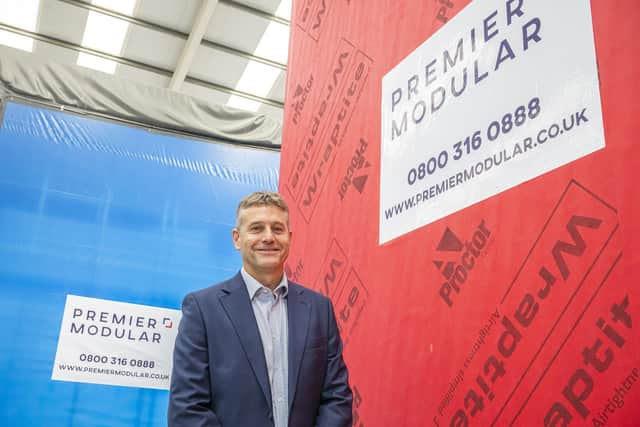
David Harris is CEO at offsite manufacturer Premier Modular