
Reform UK promises to scrap Humber carbon capture project funding - despite £15bn business investment pledge
A Reform UK Government would pull billions of pounds of funding for carbon capture projects in the Humber and in Teesside, Robert Jenrick has announced.

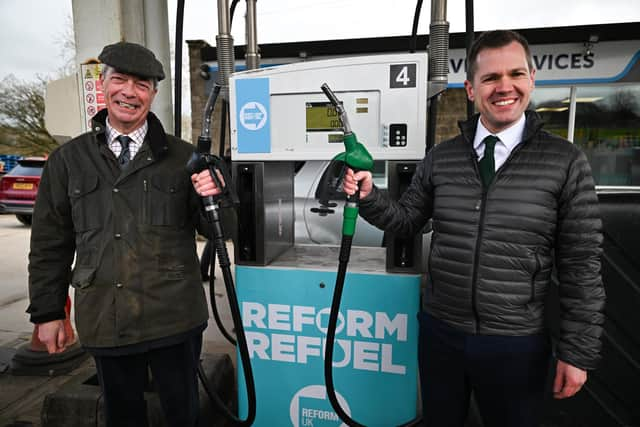
The former Tory immigration minister unveiled the policy at a petrol station in Derbyshire this morning alongside Nigel Farage, promising to spend the money on cutting fuel duty.
Chancellor Rachel Reeves has resisted calls to cancel the planned 5p increase in fuel duty in response to the oil price spike caused by the Iran conflict which will come in September.
Mr Farage said: “How are we going to pay for not increasing taxes? Well, we’re going to get rid of lunatic green levies. In particular, I’m thinking about heat pump subsidies.”
A Reform UK government would save £13bn a year by cutting spending on net zero initiatives, the party’s Treasury spokesman Mr Jenrick said.
The party would scrap the scheme providing grants to homeowners to install heat pumps, cut investment in carbon capture technologies, and axe grants for new electric vehicles, he said.

Mr Jenrick previously said that investment in carbon capture technology would “help businesses with high energy use to cut their energy bills and reduce their carbon emissions”.
The Reform policy would see funding for the Viking carbon capture and storage scheme cancelled, alongside Net Zero Teesside on the site of the old Redcar steelworks.
In the June Spending Review, Chancellor Rachel Reeves pledged to back CCS in the Humber, which would see carbon dioxide emissions taken from Immingham 34 miles to Theddlethorpe in the Lincolnshire coast, where they would be transported into huge tanks beneath the North Sea.
The fledgling technology is touted as an alternative to releasing carbon into the atmosphere, with Energy Secretary Ed Miliband saying it is essential to the UK reaching net zero by 2050.

Businesses say they have £15bn ready to invest in the Humber if the Government provides adequate support to get CCS off the ground.
The “Energy Estuary” generates 20 per cent of the UK’s total electricity, creates one-third of its refinery products and is the location for the importation of around one-fifth of all gas into the country. It is also the largest emitter of carbon dioxide in Britain.
The aim for Viking is to reach a final investment decision before the end of the Parliament.
Hull and East Yorkshire mayor is Reform UK’s Luke Campbell, who told The Yorkshire Post: “My priority as mayor is to create better jobs for people in Hull and East Yorkshire.
“Our energy industry has a strong reputation and supports thousands of skilled jobs that really matter to local families and businesses. I’ve always been clear that I will support initiatives that help grow the economy in this region.
“The reality is people across the country are struggling with energy and fuel costs. We need a practical energy policy that brings bills down, backs British energy, and ensures communities like ours continue to benefit from the investment and employment the energy sector provides.”
Industry Minister Chris McDonald said: “Reform’s pledge to scrap carbon capture and storage shows a reckless disregard for the industries and workers who will power Britain’s transition to net zero.
“This lays bare their hypocrisy, Tice and Farage are happy to use these same industries for photo-ops while pulling the rug from under them.
“This vital technology could support up to 30,000 jobs and generate £1.6 billion for the UK economy each year by the 2030s.
“There are thousands of roles linked to projects like this, from Acorn in Scotland to Viking in the Humber. Reform’s plan to walk away from it would put good industrial jobs and investment in our heartlands at risk.”
Olivia Powis, the Carbon Capture and Storage Association’s CEO, said: “CCUS is about growth, jobs and keeping British industry competitive. It enables essential sectors like cement, power, chemicals and refining to cut emissions while continuing to operate and invest here in the UK.
“This is especially important to ensure the UK’s energy sector and wider industries are resilient and secure.”
“Walking away from CCUS would put thousands of skilled jobs in our industrial heartlands and billions of pounds of private investment at risk, leaving the UK falling behind in the global race for low-carbon products.
“We must back technologies that help British industry modernise and grow or risk overreliance on imports and production and jobs moving overseas.”