
Revolving door at Number 10 is terrible for Britain's global reputation: Greg Wright
Sometimes Prime Ministers are like buses. You wait for a generation and then seven come along in double-quick time.

Once the changing of the guard at 10 Downing Street was a momentous occasion; now it seems as common as changing the curtains. None of this is good for Britain’s global reputation.
We can hardly claim to be a haven of calm in an uncertain world when our leaders continue to be dispatched to the backbenches/GB News punditry at such an alarming rate.
We can argue from dawn until dusk about the merits of recent Prime Ministers and whether they deserved their fate.
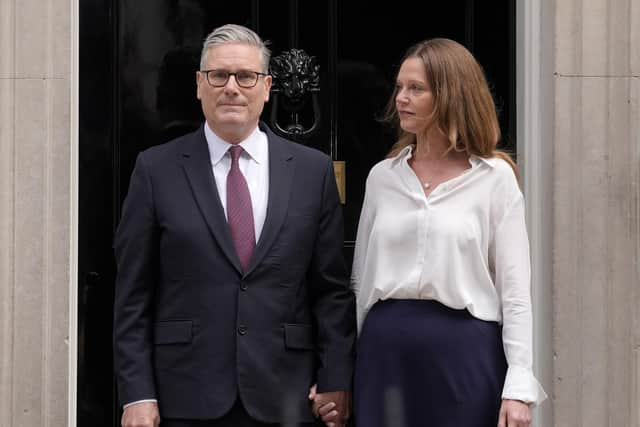

The demise of Sir Keir Starmer will give historians much to ponder. How did a PM who defied the odds to win a majority of eye-watering proportions lose the plot so quickly? What does it tell us about modern politics? Have we become less patient, less forgiving, of leaders who fail to deliver immediate results?
To external observers, the queue of removal vans outside Number 10 does not inspire confidence. Love them or hate them, nobody can deny that Britain’s influence on the world stage reached its post Second World War zenith under Thatcher and Blair, who occupied Number 10 for 21 years in total.
They were leaders who, for a time at least, exercised vice-like control over their party and country. The world at large knew who they were dealing with for lengthy periods, and what the consequences would be if they angered the Premier.
Changes in leadership and Cabinet reshuffles can also lead to the revision – and in some cases the cancellation– of long term projects linked to infrastructure and energy, which creates destructive uncertainty for businesses. Frequent regime changes make foreign investors feel queasy. Professional service firm EY’s latest UK Attractiveness Survey showed UK foreign direct investment projects dropped 14 per cent in 2025, with Greater London the only English region to see growth as the regional investment gap widens.
Political instability was flagged in the poll as the second biggest disadvantage for the UK as an investment destination, behind energy costs. UK government bonds – through which overseas investors buy into Britain – have been under pressure since the start of the year, with prices falling as yields rise on the back of downgrades for the UK economic growth outlook and amid political uncertainty. Perhaps we shouldn’t be too pessimistic. The figures showed that, despite the UK’s overall decline in foreign direct investment projects, it recorded the second highest figure in Europe last year, with 730 projects, beaten only by France with 852.
More than half of global investors surveyed said they expect the UK to become more attractive to invest in over the next three years. Anna Anthony, EY UK & Ireland regional managing partner, said that, while the UK is well positioned to attract long-term capital and compete with the US and France, the priority is to convert this into sustained investment that drives growth. Growth is always linked with political stability. Many overseas investors will be hoping that the revolving door at Number 10 has stopped turning.
Greg Wright is the deputy business editor of The Yorkshire Post