
Road repair innovations offer way out of council pothole cul-de-sac: Steve Sinnott
With the Government announcing a record £1.6 billion investment in local road maintenance, councils have an unprecedented opportunity to tackle the nation’s pothole problem.
This landmark funding aims to fix the equivalent of over seven million potholes in 2025 to 2026, providing much-needed relief for motorists and communities alike.
It will also be welcomed by local authorities, many of which, despite their best intentions, haven’t been able to make the repairs they would like to due to budget shortfalls.
How this new budget is utilised, however, will be crucial to ensure its long-term impact.

Previous cuts have trapped many councils in a vicious cycle of using temporary “quick fix” cold solutions for potholes. While these seemingly offer better value for money, they only kick the can down the (pothole-ridden) road.
On the face of it, these solutions appear to solve a common headache. Cold quick-lay asphalt is often inexpensive and two workers can make multiple repairs in one day at a cost of around £150 per pothole.
However, the fix is temporary, with the material less likely to bond to the rest of the road, meaning months later the same team will be doing the same repair again.
When you account for the use of cold material or the time spent by workers going back to the site to reload their vehicles, is it really saving time or money?
A common complaint we hear from l ocal authorities is that they can’t afford to make permanent repairs. But if you can fix a pothole once for £500 rather than spending £150 multiple times a year, in the long run there are monetary and efficiency savings to be made.
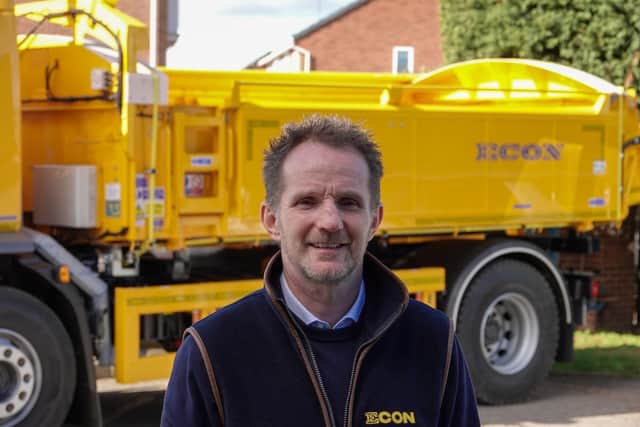
At Econ, we have established partnerships with many local authorities to offer a solution with our market- leading Hotboxes and Roadmender vehicles.
The versatile Hotbox keeps the T armac needed to ‘patch’ the surface holes at the correct operating temperature, enabling pothole repairs to be repaired properly first time.
Our Roadmenders are also a on- stop solution that bring together a H otbox with side tipper and side- loading bucket. All the equipment needed to make repairs is in one vehicle, making it easier to make quick repairs that last long term.
An increased volume of jobs is also pos sible without crews having to return to base, thus saving time. It also reduces the waste as the material left can be re-used the following day, saving time and money and being more environmentally friendly.
To further enhance the potential savings, we build the bodywork on our industry-leading QCB (Quick Change Body) system, which again offers greater utilisation all year around.
It is clear that the additional central funding is a gamechanger for rescuing our roads, but it must be used wisely. Long-term repairs offer greater value for money and would increase public confidence that quality highway repairs are being made.
In turn, councils need to follow the lead of those that are already thinking outside the box and turn to vehicles that allow them to invest in lo ng -t e r m s olutions to potholes rather than r el y in g o n q u ic k fi xes.
S t ev e Sinnott is Sales Director at Econ Engineering.