
San Francisco's decline has been sad to witness - the world needs its reinvention: David Richards
If California were a country, it would rank as the fourth-largest economy in the world. Its output last year was $4.1 trillion, putting it behind only China, Germany and the United States itself.
It even edges out Japan. To give a sense of scale, California’s economy is more than one and a half times the size of Britain’s. This is not just another state on the map. It is a global economic power.
When I moved there in 1997 it felt like a place on the rebound. The early 1990s had been grim. Defence cuts after the Cold War had gutted the aerospace industry, house prices had crashed, and unemployment was close to ten per cent. By the late nineties, the mood was shifting.
In Silicon Valley the energy was impossible to miss. The internet was moving from an academic toy into something that ordinary people were beginning to use. Companies likeYahoo and Netscape were household names.
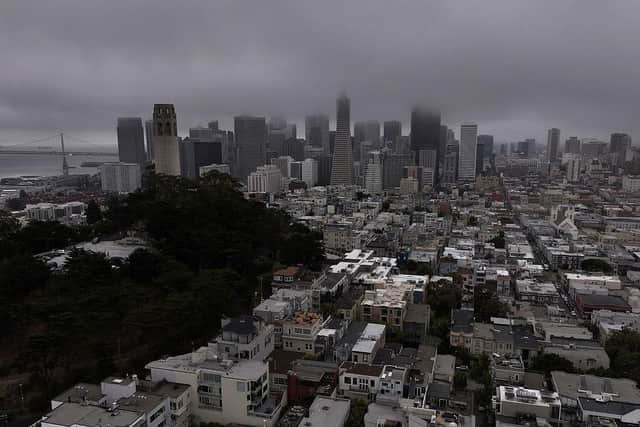

Venture capitalists were throwing money at start-ups with little more than an idea on a whiteboard. California’s economy was growing faster than the rest of the country, and the optimism was infectious. You could feel that something new was being built.
When I came back to Britain in 2020 the contrast could not have been sharper. San Francisco, which had once been the jewel of Northern California, was in decline.
The moment I knew the problem was serious was back in 2018 when I heard about the launch of an app called “Snapcrap”.
Its sole purpose was to let residents take a photograph of human faeces on the pavement and send it to the city so someone could come and clean it up. The very existence of such an app said more about San Francisco than any statistic ever could.
Walking around the city confirmed the picture. Homeless camps stretched across pavements.
Drug use was on open display. Fentanyl, dozens of times stronger than heroin, was everywhere and destroying lives. Shops were shutting because they could not cope with theft.
On one visit, I hired a car, and the clerk warned me bluntly to leave nothing inside when parking in the city. Not even a coat on the back seat. Break-ins were so common that any sign of a belonging was treated as an open invitation. For a city that had once symbolised progress and innovation it was a sobering warning.
Many point to Proposition 47, passed in 2014, as a turning point. It reduced the penalties for many non-violent crimes. Shoplifting under 950 dollars was no longer a felony but a misdemeanour. The goal was to reduce overcrowding in prisons and address unfair sentencing. The effect was very different. Petty crime soared. Organised groups knew they could act with little consequence. Residents felt the slow drip of civic order being eroded.
That decline was one of the reasons I moved my family back to the UK. It was painful to watch a city that had once stood for optimism and new ideas become a byword for disorder.
Yet I do not believe decline is permanent.
I had seen something similar before. When we first arrived in America, we lived briefly in New York. In the mid-1990s Times Square was still a place parents hurried their children past. Drugs, sex shows and crime were everywhere. Tourists were told to avoid it after dark.
Through policing, investment and sheer determination the area was transformed. Today it is unrecognisable. That change proved that cities can turn themselves around if the will is there. San Francisco has the tools. It is home to some of the richest companies on earth, world-class universities and extraordinary talent.
Civic leaders are beginning to act more forcefully against the fentanyl crisis. Housing reforms are being pushed through. New shelters and treatment programmes are opening. The statistics now show progress.
Violent crime fell by nearly a fifth in the first half of this year, property crime by a quarter, and homicides are down as well.
California matters too much for the world to look away. The fourth-largest economy cannot afford to have its showcase city associated with failure. The problems of San Francisco are still visible, but they are no longer being ignored.
The city has reinvented itself before. It can do so again. The first signs are there, faint but real. What is needed now is grit, leadership and the belief that decline is not destiny.
David Richards is managing director of Yorkshire AI Labs