
Using AI to create wills or lasting power of attorney documents is no substitute for legal advice: Rachel Roche
The use of Artificial Intelligence is significantly impacting our lives and for the legal profession this brings unique challenges.
A balance needs to be found where new technology tools can be used without compromising the integrity and accuracy of the legal document, such as a will or Lasting Power of Attorney.
AI can offer cost-effective, accessible solutions for everyday needs, however, a will, for example, is not just a legal document but a reflection of a person’s lifetime’s worth of assets, relationships, and intentions.
Real strides have been made to try and address the recently estimated 40 million people without a will in the UK and for many the process can still be seen as daunting and time consuming at a very emotional moment in people’s lives.

AI would appear to offer an alternative to using an established legal expert to draft a will or LPA, but some tasks are too important to leave to algorithms. Recently, I tested one of the current AI generated tools and ran a Non-Disclosure Agreement through ChatGPT, and it produced a document full of errors and ambiguities.
That is why we should not lose sight of the value of the personal touch aligned to solid, regulated legal advice and although AI can draft text instantly, what it produces isn’t very individual and one mistake could invalidate a legal document.
At Roche Legal we have always been at the cutting edge of utilising new technology to improve the service we offer but it is important to remember that despite the many digital tools we have at our disposal, the law is very much still a service business heavily reliant on an ability to draft a document that reflects each individual’s needs.
Drafting a will or LPA is about addressing individual needs and accounting for potential complications, including ensuring mental capacity and the absence of undue influence. An experienced legal expert will prioritise the best interests and customise an estate plan to fit a specific situation, which is something that AI simply cannot presently do.
AI-generated wills often produce generic and semi-personalised documents based on only a short prompt or two. In other words, even the best template won’t work for everyone as an AI will cannot readily account for unique situations like a blended family, children, family members with special needs, or a family-owned business. The risk is not worth running.
AI is not a substitute for legal advice allowing a bespoke legal document to be prepared.
Currently, AI does not understand meaning or context which can lead to the delivery of inaccurate information - results which are called hallucinations. This can happen because large language models (LLMs) are trained to identify the likely word sequence in a dataset, rather than the accuracy.
For example, it is possible to ask an LLM about a specific legal case and it could make up detail about the ruling or provide the user with a completely non-existent case, that could sound plausible but is not grounded in reality. This raises the possibility of incorrect legal advice.
There is also a question of data security when using an online platform compared to a fully regulated business which not only keeps data secure but ensures it can be easily located. At Roche Legal we specialise in cross-border legal work and wills involve complex legal rules that vary by country (e.g., inheritance tax, intestacy rules, formal signing requirements), which AI may misinterpret or overlook.
Discovering issues after someone has passed away – when it’s too late to fix - can cause disputes and considerable upset.
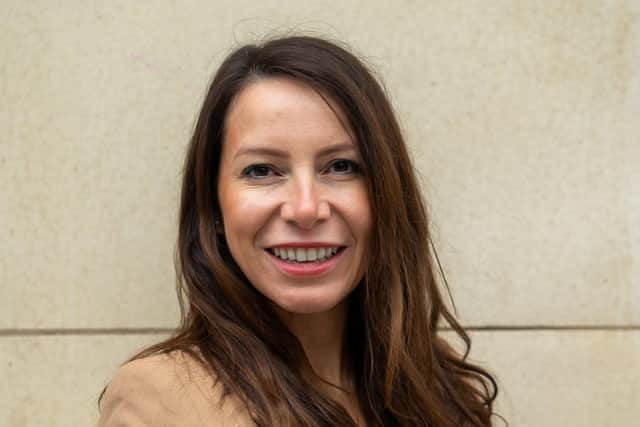
Rachel Roche is lawyer and owner of Roche Legal