
'We are sorry for any confusion': HMRC apologises for loan charge letters sent with incorrect time limit
HMRC has apologised after sending out letters with an incorrect time limit to taxpayers affected by the loan charge, a policy which opponents say has caused “very significant anxiety” to people who face potentially life-changing bills.

HMRC said it was sorry for any confusion caused in a small number of letters and is working with affected taxpayers to clarify their position.
Members of the Loan Charge Action Group had written to HMRC’s First Permanent Secretary, John-Paul Marks, after being told that those affected by the McCann Review into the loan charge were being sent letters informing them that they had 90 days in which to accept the revised amount, based on HMRC’s calculations, “with extensions apparently available only in very exceptional circumstances”.
The letter states: “This is already causing additional anxiety and is also likely to make it more difficult for some people to reach an informed agreement with HMRC within the period allowed. The reality is that there are many issues that may need to be explained, discussed and resolved within the 90-day period. Individuals must be given a full and proper explanation of the calculation, be allowed to challenge the figures and be able to provide information that may materially affect them.
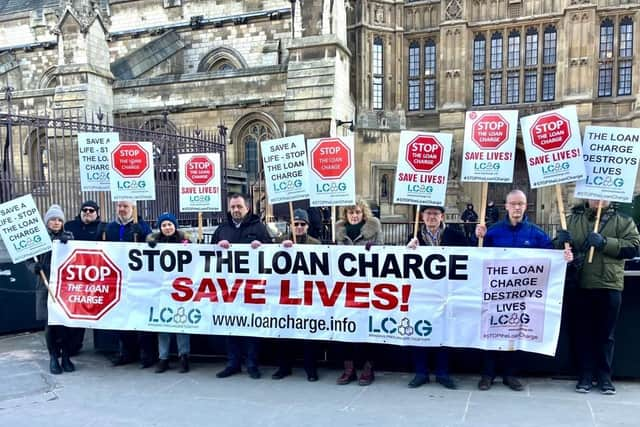

“We have also already been informed that some calculations contained in letters that have begun to be issued are inaccurate. This is, understandably, causing very significant anxiety for those affected. No one should be pushed into accepting or paying demands that are incorrect or based on incomplete or inaccurate information.”
"Our concern is not that HMRC wishes finally to bring long-running cases to a conclusion. We understand that objective. The issue is whether this 90-day acceptance period provides those affected with a fair opportunity to verify the accuracy of HMRC’s calculations and resolve any errors before being required to make what may be a significant — and in many cases life-changing — and effectively irreversible financial decision.”
Many of these cases concern complex tax histories extending back many years, in some cases as far as sixteen years, the LCAG letter states.
“The calculations may involve multiple tax years, different schemes, historic payments, interest, previous settlements, credits and other adjustments. Those affected must be able to obtain records, take professional advice where necessary and satisfy themselves that the figures presented by HMRC are correct.
“There is a particularly stark imbalance here. In many cases HMRC has had well over a decade to investigate, calculate and determine the liabilities concerned. Much of the elapsed time has arisen from HMRC’s own administration, policy development, litigation, reviews and the preparation of the present arrangements. Yet, after that lengthy period, the individual is now expected to check HMRC’s work, identify any mistakes, secure their correction and make a potentially life-changing decision within just 90 days.”
The loan charge, announced at the Budget in 2016, was introduced with the aim of tackling disguised remuneration schemes; tax avoidance schemes that seek to avoid income tax and National Insurance by disguising income as another form of payment, which is claimed to be non-taxable, typically a loan. There was an outcry when people on modest incomes were plunged into despair as they faced large and unexpected tax bills due to the loan charge, after placing faith in their professional advisers to do the right thing. MPs uncovered evidence that, in some cases, workers were told they had to sign up to schemes which later became subject to the loan charge, simply in order to be paid. Some were told they were QC approved and HMRC compliant. A review in 2019 reduced the loan charge’s impact but MPs and campaigners still believed the policy was punitive and flawed. In 2025, the Labour Government ordered a new review of the loan charge led by Ray McCann, a former president of the Chartered Institute of Taxation. The Government said it accepted all but one of the review’s recommendations and in some areas went further, including writing off £5,000 of each individual’s liability in addition to the review’s recommendations.
Responding to the LCAG letter, an HMRC spokesperson said: “Following the 2025 Loan Charge Review, the Government agreed a new settlement scheme, and we are working with our customers to help bring this matter to a close.
“We are aware of a small number of letters where an incorrect time limit has been given. We are sorry for any confusion caused and we are working with those customers to clarify their position.”
A spokesman stressed that the majority of taxpayers will have more than 90 days to consider their settlement offer.
The Loan Charge Settlement Scheme legislation came into force on 5 August and HMRC has begun contacting taxpayers to make settlement offers. Ninety days is the minimum period the loan charge legislation allows for acceptance of a loan charge settlement offer. For the majority of taxpayers HMRC will allow a longer period, the statement said.
“We will be responding in full to the LCAG letter in due course,” the statement said.
“We recognise that dealing with tax liabilities can be difficult and can lead to additional pressures. We are committed to supporting customers who need extra help and encourage anyone who needs help to contact us. There is support available for those who may be struggling to pay in full, including paying by instalments.”
Following the announcement of the loan charge review in early 2025, HMRC wrote to all “disguised remuneration” customers, and told them whether HMRC believed their situation would be considered by the review, and provided each taxpayer with a named caseworker who they could contact to discuss their case.
“The Government accepted all but one of the review’s recommendations and has given us the power to administer a new settlement scheme, which for the vast majority of eligible customers will allow them to settle with us for a lower amount. Treasury Ministers have been clear that the settlement scheme represents a fair resolution to allow all parties to draw a line under the matter. In turn, customers must now come forward and engage with us.
“Since the start of 2026, caseworkers have again written to all disguised remuneration customers explaining how they are impacted by the outcome of the review, the next steps and urging them to contact us if they need any extra support.”