
What becoming a B Corp taught me about growing a business responsibly: Neil Armstrong
There is a point in the growth of a business when good intentions stop being enough. When we founded Tribepad in Sheffield in 2008, we had a clear idea of the sort of company we wanted to build.
We wanted to make recruitment better and fairer, build technology that genuinely helped people, create a great place to work and contribute something positive to the community around us.
Those things are easy to say when you are small. But it gets harder to hold onto them as the company grows, because decisions become more complicated and commercial pressures increase.
Last year, Tribepad became a certified B Corp. We scored 90.6 in our B Impact Assessment, comfortably above the 80 points required for certification. I was incredibly proud of that result, but the number itself isn’t the important bit.

What mattered more was the external validation to test that the things we said about ourselves was actually reflected in how we operated.
B Corp certification covers governance, employees, communities, customers and environmental impact. That means examining policies and processes, but it also means looking closely at the decisions a business makes and the evidence behind them. For any leadership team, that sort of scrutiny is useful.
As companies grow, there is a danger that values become something you write on a wall or put on the careers page. Meanwhile, the real business happens elsewhere. Decisions are made according to what is quickest, cheapest or easiest, and over time the gap between what an organisation says and what it does can grow.
External accountability makes that harder. At Tribepad, fairness has always been closely connected to what we build. Recruitment technology affects who sees an opportunity, how somebody applies for it and, increasingly, how decisions about candidates are supported by technology. We work with employers including Tesco, Greggs and the NHS, and our platform serves millions of people.
That brings responsibility with it. It is particularly important as artificial intelligence becomes a bigger part of recruitment. There is huge potential for AI to make hiring more efficient, but efficiency cannot be the only measure of whether technology is good.
We need to ask who benefits from a system, who might be disadvantaged by it, how transparent it is and where humans need to remain involved. Those questions become more important as technology becomes more powerful, not less.
The same principle applies to running the company behind that technology. One of the things the B Corp process reinforced for me is that responsible business is made up of hundreds of fairly ordinary decisions. How do you support employees? Where do you spend money? What happens when commercial priorities conflict with your principles? How do you measure your environmental impact? What role do you play in the community around you?
There will rarely be a perfect answer. But measuring these things and being willing to have them independently scrutinised makes it much harder to ignore them. Being headquartered in Sheffield matters here too. Tribepad works internationally, but Yorkshire is home. There is a strong tradition here of businesses being rooted in their communities and understanding that their responsibilities extend beyond the boundaries of the company itself.
Businesses are often encouraged to think about growth in fairly narrow terms. More customers, more users, more markets, more revenue. Of course those things matter. A business needs to be commercially successful if it wants to employ people, invest in products and keep growing.
But scale also increases your impact. More employees means more responsibility for people’s working lives. More customers means your decisions reach further. More technology means greater potential consequences when you get something wrong.
Growth should therefore create more questions about responsibility, rather than fewer. That is why I don’t see becoming a B Corp as the end of a process. Certification requires businesses to keep improving and demonstrating their impact. Standards change, expectations rise and new challenges emerge.
AI is a good example. Five years ago, many of the questions businesses are now grappling with around responsible AI barely featured in boardroom conversations. Five years from now, there will undoubtedly be another set of issues we haven't fully anticipated yet.
No certification can give a company all the answers. What it can do is create the discipline to keep asking the questions and provide a framework against which your answers can be tested.
That is probably the biggest lesson I have taken from the process. You don’t protect the culture and principles of a growing business by assuming they will survive. You have to keep examining them, measuring them and sometimes changing the way you operate.
Nearly two decades after starting Tribepad in Sheffield, I still want us to grow. I want us to build better technology, work with more organisations and help make recruitment fairer for more people.
But I also want us to be able to look at how we achieved that growth, and be proud of that too.
For me, that is the real value of putting your business under external scrutiny. It reminds you that success isn’t only a question of how far you have travelled. How you got there matters as well.
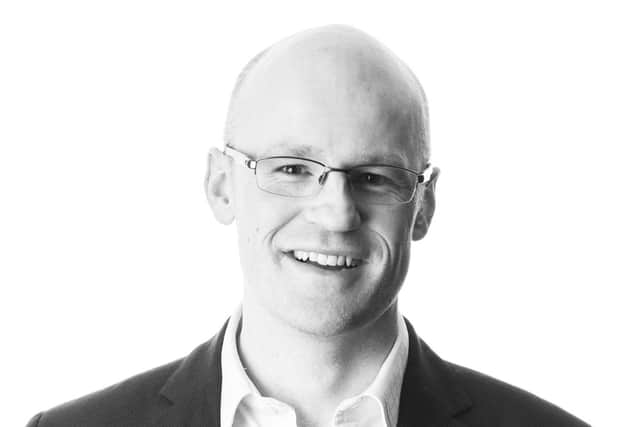
Neil Armstrong is CEO of Tribepad