
What popularity of The Traitors teaches us about importance of office working: David Richards
A few years ago, I was lucky enough to travel on the Orient Express from Paris to Venice. Late one evening, sitting in the bar, I got talking to a man who turned out to be a television producer.
His show was Love Island. I do not think I had ever seen a full episode. What I knew came second-hand from my teenage children. The programme itself held no interest for me. But what he explained did.
Love Island, he said, was one of the very few shows that young people still watched live. Not later. Not on catch-up. Not broken into clips the next day. Live, together, at the same time. In a media world dominated by on-demand viewing, that single fact changed the economics of television entirely.
Advertisers will always pay more for attention they know exists in a specific moment, rather than attention that might or might not turn up.

I grew up with three channels. My parents’ television had buttons for BBC1, BBC2 and ITV.
When Channel 4 launched, it felt like an event. With so little choice, we watched the same things and we talked about them. At school, at work, in the pub. Television gave us shared reference points without anyone needing to plan for it.
Streaming dismantled that. We still watch plenty, but we do it alone, at different times, in different orders. Outside of sport and news, the idea of a collective audience faded.
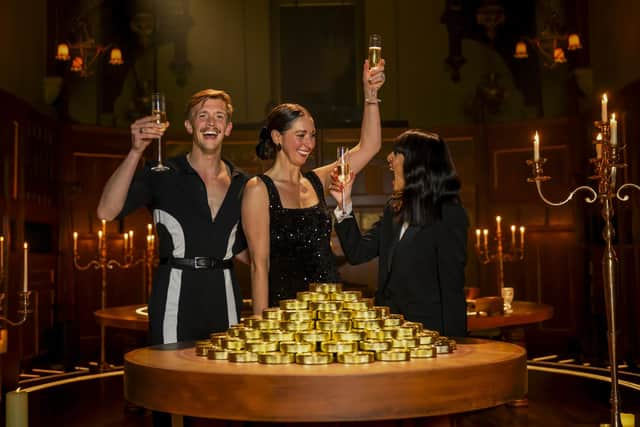
Which is why I surprised myself recently by watching The Traitors on BBC One, and watching it live.
The following morning it was everywhere. In offices, on WhatsApp, in half-heard conversations over coffee. People arguing about who would be banished or murdered, who was cracking, who had lied just a little too convincingly. Whether Stephen was foolish to trust Rachel.
It felt strangely familiar, not because the programme itself was particularly remarkable, but because it had dragged us all back into the same moment.
When millions of people watch the same thing together, it stops being just a television show.
It becomes common ground.
And it made me think about work.
Covid proved remote work is possible, but it also changed our assumptions about presence.
For a while, I thought offices were becoming optional. I now think that view was incomplete.
Hybrid works well for experienced people. Those later in their careers who already have judgment and networks. For them, flexibility often improves life.
But for people at the start of their careers, something important goes missing.
The most valuable lessons I learned early on were not taught formally. They came from proximity. From hearing how a difficult conversation was handled. From seeing how bad news could be delivered without burning bridges.
Sometimes it was simply someone leaning over and saying, “There’s an easier way to do that.” Sometimes it happened later, when the honest explanations came out over a pint.
None of that learning was planned. You could not design it deliberately even if you tried.
It happened because people were in the same place. Take that away and you lose quiet mentoring. You lose early corrections before mistakes harden into habits. You lose confidence, particularly for younger people still working out how things really function. That cost is real.
Later that night on the Orient Express, we were the last two people left in the bar. It is a long train, and once you have had a few of the Orient Express’s speciality 3674 cocktails, every carriage starts to look the same. It took us quite a while to find our sleeper cabins.
No agenda. No schedule. Just two people talking because they were there at the same time.
Some things only really happen like that. You cannot record them, replay them, or catch up on them later. And when they disappear, you tend to notice too late what they were quietly doing for you.
Sometimes progress is not about convenience. Sometimes it is about turning up, together, and being there when it matters.
David Richards is managing partner of Yorkshire AI Labs