
What The Magnificent Seven taught me about importance of DEI: Rashmi Dubé
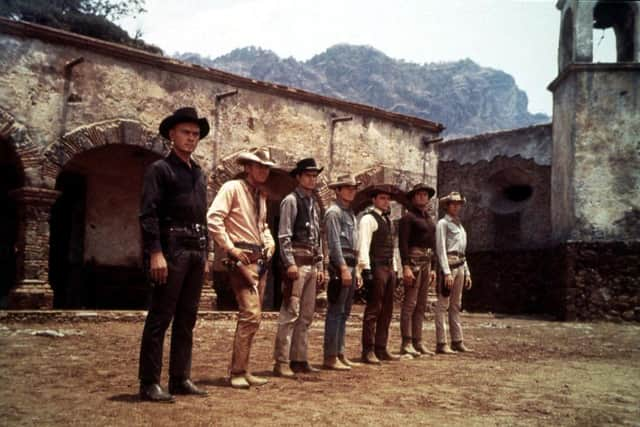
There’s a line from the 1960 film The Magnificent Seven that haunts me: “Don’t you ever say that again about your fathers, because they are not cowards! You think I am brave because I carry a gun? Well, your fathers are much braver because they carry responsibility.”
As a child, I understood this simply - fathers work hard. But now, decades later, these words carry a weight that nearly brings me to tears.
It speaks to something far deeper than parental duty - it illuminates the very essence of equity and why some shoulders bear heavier burdens than others from birth.
In our corporate boardrooms and policy discussions, we often reduce Diversity, Equity, and Inclusion (DEI) to percentages and quotas. But equity isn’t just about giving everyone the same starting line - it is about recognising that some runners have been carrying invisible rock-loaded rucksacks their entire lives.

Consider the single parent who missed promotions because childcare ended at 5pm, or the first-generation university student working three jobs while their peers focus solely on studies, or families where there is just enough food for two people out of five.
We don’t have to look far - they exist here in Yorkshire. These aren’t just heartstring-tugging anecdotes; they’re the living embodiment of why equity - perhaps the most misunderstood pillar of DEI - remains crucial.
The dawning age of artificial intelligence adds another layer of complexity to this conversation. As AI reshapes our workforce, there’s a growing concern that technology might either bridge or widen these gaps. Will AI be the great equaliser, democratising access to knowledge and opportunities? Or will it become another tool that primarily benefits those who already stand on higher ground?
The answer likely lies in how we choose to wield this new power. As the quote revealed the profound difference between surface-level judgments and deeper understanding, we must ensure AI doesn’t just process data but comprehends the nuanced reality of human experience.
Some argue that in an AI-driven future, DEI initiatives might become obsolete. After all, algorithms don’t carry human biases, do they? But this viewpoint dangerously oversimplifies both technology and humanity. AI systems learn from historical data – data that often reflects and perpetuates existing societal inequities. We have already seen the issues that have arisen in the recent past.
The responsibility we carry now is to ensure that as we build this future, we do not inadvertently cement old disparities into new systems. This means actively considering whose voices are heard in AI development, whose experiences inform machine learning models, and whose needs are prioritised in deployment. We probably are already too far down the rabbit hole, but if we ramp up DEI perhaps a greater change towards eqity can still be had.
As I reflect on how differently that quote from The Magnificent Seven resonates now compared to my younger years, I’m struck by a parallel truth about equity itself. Just as life experience opened my eyes to the deeper meaning of those words, perhaps our collective understanding of equity needs similar maturation.
The future of DEI in an AI world is not about maintaining the status quo of current initiatives - it is about evolving our approach to ensure that as technology advances, it lifts all boats, not just the already seaworthy ones. This might mean rethinking everything from algorithm design to access to technical education.
Looking ahead, the true test will not be whether we maintain DEI programmes in their current form, but whether we can embed their principles so deeply into our technological and social infrastructure that they become as natural as breathing. Just as those fathers carried their responsibilities not as a badge but as an essential part of who they were, so too must equity become intrinsic to our future systems.
The weight of responsibility, whether carried by a parent, a leader, or a society, is not always visible to those who do not bear it. As we stand at this technological crossroads, let’s ensure we do not just see the surface - the algorithm and the metrics - but understand and address the deeper burdens that shape our uneven playing field.
After all, true bravery lies not in wielding power, but in ensuring it serves all of humanity, especially those whose loads are already heavy. Yet with current changes of viewpoints, has DEI seen a rapid rise only now to see its demise in priorities of organisations?
The Gender Pay gap was part of the equity incentive and we saw how many organisations refused to take part in lockdown due to extreme circumstances. Maybe the best resolution is a combination of HR departments working with AI to ensure DEI is implemented to allow everyone a fair chance – but perhaps I am just too optimistic.
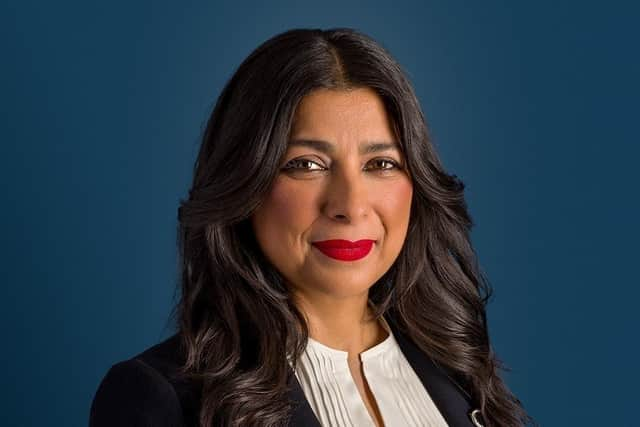
Rashmi Dubé is a partner at gunnercooke