
Writing on the wall for traditional banks as likes of Revolut prove Bill Gates right: David Richards
When Bill Gates said “banking is necessary, but banks are not” in the 1990s, it sounded provocative.
For me, it brings back memories of how close I came to spending my life inside one of those very banks.
When I finished my A-Levels in 1988 I was certain of one thing: I was done with education.
The prospect of another three years in lecture halls held no appeal. I wanted a job, a salary, the trappings of adulthood. So I applied to all the major high street banks and, to my surprise, received several offers.

I took one. Within five minutes of starting work, I realised I had made a dreadful mistake.
The atmosphere was stifling, the systems archaic, the excitement nonexistent. Tail between legs, I walked back to my school and asked the head of sixth form, Dave Jackson, for help. He gave me advice that changed my life: “Go and study computer science.” I did, and the rest is history.
What strikes me today is how little has changed inside the banks since those days. When my family and I returned to Britain after 25 years in Silicon Valley, we needed to open personal and business accounts. What should have been routine turned into a protracted ordeal. The processes were as if designed to test one’s patience.
For a personal account, we endured endless paperwork.
For a business account, they insisted that we must use a clunky hardware device that spat out security codes every time we wanted to log in. In an age when every smartphone has secure authentication built in, this was farcical.
The truth is that the biggest innovation in banking over the past half-century has been the cash machine. That is a poor record for an industry that prides itself on serving the lifeblood of the economy.
Back in the 1990s Gates’s remark captured three key ideas. The first was the unbundling of financial services. Instead of a bank offering current accounts, loans, mortgages, payments and investments under one roof, specialised firms could emerge to do each part better and more efficiently.
The second was the potential of technological disruption. Computers and networks would empower consumers directly, reducing the need for expensive branches and slow manual processes. Banking could become something you did on a device rather than a place you visited.
The third was the rise of digital finance. Gates foresaw mobile platforms and online services delivering the functions of a bank without the cost and bureaucracy of legacy institutions.
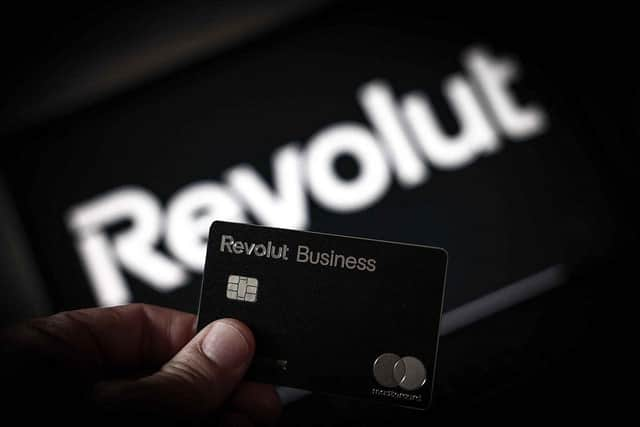
That vision is no longer theoretical. It is becoming the daily reality for millions. I now use Revolut and Wise personally and across all of the Yorkshire AI Labs portfolio companies.
The difference is extraordinary. Paying bills takes seconds. Currency transfers happen in real time. Security is handled through the phone in my pocket, not a clumsy gadget in a desk drawer. These platforms make the high street banks look like relics.
The contrast is stark when it comes to big transfers. Moving £100,000 through a traditional high street bank typically costs about £3,000 in hidden exchange rate mark-ups and fees.
With Wise, the same transfer costs closer to £330. Revolut comes in at around £400 to £600, depending on your plan. The saving is obvious.
The scale of the change is reflected in Revolut’s rise. The company now serves more than 60 million customers worldwide and is on track to generate over £4.1 billion in revenue this year, up from £3.1 billion last year. In July and August alone it booked revenues of £373 million and £410 million. Investors are circling at a valuation of $75 billion, with talk of acquiring a US bank to accelerate expansion.
This is no longer a start-up operating on the fringes. It is a global financial powerhouse built on technology rather than marble pillars. Wise, too, has transformed cross-border payments, cutting costs and delays that customers long endured at the hands of traditional banks.
The cat is out of the bag. Gates was right. Banking is indeed necessary. But banks, at least in their current form, are not. They will be replaced by services that deliver the same outcomes more quickly, cheaply and securely. For the incumbents, the writing is on the wall.
Looking back, I am grateful I swallowed my pride and went back to the head of sixth form.
Choosing computer science set me on a path I could never have imagined at the time. If I had stayed in banking, I would have been stuck in a system that is only now being overtaken.
By choosing technology, I found myself in the right place just as it began to transform the world, and now that same wave is finally sweeping through the banks.
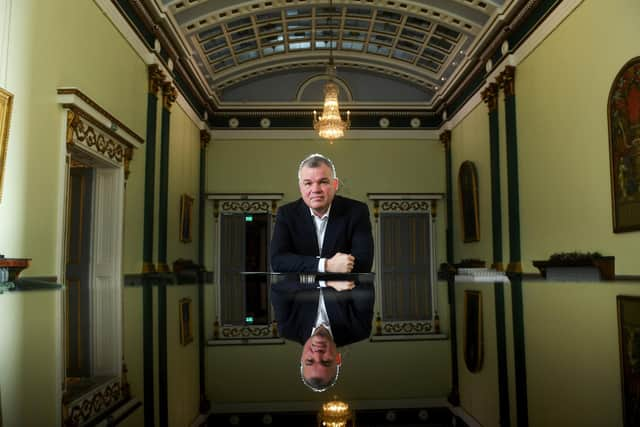
David Richards is managing partner of Yorkshire AI Labs