
50 years as a Samaritan volunteer
Chris Collins, a volunteer at Sheffield Samaritans has been a dedicated Samaritan for 50 years. It’s volunteer week and he shares why he joined the organization. “I went to an all-boys grammar school and didn’t really know how to talk to girls. So I listened to them and let them talk about themselves. I guess I became a bit of an agony uncle, a shoulder to cry on about teenage angst. As a tactic to meet girls, it worked, but it didn’t help my love life much.”
Chris joined Samaritans after finishing university and found a job in Newcastle-Upon-Tyne. He didn’t know anyone in the city and began volunteering for Samaritans.
“We listen. We sit alongside people in their pain and misery. It may not sound like much but, sometimes, it doesn’t take much to make a difference.”
Over the years his job moved around a fair bit and, wherever he went, he could switch branches and have instant contacts. Chris mainly took on night shifts so I rarely got to see callers face-to-face - so joined Samaritans Festival Branch because he loved camping, music festivals and it was all face-to-face.
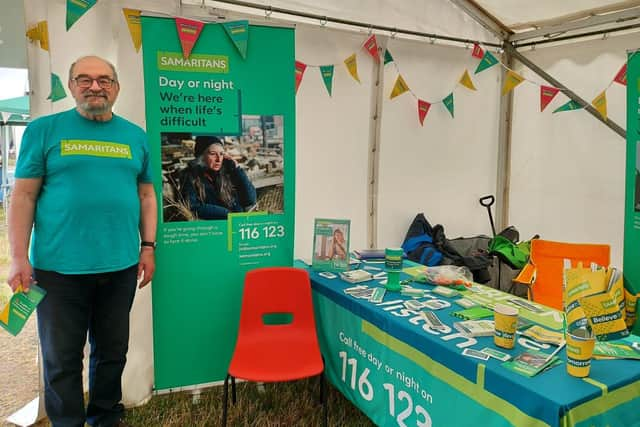

“There have been high spots and low spots. A caller at a festival told me if it wasn’t for me, I’d be dead by now. That was a high spot (I had talked to her the previous year). So often, we don’t get to hear the end of the story.”
Samaritans was founded by Chad Varah, on 2 November 1953, the first ever call was made to a pioneering helpline for people thinking about suicide. Founded in a backroom in London, the helpline was initially known as 999 for the suicidal.
Today, there are around 23,000 volunteers and over 200 branches and locations across the UK and Ireland.
“We were talking about landline telephones under the stairs and telephone boxes. There have been several iterations of technology in between these extremes. Younger people often don’t use their phones much to talk. In the early 2000s, we started ‘listening’ by email, followed by text messages and Instant Messaging.”
In 2002, Samaritans began offering support by email. In the first year, they received 72,000 emails from people in distress. More recently, a pilot began to use online chat as an alternative for those who prefer not to use the phone.
In 2024, the organization celebrated 30 years since the first media guidelines were developed—an essential resource for those involved in reporting or portraying suicide. This vital work continues to influence the media toward safe reporting.
Chris shares what he wishes people were more aware of: “The dangers of isolation and loneliness are real. Some people phone just to hear another human voice. Many charities are trying to help in this area, but there is something wrong with a society where so many people are isolated.”
After volunteering for 50 years at Samaritans: “Having found the right thing, you just keep going. I keep learning all the time. I get good ideas from other volunteers, no two shifts are the same. And, if I have a problem, I know lots of lovely people I can talk to.”
Volunteers’ Week is an annual UK-wide campaign held from the first Monday in June to celebrate and recognise the contributions of volunteers.
“It isn’t often that you can do a short course and it will change your life. Even if you only volunteer for a few years, you will retain those skills for the rest of your life. I can’t imagine what I would have been like if I hadn’t been a volunteer! I have been able to support friends and members of my family.”
£10 could help Samaritans answer a call for help from someone struggling to cope. To support Sheffield Samaritans, visit: https://justgiving.com/sheffieldsamaritans
Samaritans are available 24 hours a day, 365 days a year. If you are looking for someone to speak to, call 116 123, free, 24/7 or email [email protected]