
Family welcomes research investment in Leeds for deadly brain tumour that devastated their family.
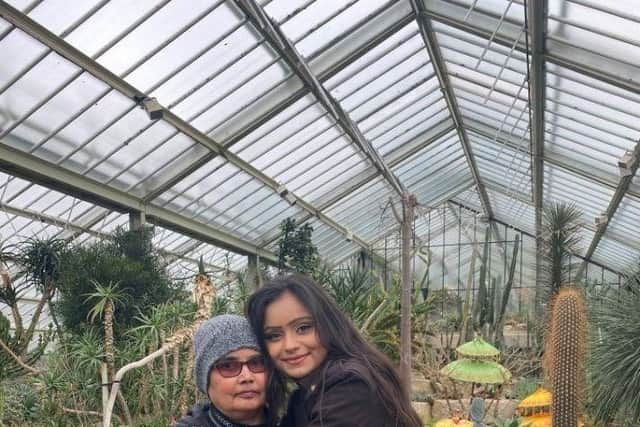
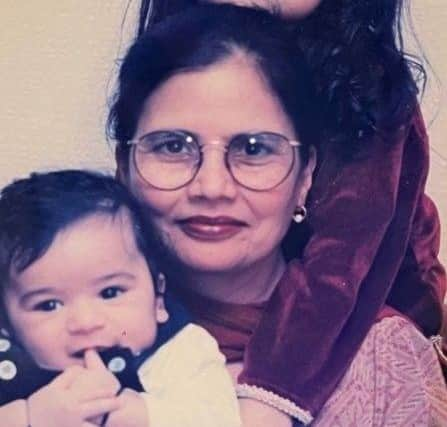
Baljit Ahluwalia, from Pinner, remembers her mother, Harbans Kaur Walia, as “an absolute powerhouse of a woman, who held our family together and was the love of my dad’s life.”
Sadly, she lost her to a glioblastoma - an aggressive brain tumour with few treatment options – in 2020. The disease affects more than 3000 people a year in the UK and has an average prognosis of 12 to 18 months. The Brain Tumour Charity is funding pioneering research that hopes to change this.
Harbans was diagnosed in November 2019 after complaining of discomfort in her left hand. Her GP suspected Parkinson’s disease. Further investigations were planned, but over the next few days, Harbans revisited the doctor, convinced that something wasn’t right. After a further GP visit, it was suggested she go to A&E. A CT scan revealed a mass on her brain.
Baljit said: “Mum was immediately admitted into hospital and then a few days later, following consultations with specialists at Charing Cross, mum was diagnosed with a glioblastoma multiforme, a term that we had never heard of before.” A former headteacher, Baljit had supported a child diagnosed with a brain tumour while in her care, but never thought the condition would affect her own family.
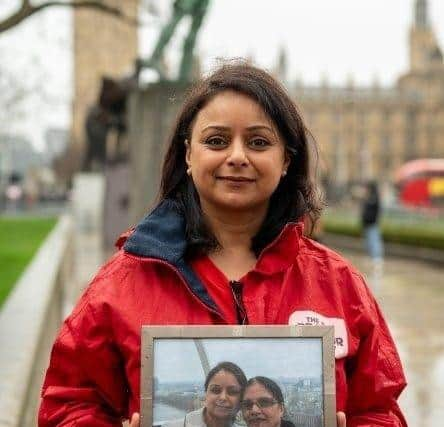

She said: “I remember googling, ‘glioblastoma multiforme’ that night after mum’s diagnosis and the breathtaking horror on reading about them.”
Harbans’ family clung to the hope that she would be treated, and recover, but learning that treatment options for this condition are so limited was a huge shock.
Baljit said: “At the time, the “options” for treatment did not feel like options. The only option was whether mum took them or left the tumour to grow further and cause more damage. The options available, crudely, were to prolong life or not, there really wasn’t a choice.
“It was only a year after mum died that I started to look to understand more about brain tumours.
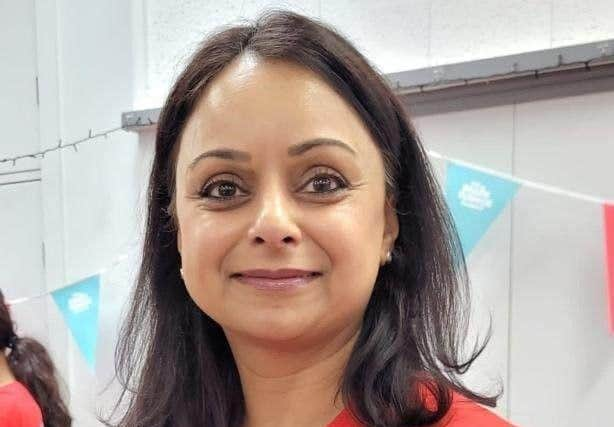
“I soon discovered that treatments for glioblastomas hadn’t changed for over 30 years and the standard treatment remained as partial removal, chemo and radiotherapy. And if you happened to be in your early 70s, as mum was, further treatment was likely to be refused.”
The Brain Tumour Charity hope that funding pioneering research will find new treatments for glioblastoma. They have recently pledged £300,000 to two new, innovative glioblastoma research projects.
The first, at the University of Leeds, is investigating why glioblastomas resist treatment and regrow after first-line therapy. Researchers Dr Lucy Stead and Dr James Poulter are developing complex tumour models in the laboratory that they will use to test new drugs that they hope will prevent treatment resistance.
Dr Lucy Stead said: These tumours adapt and survive treatment in what we believe are two different ways. What we now need to do, is to try and understand this in experimental models, so that we can really pinpoint why they're reacting in these two different ways and whether or not that means we should be splitting patients into two groups and giving different types of drugs.”
The second project, at King’s University, London, is investigating novel ways to improve immunotherapy for glioblastoma treatment. Professor Khuloud Al-Jamal aims to use tiny particles – 10,000 times smaller than a human hair – to make the immune system better at killing glioblastoma cells.
Professor Khuloud Al-Jamal said: "We know much more about this disease than we used to. Now, we are able to tackle some of the challenges of treating brain tumours by having new technologies that have been shown to work with other types of tumours."
Harbans and her family understood the importance of research and agreed to be part of an MRI-focused research project, trialling the use of high specification imagery to enable a better targeted operation. Harbans underwent surgery in November 2019, just weeks after diagnosis, followed by chemo and radiotherapy.
Baljit said: “Chemo and radiotherapy exhausted mum, yet she was happy. She felt that she was getting her life back, with her children and grandchildren around her for every moment.
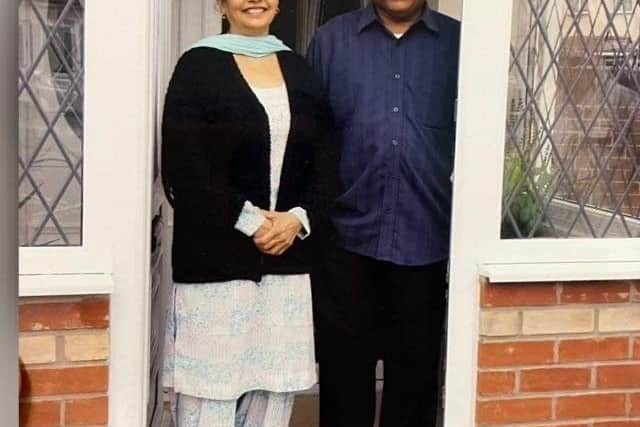
“Mum did start to lose her hair over time as a result of the treatment. Being a proud Sikh and Punjabi woman, she always kept her hair long and bound. Dad found combing mum’s hair too upsetting so I would carefully do it. At a point, I had to ask mum if I could cut off what was left of the long strands.
“Mum managed the side effects of the treatment a day at a time and always with gratitude and hope. Her only request would be that she wanted to go for walks, to the park and to see the swans and ducks and we would take her until she became unable to.”
In February 2020, the family were devastated to learn that the tumour had started to grow back, and doctors advised that further chemo and radiotherapy would not help Harbans. She was given six months to live. Harbans died at home in Baljit’s arms, on 24th October 2020.
On the fourth anniversary of her mum’s death, Baljit, who is now an Involvement volunteer at The Brain Tumour Charity, is supporting the charity’s investment in research into glioblastoma, which currently has no cure.
Baljit said: “My mum loved life. She treated each day as a gift, each meal as precious, and her family was everything. A glioblastoma took away her right to life.
“To save one life from this disease is a success. That one life then impacts on others, a family, a culture and a community. With greater understanding through research, hope becomes tangible for those in the future who will face a glioblastoma diagnosis.
“Investment in research is vital, to encourage bright minds to ask new questions, and challenge existing ones around glioblastomas; to enable quicker, and more accurate diagnoses – and to improve understanding, and assessment of brain tumour cells in order to develop better, more effective treatments.”
Dr Simon Newman, Chief Scientific Officer at The Brain Tumour Charity, which is funding the project said: “A glioblastoma diagnosis is devastating and currently, there is no cure. Glioblastomas are uniquely difficult to treat, which is why we are dedicating significant research funding into new, innovative ways to understand this disease and find more effective treatments.
The two projects we are funding are part of our Expanding Theories awards that fund new ideas with the potential to find novel ways to treat glioblastoma. We look forward to following the progress of these exceptional scientists and their projects.”