
Acoustic trial to help improve health and welfare of chickens
An East Yorkshire egg farmer has spoken of his hopes that a pioneering trial he hosted exploring the use of acoustic technology will help support producers following turbulence in the sector.

Free-range farmer Will Waind, a Happy Egg producer who recently re‑entered egg production near Sewerby, has helped launch the on‑farm project aiming to improve understanding, monitoring and the welfare of laying hens – marking a significant leap forward in evidence‑led animal welfare in egg production.
Animal welfare in egg production has traditionally been measured through a combination of standards, audits and assurance schemes. These important mechanisms provide confidence and accountability, but often offer only periodic snapshots of life on farm.
Those behind the trial say chicken welfare is not only an ethical responsibility, but a crucial driver of productivity and even small improvements to egg production results in substantial benefits to a farmer’s bottom line and UK food security. Trial managers said the project was about “going beyond assurance alone and exploring how emerging science can give us deeper, more continuous insight into the lived experience” of farmed birds.
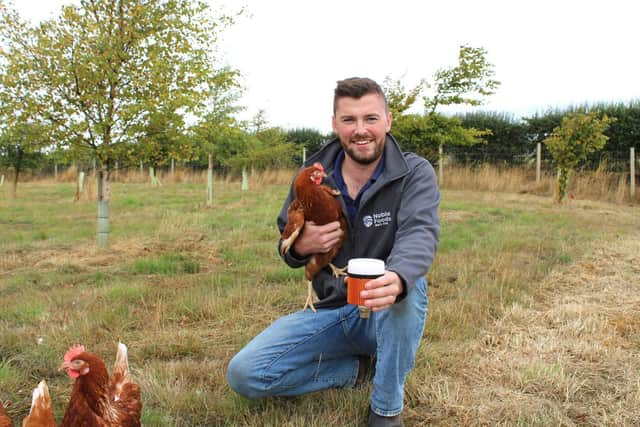

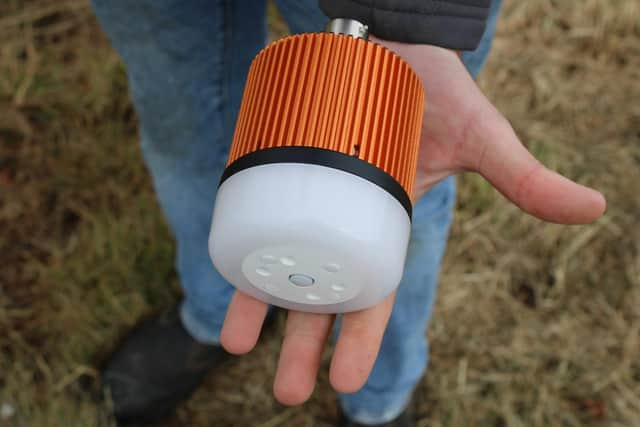
The initiative marks the second collaboration between food supplier Noble Foods and smart listening technology firm AgriSound, following an earlier pilot that saw Noble become the first UK egg producer to trial bioacoustic pollinator monitoring on farm. Insights from that project helped inform how sound‑based data could be applied more broadly within agricultural systems, including its potential to support animal welfare.
The technology analyses the soundscape within poultry houses, using machine learning to identify patterns in flock vocalisations and activity that may indicate changes in behaviour, health or environmental conditions. The aim is to provide farm teams with earlier, data‑led insight that can support proactive welfare management alongside traditional stockmanship.
Rather than operating in a controlled test environment, the system is being trialled within the realities of a working commercial farm – ensuring that any insights are grounded in day‑to‑day practice and producer needs.
Mr Waind, who is actively engaged in testing new approaches that can strengthen welfare and farm resilience, said having “another set of ears” in the shed, picking up on things that might otherwise be missed”, had attracted him to take part in the trial.
He said: “As a farmer, your job is to spot small changes before they become big problems, but you can’t be everywhere at once.
“We’ve all been through a tough few years in egg production, from bird flu to rising costs, so any innovation must be genuinely practical and work in the real world. This trial isn’t about replacing our work – it’s about giving us better tools to support welfare and make confident decisions. If testing new approaches like this helps improve outcomes for hens and gives farmers more confidence in how they manage their flocks, then it’s worth being involved. Progress only happens if someone’s willing to try it on farm.”
Alongside the free-range trial, Noble Foods is also testing the technology within one of its barn laying facilities. Evaluating the system across both housing environments will help determine how acoustic monitoring can be used to better understand bird welfare in different settings, providing valuable insight into flock behaviour, environmental influences and welfare indicators.