
Airmyn: The flooding threat that won’t recede
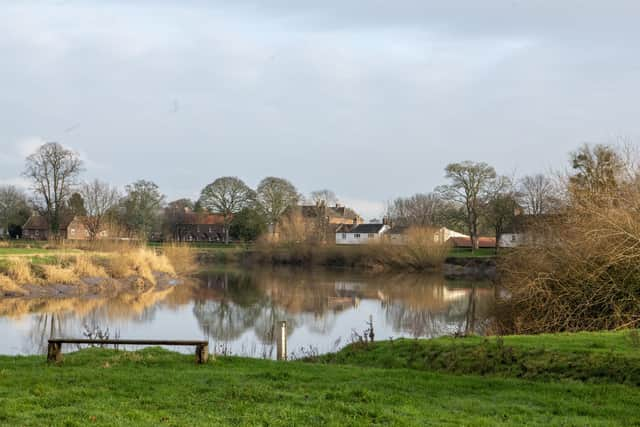
Some 92 miles after rising at Malham Tarn and flowing through Leeds and Castleford, the River Aire reaches its mouth with the River Ouse at Airmyn, to the north-west of Goole.
Alongside reflecting its place about half a mile south of the junction of two of Yorkshire's foremost watercourses, the village's name points towards Scandanavian origins and potentially the reason for the foundation of the settlement.
As such, the village's High Street and historic core follows the path of the River Aire on its final bend before the confluence, to the east of which the 698ft long Boothferry swing bridge has stood for the last 97 years. With a swing-span giving a 125ft wide shipping channel, the bridge ended centuries of ferry crossings across the Ouse.
The north end of the High Street has a landmark Gothic revival clock tower featuring a four-sided spire built to mark the second Earl of Beverley's elevation to becoming the Duke of Northumberland in 1865.

The tower, which took two years to complete, sits in neat gardens alongside the river and a Sunday school with Gothic details for some 120 pupils built by the same peer, which later became the village school. Unlike many villages of its size and in the face of the parish population falling from 795 to 729 in the two decades following 2001, Airmyn has retained its school, however it is on Percy Drive. In 2022 Ofsted inspectors wrote: "Pupils spoke highly of the many clubs that are available for them. They are particularly proud of the school’s sporting success.Some parents told inspectors how well the school is identifying children’s talents and helping their children to shine. Pupils know they have a voice in school."
Almost opposite the clock tower stands the equally impressive early 18th century red brick Airmyn Hall, from which views of the river, like the rest of the High Street, are impeded by a bank to protect properties and volunteers regularly clear watercourses to cut the threat of being inundated.
It's three years since the completion of a £4m scheme to protect 171 homes in the village, which saw the riverbank reinforced with 180 shet piles and 6,000 tonnes of rocks following devastating deluges in 2013, on Boxing Day 2015 and in February 2020.
Nevertheless, writing to residents last summer, the parish council's chair stated: "The risk of flooding remains prevalent for residents."
The village has also held onto its pub, The Percy Arms, named after Airmyn Hall's owners during the Victorian era, which boasts an array of menus and recently staged a Game Week, serving up dishes such as pheasant, duck and partridge pie.
However, villagers have not always held authority figures in high regard. The earliest documentary evidence of a medieval settlement at Airmyn comes from a court hearing in Michaelmas 1253, when the men of Airmyn brought an action against the Abbot of St Mary's, York. In the 1930s, the Yorkshire Archaeological Society wrote the complaint was over the abbot "attempting to extract services from the men of Ermine... such as exactions of hens, eggs and the like, which they say they were not wont to pay when the manor was in the hands of the King of England".
Other sources relate how villagers contested Airmyn had been on the Royal manor since Henry I's reign, highlighting how their annual rent had soared under the abbot, who countered that it had been his predecessors who had founded the settlement, between the middle of the 12th and 13th centuries.
Further evidence of Airmyn's relatively late establishment comes with its first church dedicated to St David of Wales being built in 1311, which sparked another row with the church, this time with one of the country's most powerful figures, Archbishop of York and Lord Chancellor of England William Greenfield.
After Airmyn residents created a straw-thatched roofed chapel without seeking consent, the cleric expressed disbelief, accusing them of “contempt of us and the mother church of Snaith in whose parish they live”, before barring villagers from holding services in the place of worship “on pain of ecclesiastical exclusion”.
For the following 353 years most Airmyn residents were obliged to walk the 14-mile round trip to Snaith to attend church services. Airmyn funeral parties used boats to convey bodies to Snaith as despite the present St David's Church being completed in 1676, albeit just the building's two-bay nave, the village did not win the right to bury its dead there until 1726.
Were it not for its bellcote and the surrounding churchyard, the sole church in the Diocese of Sheffield dedicated to St David could be mistaken for a building with a different function, partly due to it having been built with red brick with ashlar dressings and a Westmorland slate roof.
The village has a longstanding reputation as a particularly musical one, which appears to have been fuelled following the installation of an organ in the church to mark Queen Victoria's golden jubilee. The church's lychgate, added to commemorate her diamond jubilee, prominently features the somewhat macabre Latin inscription 'Mors Janua Vitae' - death is the gateway to life. Coach houses either side of the lychgate were built in the 1840s to shelter the coaches and horses of a landowning family as they attended services.
The churchyard has for more than 100 years attracted visitors in February wanting to view its spectacular snowdrop display and in 2004 its dedicated team of volunteers were recognised for making the consecrated grounds among the country's best-kept. Under the east window, the 350th annversary of which is set to be marked by villagers this year, lies the grave of the Rev Christopher Dodgson, the Perpetual Curate of Airmyn until his death in 1750 and great-great grandfather to Alice in Wonderland author Charles Lutwidge Dodgson, better known as Lewis Carroll.