
An exotic future for Yorkshire parks?
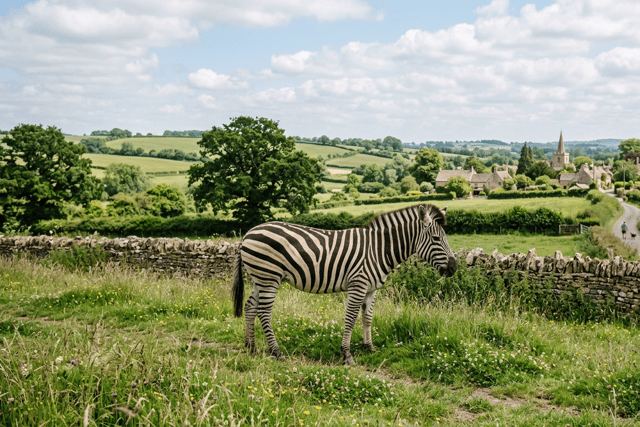
Zebras grazing in a Yorkshire park might sound like a scene from an animated movie for children, but new University of Sheffield research has suggested introducing such African creatures could become vital in the fight against climate change and that the move would be likely to receive public backing.

Scientists from the university’s School of Architecture and Landscape surveyed UK residents about their attitudes to non-native plants and exotic animals in urban green spaces, as part of a wider study into how parks and gardens could help protect species threatened by overheating in their native habitats.
The International Fund for Animal Welfare has stated climate change threatens the survival of up to one million wildlife species, including some of the most recognisable animals, such as elephants.
The latest Intergovernmental Panel on Climate Change report showed that, in land-based ecosystems, up to 14 per cent of species face a very high risk of extinction at 1.5°C of warming. At 3°C of warming, that number could rise to as much as 29 per cent of species. More than half of respondents said they would be happy to see Hermann’s tortoises, which are native to southern Europe and are distinguished by their high-domed shells with bold dark patterns, and Northern carmine bee-eaters, an African near passerine bird, introduced into their local parks.


A Mediterranean-style planting scheme won approval from 60 to 70 per cent of those surveyed in the study, which was published just days before the Environment Agency declared a drought in Yorkshire, following the region's fifth-driest April-to-September period on record.
And when asked about zebras, which are found in the grasslands and savannas of eastern and southern Africa, more than 40 per cent of participants said they were broadly open to the idea, a finding the researchers described as “surprising”.
Scientists have previously concluded that with climate change increasing the frequency and severity of droughts, freshwater supplies zebras need will become more limited, forcing zebras to venture further into inhabited areas in search for water, increasing the human-wildlife conflict.
Professor of Horticulture Ross Cameron, who led the research, said: “We expected people to be fairly resistant to the idea of exotic, non-native animals in their local park. But people seem to understand that the natural world is under pressure and that we may need to do things differently.”
However, the research, published in the journal Sustainability, is more than a quirky thought experiment. The scientists argue that as global temperatures continue to rise, many species will simply be unable to survive in the regions they currently inhabit. Without human help, they will not be able to migrate fast enough to find cooler ground. Parks and gardens in the UK, the research highlights, could act as the first ‘stepping stones’ in a network of new habitats stretching across northern Europe.
Prof Cameron added: “It is not as far-fetched as it might seem. London’s climate is already projected to resemble present-day Barcelona by 2050. Plants that currently need careful protection from frost in British gardens could eventually thrive outdoors all year-round.
“British parks and gardens have been hosting plants from around the world for centuries. What we’re suggesting is that we start being much more deliberate about it, choosing species not just for their looks, but for the role they could play in sustaining ecosystems that might otherwise disappear.”
Not every proposed newcomer proved popular. Venomous European asp snakes and spotted hyenas received a considerably cooler reception, with nearly three-quarters of respondents saying no or expressing uncertainty.
The researchers acknowledge that apex predators and dangerous species present particular challenges, both practically and politically, and propose that any programme of introductions should proceed gradually, starting with smaller and more benign animals.
“We’re not suggesting that anyone will be encountering hyenas on their morning run any time soon,” said Prof Cameron. “But tortoises, bee-eaters, interesting Mediterranean plants - these are things that people seem genuinely enthusiastic about. And they could make a real difference.”
The authors of the study, in which more than 250 UK residents were surveyed, have called for a broader national conversation about what British green spaces are for, and what role they could play in protecting global biodiversity as the planet continues to warm.