
Argrain: Meet the family behind one of Yorkshire's last remaining independent grain merchants
In a world increasingly made up of largely faceless corporate organisations that only ever appear to talk via automation, the independent agricultural service sector provides a refreshing and approachable alternative and for David Padgett this is a landmark year.

Fifty years ago David’s father, Derek, started as an independent grain merchant Argrain.
David has been in the business thirty years and since 2010 has also grown his own farming enterprise that now runs to just over 2,000 acres, which is largely arable cropping but has recently added a prestigious Charolais herd.
“My dad established Argrain just off Bootham in York,” says David.
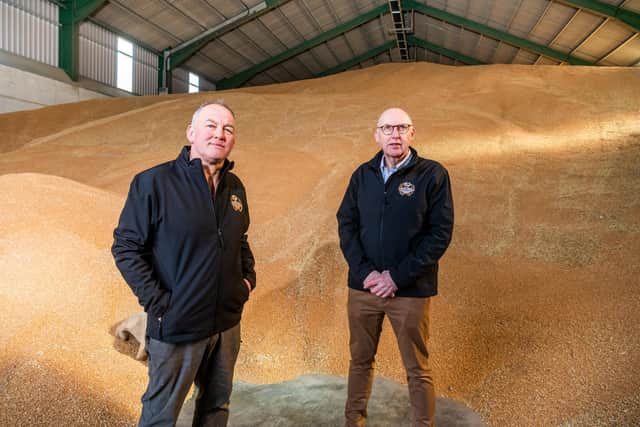

"The business then moved to Easingwold in 1981 and then to Mill Farm here in Raskelf in 2000. The name derives from the Goldthorpe family’s Argo Feeds who were, and still are, in business in Penistone and came from AR Goldthorpe.
"They backed dad as they ran wagons and had a feed mill and dad would buy grain for them.
“Dad was born in Bradford and had studied at Askham Bryan College. He had followed a similar path to my maternal grandfather, Laurence Harrison, who had became a grain trader.
"Dad had been with other grain companies before starting on his own and already had a business relationship with Argo.”
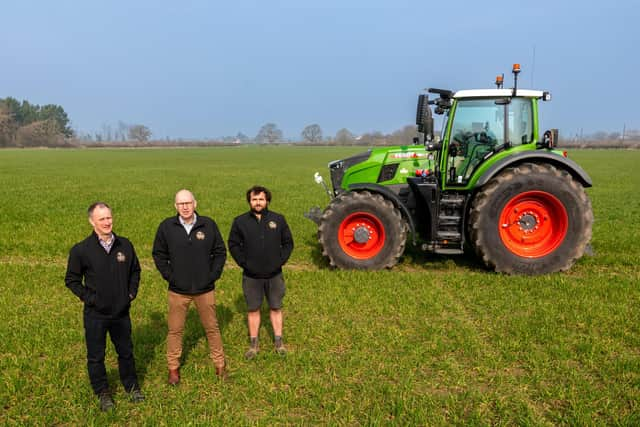
Argrain is now one of the few independent grain merchants trading in Yorkshire and David says that their strength is in dealing with independent buyers.
“There only three or four of us left. Going back twenty years there would have been a dozen. We trade mainly within the old county boundaries of Yorkshire, Durham and Lincolnshire, all the east side of the Pennines.
“There are still a lot of independent firms in Yorkshire buying cereals and, by and large, independent buyers want to deal with independent traders.
“It’s all about relationships with farmers and our buyer customers and the service we offer. If wheat is to arrive with our customers by 8 o’clock Tuesday morning, it is there. That’s what customers want, a reliable service.
“We have a team of 30 including traders, administration, training, drivers and the yard teams at our four sites where we store up to 50,000 tonnes.
"At least half will be wheat, the next largest will be barley, with the rest made up of oilseed rape, oats, beans and a little rye.”
David says the overall tonnage of cereals traded by Argrain is somewhere around 250,000 tonnes and that he encourages farmers to sell a proportion of their grain on forward sales to offer a degree of surety.
“This year we will have been down substantially in tonnage because of the poor establishment of last year’s harvest due to the rains that decimated crops in autumn 2023.
“We always buy forward. We will still buy grain from last year’s 2024 harvest, but we are already buying grain at forward prices for this year’s 2025 harvest and we will also commit to 2026.
"What we have to be able to do is to trade it forward, hedging it off. If we have a customer who wants to buy from us we’ll sell to them. It’s only as risky as you want to make it.
“The current wheat price is around £180/tonne. We’re currently buying forward for next winter at about £190/tonne. Many farmers will sell a proportion forward as they will be nervous that the price could get worse.
“The biggest change we’ve seen in recent times has been the oilseed rape volumes which have gone down massively due to the neonicotinoids ban and risk of flea beetle.”
Argrain didn’t start buying farmland until 2010 and farm manager Richard Colebatch joined in 2016.
“We initially bought 150 acres at Rush House at Knayton,” says David. “We’re now farming across 2,070 acres with 970 acres owned and 1,100 acres contract farmed. We’ve purchased land as it has come up, with most of it consolidated around here near the A19.”
Richard was previously farm manager at Sutton Park when it was farmed by Booker Farming, which became Broadoak and he then covered all forms of farm business with Co-op farming.
He used to sell grain to Argrain, which led to Richard becoming farm manager as David’s farm enterprise took shape.
“We have 1,600 acres of combinable crops,” says Richard. “It is made up of just short of 1,000 of winter wheat, 250 acres of winter barley, 50 oilseed rape and the rest a combination of spring barley, spring beans, spring wheat and fodder beet. We also rent land out for potatoes and carrots.
“We sell lot of rolled barley for cattle feed and we also now have our own cattle to feed, so we want the straw and the yield. We also have access to muck and slurry to spread in spring as we’re farming for a farmer who has pigs.”
Richard says that autumn 2024 establishment was a lot easier than in 2023. “The weather conditions were better and we had 160 acres of fallow already prepared, which gave us a head start by having got some poor land turned round.
“We grow winter barley as an entry for oilseed rape and stubble turnips; we will often go winter barley, stubble turnips and then into spring crops. Two-thirds of our winter barley are hybrids Canyon and Kingsbarn.”
Richard says that stewardship now plays an increasingly important role.
“We’ve gone fairly comprehensively into stewardship. We try not to take too much land out of production but where it’s the right thing to do we will put in legume fallow to improve the soil.
"We’ve a significant amount, around 190 acres in margins, field corners and any poor land. It creates a guaranteed income. We also have 170 acres of grassland. The farm team includes myself, two full-timers and casuals at harvest.”
David talks of their latest addition to the farm. “We now have a herd of 60 pedigree Charolais breeding cows that we intend to grow to 100.
“My daughter Katy, who is currently studying agriculture at Harper Adams, fully intends to come back here and she’s the inspiration behind the cattle.
"We started with a dozen sucklers in spring 2023 but when we heard Sarah Turner was looking to dispose of her late father Billy Turner’s multi-award winning show herd that we took the opportunity to go pedigree and the herd came here in autumn 2023.
“Two of our team, Mike Andrews and Brad Rawling, are both keen on cattle and I’ve always felt that if you have somebody that wants to do something we’ll have a go.”