
Birdwatch: Protection of little terns reaps reward
With the holiday season in full swing life can be hard for Little terns.
Small colonies of them are found all round our coasts and these are very vulnerable to disturbance,
Little terns lay their eggs on open sand and shingle quite close to the sea. The eggs are well camouflaged with sandy or pebbly speckling but this can be a disadvantage as people wandering along a beach can accidentally tread on them.
Off lead dogs are another big problem and there was a recent example on a Norfolk beach of what damage they can cause..
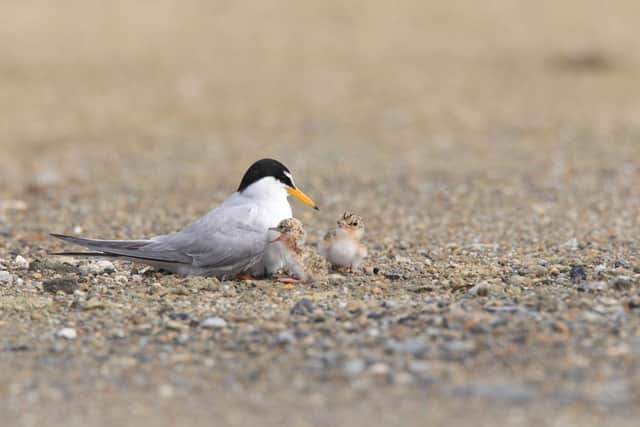

Dogs ran through a Little tern colony of some 600 adults and 500 chicks killing as least four of them while the adults panicked and abandoned nests leaving chicks vulnerable to predators such as foxes, rats and stoats.
Up until then this colony was enjoying a good season with 85 chicks fledged.
Yorkshire's only Little tern colony is at Beacon Ponds on the Holderness coast and here strong protection measures are leading to a record breaking season.
This summer three tern wardens have been guarding the colony around the clock helped by volunteers, also more back-up from Spurn Bird Observatory staff, Yorkshire Wildlife Trust and RSPB.
The results show just how effective these measures can be,
There have been a record number of Little tern pairs, in the region of 100, this summer, and, while some young have still to fledge, another record is expected of more than 100 beating the previous record of 107 fledged in 2023.
Large numbers of both Little and Sandwich terns have been gathering in post breeding flocks at Beacon Ponds.Some 20 per cent of the young Sandwich terns have been ringed at Scolt Head in Norfolk while others have arrived from Scotland and Germany,
Also seen at Beacon Ponds were three adult White-rumped sandpipers , vagrants from Arctic Canada, while another wader from North America, a Pectoral sandpiper, was seen at the St Aidan's reserve.