
Birdwatching: A full larder as the bramblings start to arrive
After the dry summer there is a bumper crop of tree mast for the birds this autumn.
Flocks of chaffinches are feeding on the fallen seeds beneath beech trees and in stubble fields, often with a close relative, bramblings.
The two resemble each other but when the flock flies up the brambling stands out because of its white rump.
Then, when the flock settles in the branches of a tree, another feature can be seen.
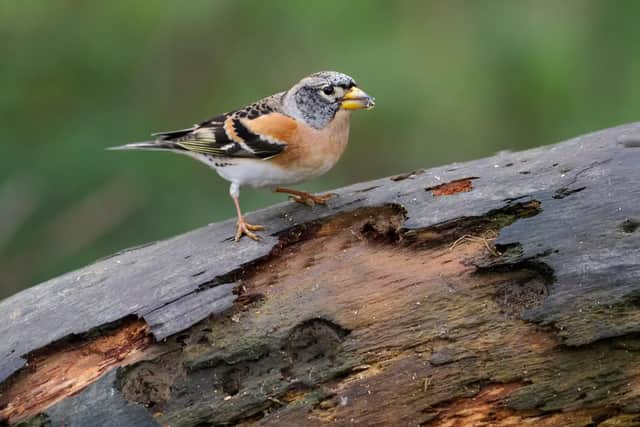

The pink breast of the male chaffinch goes down from the throat to beneath the tail.
But the male brambling has an orange-pink apron which stops half way down its breast- below that the underparts are white.
In summer they are much more colourful black and orange birds and some still have much of this colour when they arrive here.
Bramblings are called the Chaffinch of the North and some have already been arriving from Scandinavia and Russia to spend the winter here.
Small numbers might be seen anywhere across the country but especially where there are beech trees with plenty of nuts.
In some winters they arrive in large numbers with 150,000 of them estimated to have arrived on Merseyside in 1981,
In the winter of 1951-2 52 million of them swept across Europe to Switzerland and settled around the town of Hunibach. This was thought to make up practically the entire brambling population of northern Europe.
How many bramblings eventually arrive here depends on how good or otherwise the beech nut harvest has been in Scandinavia- a good crop means that fewer bramblings will need to search for them elsewhere.
Increasing numbers of Yellow-browed warblers have been arriving along the east coast and some have been caught and ringed. A Red-backed shrike was seen at North Landing,Flamborough while both long and short-eared owls have been arriving,
A male Hen harrier was seen at The Outstrays reserve on the Humber while two ring-tails came in to roost at Blacktoft Sands.