
Birdwatching: A traffic jam on the migrating highways
This is the maximum cross-over time for birds with millions leaving for the south to be quickly replaced by others arriving to spend the winter here.
Among the new arrivals are the first Whooper swans, Goldeneye , Pintail and Wigeon ducks of the Autumn , also Siskens and Redpolls.
One of the more obvious migrants are chiffchaffs,busily fattening up on flies and other insects before their long journey to the Mediterranean and Africa.
They have spent the summer in deciduous woodlands but now they might be seen anywhere, even in gardens.
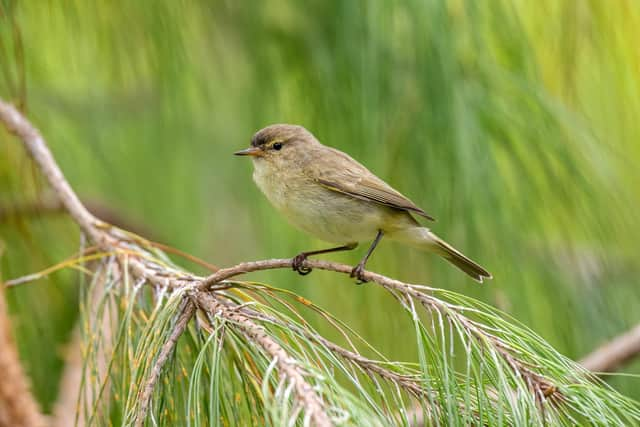

One curious thing is that they continue to sing their familiar tink tank song throughout September and October, no-one knows why.
Obviously they are not calling to attract a mate or defend a territory which they have already vacated.
It might be that it is adventageos for young chiffchaffs to learn the song in time for next year.
Certainly, while most chiffchaffs continue to migrate away from the UK increasing numbers- over 1,000- are thought to stay here for the winter and you might hear a chiffchaff burst into song as early as February.
Another bird on the move, but only for a short distance, is the stonechat which leaves the heaths and moorland edges where it has spent the summer and heads for lower ground.
Some continue, along with their close relative the Whinchat, to the Mediterranean but the majority stay here, close to water where temperatures are a little higher and there are still small insects to be found.
THe male stonechat is a smart looking bird with a dark head, bright orange chest and white patch on his neck while females and juveniles are less colourful.
The stonechat, like its relative the robin, is a lively bird constantly on the move with much flicking of wings and tail.
A recent addition to the family is the Siberian stonechat, now regarded as a separate species As the name suggests it breeds on the eastern edges of Europe and is a rare visitor to Britain.
Compared with the European stonechat it has a duller orange chest, more white on the wings and a white rump.
One was present last week at the edges of a field near Grimston, East Yorkshire and another, possibly a first-winter bird, at the Bempton Cliffs reserve.
There were also several Yellow-browed warblers and Red-breasted flycatchers, Barred and Dusky warblers and a Brown shrike among other birds seen on the Yorkshire coast.