
Birdwatching: The woodcock, a bird that still mystifies
For much of the year the Woodcock is one of those birds you normally stumble on by chance.
It spends all day hidden under dead branches or brambles, so well camouflaged by its brown plumage that it is all but invisible.
It only flies off when it is about to be trodden on, then dashes off through the trees with a fast zigzag flight.
But in Spring, in contrast, the Woodcock is much easier to find as the males circle over woods at dusk and to a lesser extent dawn, advertising their presence to the females below. This is known as roding.
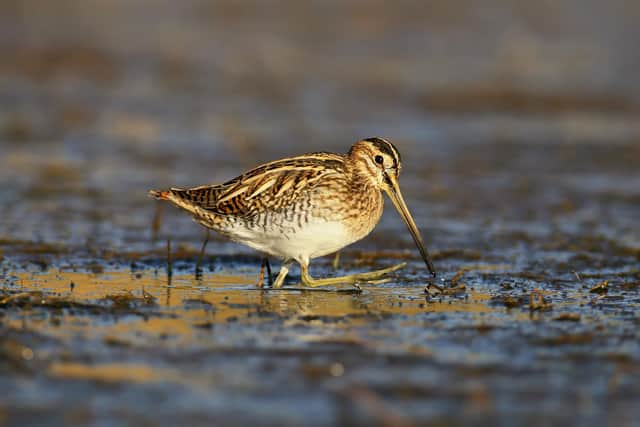

As it flies the male males a distinctive call, the first note a curious gruff frog-like sound followed by a far-carrying twisick note.
Each individual in the dusk is seen as a heavy round-winged silhouette, and each develops such a regular flight path that it can be timed to the minute.
There are very few sightings of the females as they incubate eggs on their own.
The females are claimed to have their own curious habit during the breeding season, the ability to fly off carrying their young away from danger.
There has been much debate over this for many years between those claiming to have seen woodcock doing this and others hotly denying this happens and dismissing the claims as folklore.
However, there are a wealth of reports supporting the claims including a video taken by a gamekeeper on the North York Moors.
He managed to get brief if somewhat blurred footage of what appears to be a woodcock carrying a chick and there was also a woodcock nest nearby.
The female woodcock is said to carry young tucked between her legs and body, often with the tail as an additional support.
Others have said to have been observed carrying young in their beaks while, rarest of all, are reports of a mother flying off with a youngster nestled on her back.
Perhaps the only way to conclusively prove this is with more photographic evidence using ever more sophisticated digital cameras and trail cams..
So it seems that in summer as well as winter the woodcock remains a mysterious bird.
Other sightings included an adult male Red-footed falcon at Thorne Moors and another at Thorpe Marsh, South Yorkshire.
On the coast a singing male Iberian chiffchaff was in the golf course willows at Flamborough and a singing male Rosefinch at Spurn.
An American golden plover was at Paull Holme Strays on the Humber.