
Call for farmers to plant more trees on unproductive land
Farmers should consider planting more trees on less productive parcels of land to increase the resilience of their enterprises, according to the outgoing chairman of the Forestry Commision.

Sir William Worsley, who owns the 3,000-acre Hovingham Estate in North Yorkshire, said while the arable sector was “going through a really difficult time” due to rising costs and uncertainty over Government grants, planting trees represented a good investment for farmers amid forecasts of declining timber imports and subsequent rising prices.
After six years at the helm of the commission, and serving as National Tree Champion before that, Sir William said he had concluded forestry would command “a really important place” alongside farming in the future rural economy, as well as bringing a host of benefits.
The former president of the Country Land and Business Association said while most farms had diversified, creating woodlands with a mix of productive conifer trees alongside hardwoods would provide an additional income stream for farmers.

He said: “We are not looking to plant all the best land in England. There is plenty of land that is poor quality agricultural land we can plant trees on. As a farmer I want to farm my best land.“
His comments follow the Government announcing it was exploring a new Woodland Carbon Purchase Fund, which would offer upfront payments to landowners to plant woodlands and thereby tackling one if the major barriers to tree planting.
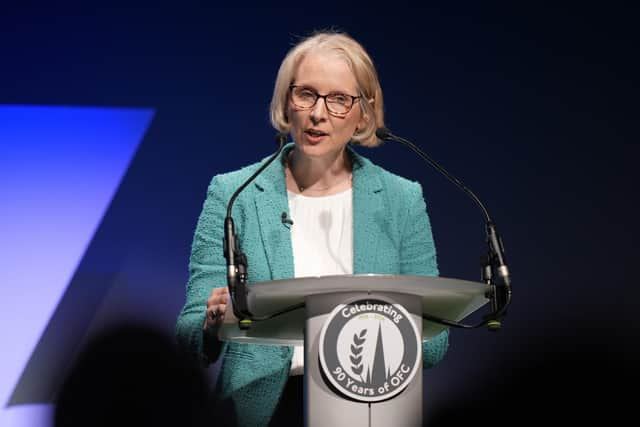
Speaking after the announcement in November, Environment Secretary Emma Reynolds said: “Our woodlands are vital for regulating our climate, supporting wildlife and increasing access to nature for us all.”
Sir William said the Government had provided “very good” grant schemes for tree planting, such as the Farm Woodland Premium Scheme and more recently the England Woodland Creation Offer, in which landowners are given funds to plant alongside 15 years of annual payments to bridge the costly early stages of tree planting.
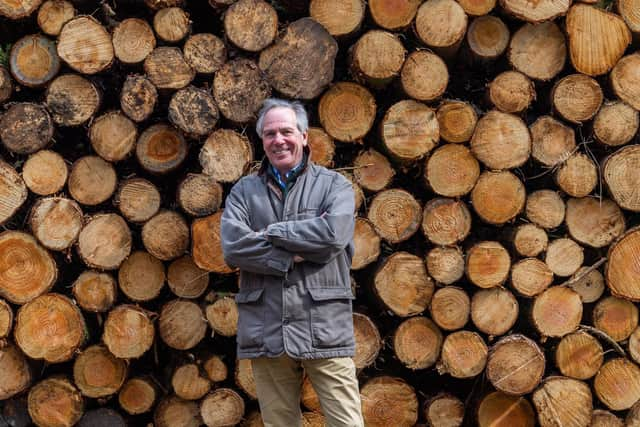
He said: “Farming is absolutely key to the rural economy, not just in the crops, but all the ancillary industries which support farming. Arable farming is going through a really difficult time. Prices are not great, input costs have continuously gone up and Brexit has seen huge inflation in farm machinery. There are areas on every farm that are actually losing the farmer money and those are the sort of areas we should be looking at for planting trees. Trees on farms have many benefits. If you have livestock, they shelter, if you’ve got flooding, trees are a brilliant way of flood risk management.”
Sir William said the last two generations had seen a move away from mixed farming and “we are suffering as a result”. He said farming businesses and landowners should also be incentivised to help increase public access to woodlands, due to woodlands’ potential to boost health and wellbeing.
Sir William said: “Forestry England is the biggest timber producer in the country, but also we are the biggest outdoor recreation provider in the country. Forty per cent of Forestry England’s turnover is recreation. Motorsport, cycling, all these things rely on Forestry England to survive, but it’s also the opportunity for outdoor recreation, health and wellbeing that people can benefit from our trees, woods and countryside. One of the things that I really saw with Covid was people and particularly young families coming out into the countryside. That was a really great thing.”