
Call to Defra to recognise the vital work of upland farmers
The government is facing calls to recognise upland farmers for the species and habitats their work produces after a report it commissioned found “top-down” policies are failing to produce significant changes.

Drawing on visits to the Lake District, Yorkshire Dales, North York Moors and the Pennines, the Towards A Flourishing Uplands report concluded current Defra-led approaches are not balancing competing demands between farming and environmental policy.
Farmers told the review they feel constrained by a system that is too centralised and difficult to navigate, with one describing official bodies as “the judge, the jury and the paymaster”.
The report states: “A highly stratified vertical system of relationships is held in place – Defra at the top, arms length bodies in the middle, farmers at the bottom – by funding and regulatory systems. The farmer or landowner largely experiences this system as a one-to-one relationship in which they have little power."

The report states the relationship between upland farmers and environmentalists has been described to us “civil war” and in all upland areas social tensions are acute.
The report states: "There is extreme anxiety in the face of uncertainty – what will Defra do next – and there is widespread resentment on the part of farmers - most of whom see themselves as guardians of nature - that they are being forced to pay the high costs of environmental problems made elsewhere.”
There were also repeated calls for greater local control.
Announcing an apparent change of tack, Environment Secr etary Emma Reynolds, said the government is aiming to develop a place-based approach, co-designing solutions to specific problems.
She added: “That’s the most important thing here, that communities lead change from the ground up.”
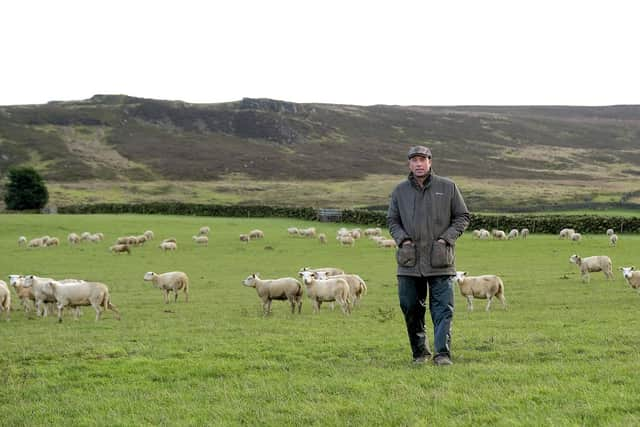
NFU Uplands group North Yorkshire committee member Richard Findlay, who farms a mixed holding in Westerdale in the North York Moors National Park, said he was dismayed the Government had admitted they can’t offer any Sustainable Farming Incentive options for common land. He said: "Nearly all the SSSIs are in upland areas and they are already special and unique and the ill-informed think they need to protect and alter them. You just need to encourage the management that’s created them over the last 50, 60, 80, 100 years and maintain them. They are already unique and special.”
Mr Findlay said bracken control, sheep grazing and heather management had seen the world’s longest continuous area of heather moorland, where he farms in Westerdale, had grown by up to 20 per cent since the 1980s, but that had received “no recognition”.
Mr said: "It’s not possible to damage the North York Moors by over-grazing, under-grazing is the issue, and lack of burning management, which is why we had the fires near Whitby that we did. It really disappoints me that people in Defra, and outside Defra who seem to have a lot of influence on Defra, believe all uplands are damaged. Most of them are in pristine condition, and in Westerdale at this time of year that’s supported by the hundreds, thousands of red listed ground-nesting birds, curlew, golden plover, oystercatchers.
"Defra should be coming and counting these birds and paying me for the habitat that they are all nesting and feeding in. For all my fellow upland farmers in the north of England, the Yorkshire Dales is exactly the same, covered in rare ground-nesting birds because the moors are keepered and there’s predator control.”