
Call to put wildlife prevention on equal footing
A leading member of the Peakland Environmental Farmers group has joined other moorland organisations in calling on the government to give wildfire prevention the same priority as emergency response amid continuing controversy over changes to the rules for controlled burning.

Richard Bailey, who is also coordinator of the Peak District Moorland Group, said a new poll’s finding that the British public favours active moorland management – including controlled burning, cutting and grazing – as a means of reducing wildfire risk over leaving moorland to natural processes, matched what gamekeepers have seen across the English uplands all summer.
The survey of 2,050 UK adults by Opinium Research found 41 per cent prefer controlled burning, cutting and grazing, compared with 32 per cent who favour leaving moorland to natural processes with wildfire risk managed through other means such as firefighting and access restrictions.
Support for moorland management is highest in rural constituencies, where 46 per cent back active management against 29 per cent for natural processes. Urban respondents also preferred management. A quarter say they did not know, which the regional moorland groups say reflects how little the public hears about how moorlands are looked after. The groups say no single approach suits every site: the right mix depends on each moor's vegetation, peat condition and terrain, which is why decisions are best made with the people who know the ground.
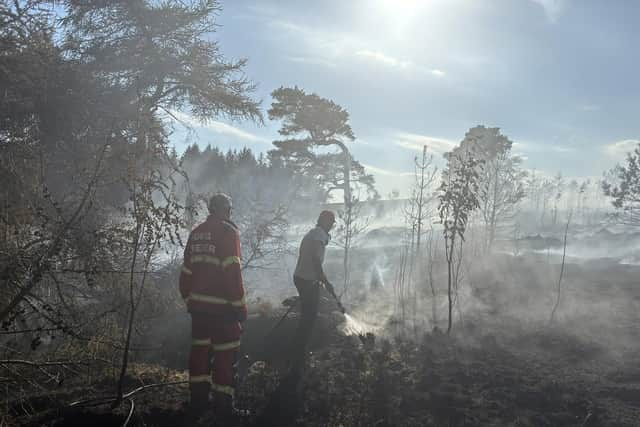

The polling follows a summer of repeated moorland fires. Mr Bailey said: “Fires spread where fuel has built up, and they slow where it's been managed. Grazing, cutting and controlled burning can be the difference between a fire you can fight and one you can't. The public clearly gets it, and it's time the debate caught up with what people who live and work on the moors have known for years.”
However, a Defra spokesperson said: “Burning vegetation on moorland releases harmful smoke that can affect air quality across wide areas, which is why in September 2025 the government extended restrictions on burning, unless under licence, to nearly 700,000 hectares of deep peat.”
Speaking at the Farndale Show on Monday, Thirsk and Malton MP Kevin Hollinrake said, with farming facing numerous pressures, many people in Farndale supplemented their incomes through the game shooting industry. Referring to the extension of deep peat restrictions, the Conservative Party chairman said: “The government is making it more and more difficult for places like this to exist because of what they’re doing to game shooting.”
The NFU has stated the heather burning restrictions undermine upland farmers' work. It has called on Defra to “recognise the local knowledge and understanding of the land that farmers have in evaluating wildfire risk and be receptive of that when granting burning licences”.
The Yorkshire Dales Moorland Group this week reported the first fortnight of the grouse season had been “a fabulous success”. A spokesman said: “Most, if not all, estates have harvestable surpluses, and shoot days have been plentiful with more to come.”