
Chaffinches - the bird that can deliver the song six times a minute and up to 3,000 times a day
This is the time to listen for the first chaffinches singing.

Many begin in the first half of February and some in January, especially if the weather is mild.
The song is a cheerful run of notes getting faster and faster and ending with a flourish known as the cadence,
One ornithologist likened the notes to a cricketer's run up to the wicket with the cadence as the bowling action.
In early spring a chaffinch might need practice but in its prime can deliver the song six times a minute and up to 3,000 times a day.
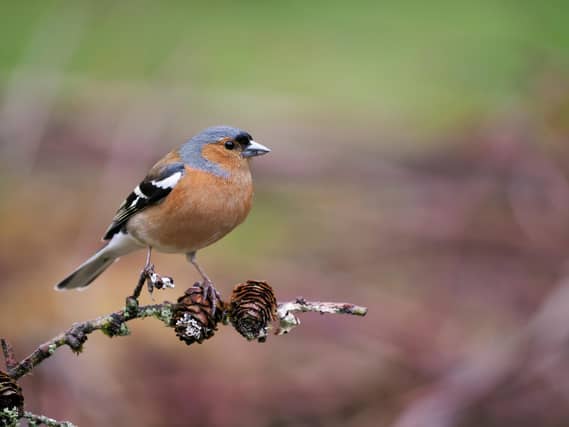
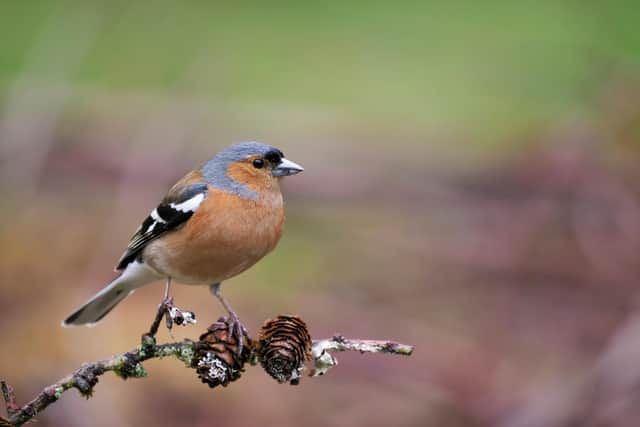
The male chaffinch is also a cheerful looking bird, pink breasted and with two wing bars. His back is a rich chestnut colour, he has a soft bluish crown and the pink breast stretches right down to under the tail.
The females are a much plainer yellowish-brown.
The males don't only sign to announce ownership of their territories, they also fly around the boundaries makng loud pink pink calls.
Chaffinches nest in tall hedgerow trees, building nests made of a cup of moss coated with lichen for camouflage and spiders' webs. Four or five eggs are incubated by the female.
Most British chaffinches stay close to territories throughout the year but in winter the population doubles with the arrival of migrants from Europe.
Most of those come from Norway and Sweden but others from Finland and Russia.
Ringing recoveries have revealed that female chaffinches travel further than the males, the theory being that males stay closer to home as they need to be there earlier in spring than the females to set up their territories.
Also more females than males come to the UK in milder winters and often stay together in all female flocks.
The apparent winter abundance of male chaffinches is reflected in this bird's specific name, coelebs, derived from the Latin for bachelor, as in celibate.
Other sounds of spring have been the first booming bittern tuning up at the St Aidans reserve, Leeds and the loud calls of green woodpeckers.