
'Communication is key' - Why farming and forestry need to support each other
The forestry and farming sectors should support each other more to sustain the communities, landscapes and livelihoods that depend on them, the UK Forest Market Report 2025 has concluded.

While timber felling and timber extraction has become a significant part of Yorkshire’s rural economy, employing some 2,000 people in North Yorkshire alone, it remains subject to conflicts over land use.
Writing in the report, fifth-generation farmer Rebecca Wilson, of Marton cum Grafton, near Boroughbridge, who was named on this year’s The Times Young Power List, said a “push-and-pull between farming, environmental, policy and commercial viability” had exposed a tension over how to decide which land is best suited for food and which for forestry.
She said this tension had been exacerbated as other uses are diminishing the most productive farmland elsewhere.
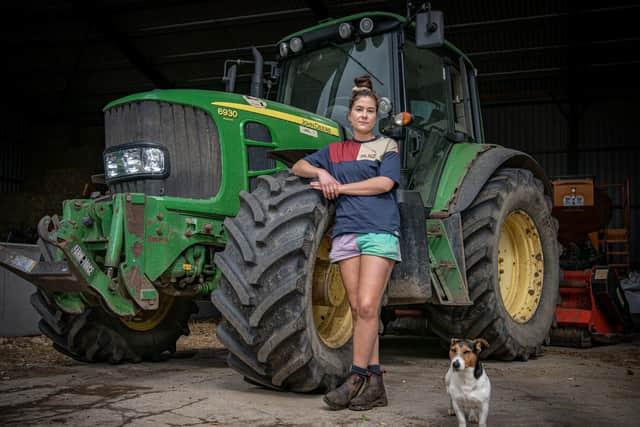

The report by Tilhill Forestry and Goldcrest Land and Forestry Group found communication and collaboration on land use would be key as forestry and farming faced “common uncertainties”, including government policy, product prices and cost inflation.
The report called on “forestry to support farming and farming to support forestry”.
A Tilhill Forestry spokesman said: “Forestry and farming have often been slightly uncomfortable bedfellows in the rural space. Today, there are perhaps more pressing shared challenges than the relatively minor skirmishes between us.”
Questioning where and in what numbers trees should be planted, and what impact their planting would have on the landscape and rural communities, Ms Wilson highlighted how farmers often argue “that forestry situated down the hill poses more challenges for food production and that trees should belong on higher, less productive land”.
She added: “However, regulations can often prohibit this due to policy aims designed to protect wildlife and peatland at a higher elevation.
"Tree planting on lower land may give quicker growth and will potentially be more commercially attractive for forestry companies, but it does raise questions about where the balance is to be struck.
“The relationship between farming and forestry is often described in terms of competition and perhaps even conflict.
“This narrative has, in part, been formed by the ever-growing demands for land both in terms of use categories and area.
"Government policy and misinformation have also had a role to play, as farmers feel that the odds are increasingly stacked against them and their ability to produce food."
She said the Government’s recent Land Use Framework consultation recognised the growing and often competing demands placed on limited amounts of land.
“For farming and forestry to be sitting at a table together is absolutely vital as we go forward,” Ms Wilson said.
“Communication is key. Farmers’ concerns aren’t really being heard. The future of land use in the UK will be defined not by choosing between trees and food, but by finding ways to integrate them.”