
Dales estate trip was ‘best day of one youngster’s life’
Former Yorkshire Dales gamekeeper Darren Chadwick says: “We’ve had children who’ve never seen a cow before”, as scores of pupils march up an old lead smelter track towards their Let's Learn Moor centre for the day. “I had one child high-five me with tears in his eyes saying it was the best day of his life. Even I got a lump in my throat!”


While the initiative has been running in the Dales for a decade, the popularity of the programme Mr Chadwick manages still proves popular with local schools and is well supported by the local community, including Lord Peel, owner of the Grinton Estate which is hosting the latest event.
Let’s Learn Moor is a collaborative educational project, with events facilitated by the Regional Moorland Groups and private estates across northern England and the support of more than 50 partners. The project is overseen by BASC and made possible through BASC’s legacy fund. Mr Chadwick highlighted how only two of the seven organisations involved over the two days represented the gamekeeping profession, and they were focused on explaining fire management and vegetation control.
"There’s no mention of guns, shooting”, he said. “It’s just about managing the habitat and exposing these kids to some of the fundamental things making these moors tick as they do. We know that they are going to go away with something that potentially will stay in their memory for a lifetime and hopefully inspire them to want to look after the moors and invest some of their own passion into it.”
Before tucking into game burgers, comprising pheasant or venison, for lunch, the children experience aspects of the moorlands such as meeting Reeth Young Farmers members to hear about sheep farming or seeing Richmond Beekeeping Association apiarists working with the insects.
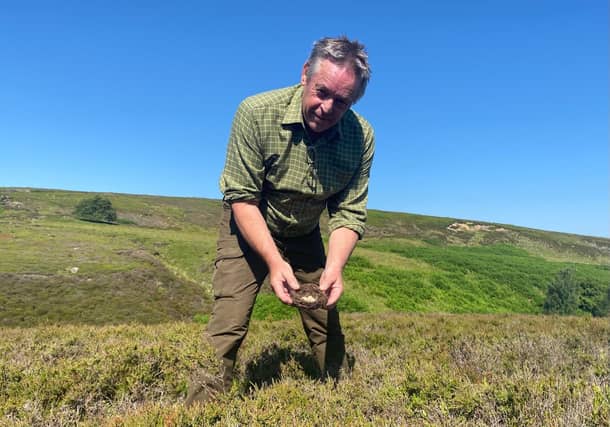
Many of the activities are immersive, such as searching for replica birds nests and fake eggs in the heather, to illustrate the vulnerability of some species and how easy it is to stand on them and the measures that have to be taken to protect red-listed birds such as curlew. Mr Chadwick said: “We believe in telling the kids how it is. Sometimes you have to take a life to save a life.”
The event also included a taxidermy display of the birds gamekeepers in the area are working to protect, including little owl, short-eared owl and the curlew, 43 per cent of the national breeding population of which is in the Yorkshire Dales.
Overseeing the display were two local gamekeepers, who had taken a day off mending roads and putting up butts on their estates to volunteer at the event, said they were there to help dispel myths about moorland management.
“We’re not cruel people because we help all these birds thrive because of the vermin that we control, the stoats and polecats”, said one, who asked for his name to be withheld. “We might remove a couple of hundred, but the next year there will be another couple of hundred. We’re not wiping a species out from the Dales, we’re controlling it so everything else has a chance.
"If it wasn’t for us over the last 30 years this whole area of heather that we are in would have been bracken.”
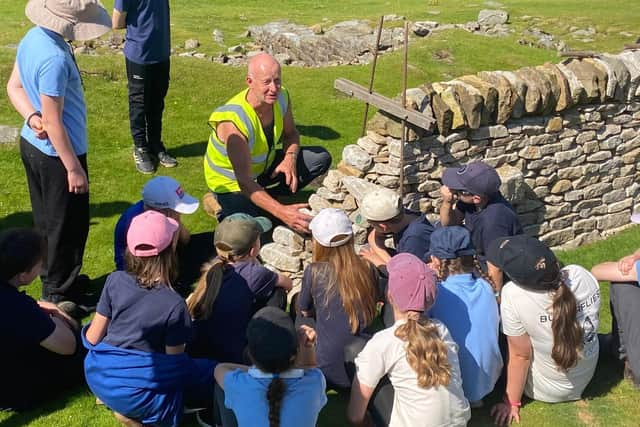
Other activities included helping Swaledale Mountain Rescue stretcher people off a hillside or building mini drystone walls under the supervision of expert drystone waller Rod Marsh. He explained to the children how there is an estimated 8.8 million tonnes of stone walls in the Yorkshire Dales, involving horses carrying many millions of loads.
"What keeps me in a job rebuilding walls”, Mr Marsh tells a group of Year Five children from Leyburn, “is that over 80 or 100 years walls built on wet ground have foundation stone that sink and spread out sideways until the middle falls in.
“Then there’s sheep who keep jumping over and back and then five others go with them. In the summertime when the cows are out in the field if the cows have an itchy bum they rub it on the wall and the next thing you know the wall’s on the floor!”
Another activity involves a gamekeeper allowing children to fire the launcher used in gundog training to simulate flushed game and demonstrating dogs’ retrieval abilities. When the dog he has trained to appear naughty lets things go awry, the children find it hilarious.
Mr Chadwick said: “A large proportion of it is to emphasise the importance of keeping dogs on leads during breeding season. We are promoting responsible use of the landscape and showing how and why it is managed in a particular way.”