
Dales group's remarkable milestone in conservation of red listed curlews
A group dedicated to highlighting “the positive environmental, conservation, economic and social benefits of managed moorlands” has announced a UK conservation first.

After overseeing a remarkable revival in the Dales for curlews, one of the UK's most rapidly declining breeding birds due to changes in land use, the Yorkshire Dales Moorland Group (YDMG) has undertaken the first export of live wild birds eggs from the country, which required a unique export health certificate created specifically for the project.
The ambition was to place Eurasian curlews into the Irish landscape to stabilise populations across the country.
Declines of around 97 per cent have been recorded over the last three decades, reducing the population to dangerously low levels.
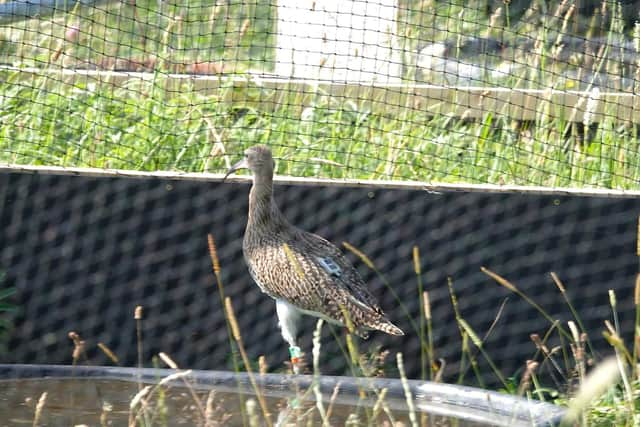

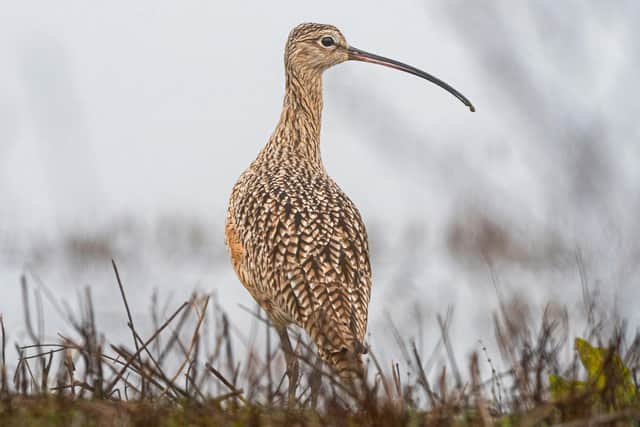
Eurasian curlews have been added to the UK Conservation Status Report’s Red List - the highest conservation priority, with included species needing urgent action.
Darren Chadwick, a former gamekeeper and coordinator of YDMG, said it was clear without interventions the symbolic wader could become extinct as a breeding bird in most of the Irish counties.
YDMG, whose members include more than 20 estates covering vast swathes of the national park, was established in 2015 to show how “habitats are optimised for ground-nesting birds through a combination of rotational burning and cutting, predator management, nest protection, disturbance reduction and working partnerships with upland farmers”.
Mr Chadwick said: “Here in the keepered uplands of the Yorkshire Dales the curlew is abundant and plentiful."
While YDMG has previously worked to increase curlew populations around the country, a licence has now been granted by Natural England to harvest 40 curlew eggs per annum for five years for transfer to Ireland for a headstarting project with Breeding Waders (BW).
Headstarting is a conservation technique where wild animal eggs or vulnerable young are collected, raised in captivity through their most vulnerable stages, and released back into the wild.
Mr Chadwick said: “Headstarting is not a long term solution to curlew declines.
"What it does provide is a medium to longer term bridge preventing localised extinctions whilst solutions are sought to address thee challenges facing this much-loved wader.
“Managed uplands in the Yorkshire Dales provide specialised habitats for many rare and red listed species.
"Their productivity and sanctuary have enabled this project to become a reality and it is with great pride that our moorland keepers and estates have been able to assist this hugely significant curlew conservation project.”
Crucially, the eggs have been sourced from vulnerable nests in the Dales, which are then incubated in specialised facilities until close to hatch before being collected by BW staff for onward delivery to Dublin zoo for hatching and rearing.
Of the 40 eggs transferred to Ireland, an incredible 39 were viable and 38 hatched successfully. Some 36 were reared to the fledging stage, which Mr Chadwick described as “a significant achievement”, before highlighting how the success rate had exceeded the typical fledging rates in wild curlews.
This week saw the release of some of these curlews in Ireland and four of the YDMG team were present to witness what Mr Chadwick described as a “milestone moment in the history of curlew conservation”.
He said: “It was an emotional experience seeing these iconic birds venture out of their temporary aviaries having spent time acclimatising to their new environment.”
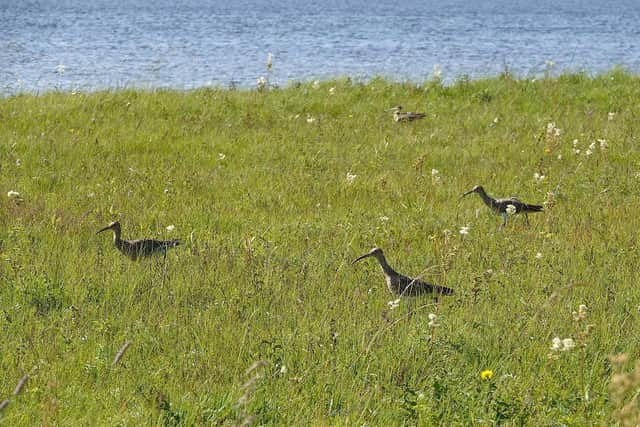
The release site is a predator-free island on Lough Ree in the Irish midlands. With its wildflower-rich meadows and waterside setting it provides and excellent first stage site before the birds naturally disperse and assimilate with other curlews in the area and beyond.
Birds are fitted with coloured rings along with GPS tags to monitor their fortunes.
The five-year project also includes the scientific evaluation of clutch replacement in breeding curlews.
Adult birds were tagged this year in the Dales by the YDMG partners, the Game and Wildlife Conservation Trust.
The research will measure the incidence of clutch replacement in the species resulting from egg loss through predation or other causes.
Mr Chadwick said: "This is a groundbreaking conservation project and could not only provide important scientific data, but potentially help recover Irish curlew populations in the decades to come.”
sasadasd