
Farm on the M62: Stress and joys at lambing time - Jill Thorp
March has finally arrived and with it some milder weather leaving us all giddy with the joy of spring. Bulbs that have lay dormant all winter are pushing up through the soil, trees are in full bud whilst hedgerows are slowly but surely coming back to life. The little guy likes to point out that the days are lengthening which means more time spent outside on his bike or walking the dogs.
It’s such a wonderful positive time of year, so much promise and hope rests on the blossom of every tree, every daffodil that unfurls it’s cheery petals and every snowdrop that carpets the very ground beneath our feet. Whilst the official first day of spring is still several weeks off, you can taste it in the air. The heavy cloak of winter is slowly and cautiously being cast off as the long awaited rays of sunshine push through the dark clouds of January and February.
Our Leicester girls are due anytime, their heaving sides and bulging bags keeping us on high alert as we endlessly check them for signs of lambing. We’ve had a couple of scares with two of our best shearlings succumbing to twin lamb disease. Separate from the rest of flock, the first one stood helplessly at the back of the shed. Head low and her ears down flat which is always a bad sign in sheep. She’d no interest in eating, not even when the feed troughs were filled. I didn’t hold out much hope for her, she looked so utterly wretched, but much to our surprise within an hour she had perked up. The second one we caught sooner and after a high energy drench she was back filling her face with hay. The relief is overwhelming when you manage to pull them back from the brink.
They are both first time lambers and were part of last year’s show team. Suzie, one of our favourites, had given the little guy his first taste of success in the show ring, coming away with endless rosettes both when shown as a lamb and then a shearling. To lose her would have been a terrible blow and huge loss to my small flock. Thankfully on this occasion things turned out well. The last four weeks of pregnancy throws all manner of worries and problems at a shepherd. Seventy percent of the lambs growth happens in this last stage putting the ewes under huge stress.
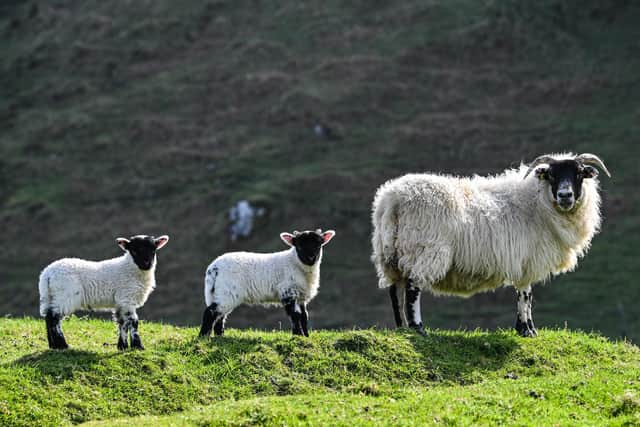

Diet and flock management is absolutely crucial to ensure the ewes are fully supported nutritionally otherwise you put both her and her unborn lambs at risk. Ovine pregnancy toxaemia, the correct term for twin lamb disease happens when lambs, usually multiples take more energy from the ewe than what she can take in. There’s several causes, a change in diet or poor quality forage being the primary ones. In some causes, however, despite the very best of feed and mineral supplements, they still come down with it. An injection of calcium can also be administered but this comes with it’s own risks. On this occasion the glucose drench was successful and both ewes came round much to my immense relief. School becomes a huge hindrance at this time of year, when the absolute joy of watching or assisting that first lamb into the world takes precedence over anything the classroom has to offer.