
Farmer’s joy over Farming in Protected Landscapes funding
A first-generation upland hill farmer, who credits the transformation of his enterprise to the government's Farming in Protected Landscapes (FiPL) programme, has spoken of his delight as it was announced a total of £1.75m would be pumped into the programme this year across the Yorkshire Dales alone.

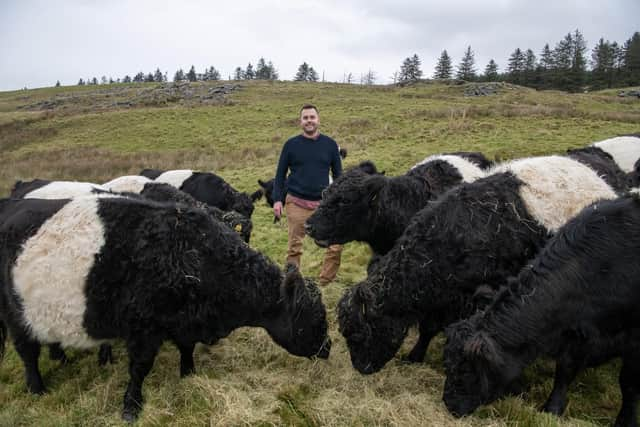
James Newhouse who produces Belted Galloway cattle and Swaledale and Herdwick sheep on Meg’s Farm in Long Preston underlined that the grants and bespoke advice offered under the scheme gave farmers a rare opportunity to secure their enterprises.
He was speaking after the Yorkshire Dales National Park Authority agreed funding for the FiPL programme for a further three years and approved an action plan featuring farm conservation. The plan’s first priority is to support farmers and landowners to restore or create 500 hectares of new wildlife-rich habitats outside protected sites by 2030.
Other parts of the plan include working with farmers, landowners to improve the condition of rivers – including significantly reducing diffuse pollution, from farming through the Catchment Sensitive Farming programme.

Another priority is to work with farmers and landowners to encourage creation of 600ha of native broadleaf and mixed woodland, including, scrub, wood pasture and natural regeneration by 2031, to create a network that increases resilience to climate change and reduce downstream flood peaks.
The authority said it would work with partners to submit a bid for an upland farm advice ‘Pathfinder’; and establish a programme to support take up of regenerative farming practices.
A meeting at the authority’s Wensleydale headquarters also saw support for new programmes to support farmers and land managers across at least 40 farm holdings to adopt sustainable and regenerative farming practices that can help make farms profitable while protecting the landscape.
The authority’s members also approved investment to create and extend important, wildlife-rich habitats and support species recovery, including expanding native woodland and hedgerows.
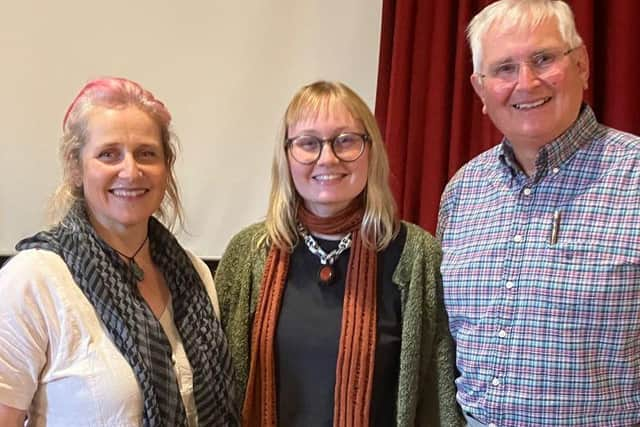
Derek Twine, the authority’s chair, said: “By backing farmers and land managers to lead nature recovery while improving opportunities for people to enjoy the national park, we can help ensure the Yorkshire Dales remains a thriving and inspiring place for generations to come.
"This wide-ranging programme shows our commitment to supporting the people who live, work and visit here, with practical projects that strengthen communities, improve access and care for this special landscape.
“The Government’s new three-year financial settlement provides welcome stability, and - alongside continued capital investment - gives us the confidence to plan ahead and deliver real, long-term impact.”
Mr Newhouse eally important” for the farms of the national park.
He said with the latest round of FiPL funding having being geared towards capital projects, he had invested in machinery to help diversify his enterprise.
Mr Newhouse said: “FiPL is brilliant because it gives farmers the opportunity to invest in things that are going to make the farm more productive, probably more sustainable, secure. Things that you normally wouldn’t do, you will do.
“It’s a very good process where you actually get the land managers to come out to the farm, go through it all with you discuss the best way forward and then help you to put it in place, with them making sure it fits the targets for the programme.”