
'Farms must come first in queue for water during droughts'
Farms should be given legal priority over water during periods of drought to improve and ensure the UK’s food security, Baroness McIntosh of Pickering has said.

The Conservative peer, who chaired the Environment, Food and Rural Affairs Select Committee, was speaking after an inquiry by the House of Lords’ Environment and Climate Change Committee she sits on recommended a swathe of measures to improve resilience to flooding and droughts.
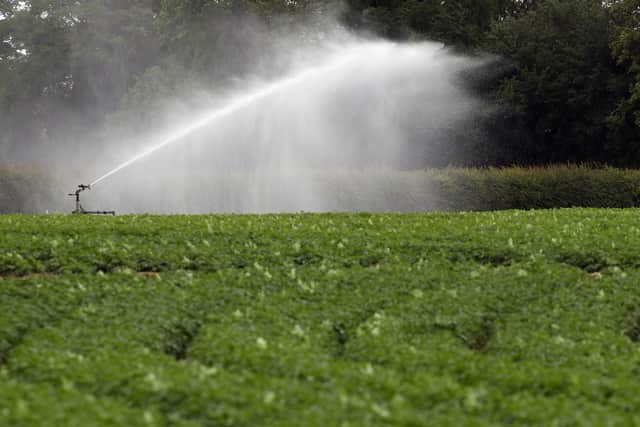
While Yorkshire remained in drought status for seven months of last year, arable farmers from the region emphasised how produce such as carrots are mostly water and when their abstraction licence limit from the Environment Agency was reached their crops would suffer.
Last year’s drought cost arable farmers across the country an estimated £828m revenues and the inquiry heard the Environment Agency warn by 2055, daily public water demand could exceed supply by five billion litres – equivalent to 2,000 Olympic swimming pools every day.

It recommended stepping up work with farmers and landowners on nature-based solutions, such as restoring wetlands and reforesting catchments, as they can enhance water retention, restore ecosystems and build resilience against both droughts and floods.
The inquiry found most agricultural businesses are not formally engaged in drought planning processes and called on the Government to conduct a full environmental and economic assessment of drought. Following its recommendations, such as increasing water retention on farms, the Government is under pressure to consider measures including permitting small on-farm reservoirs and testing soil regularly.
While not among the committee's recommendations, which also includes a call for local drainage boards to be given responsibility for water resource management, Baroness McIntosh said given the urgency of the situation, she was optimistic the Government would introduce legislation to prioritise farms for water in the forthcoming Water Bill.
She said: “Farmers are feeling very vulnerable. I'm acutely aware that in Yorkshire, and particularly North Yorkshire, we've had both major floods and major droughts. Last year one of the issues with the wildfires was access to water to put the fires out. If abstraction is going to be an issue we ought have a drought plan that farmers could be involved in.”
She rejected a suggestion different types of farming could be given different priorities, saying people needed a balanced diet and the country had to improve its overall food self-sufficiency.
Baroness McIntosh said: "We're only producing 16 per cent of own fruit and 62 per cent overall for fruit and vegetables. When there is an excess of water we should be looking at every possible means of retaining it to prevent a drought. Farmers want to play a role, but they've got to be reimbursed for it, so the Government has to make sure that under the new environmental schemes coming forward if farmers are not going to get direct payments let them retain water on the land."