
Fears for wheat farmers as plea issued over threatened bioethanol plant

The NFU is pressing the government to urgently support the UK’s biofuels sector, after the Vivergo bioethanol plant in Hull ceased taking wheat deliveries.
The NFU said the potential complete closure of one of the UK’s two bioethanol plants raised serious concerns for arable growers in Yorkshire and Lincolnshire and the wider biofuels sector.
Vivergo’s owners AB Foods said the UK's largest bioethanol plant, at Saltend, is in doubt following a government agreement with the US to abandon a 19 per cent tariff on US imports of the fuel as part of the recent UK-US trade deal.
Managers at the plant are also are calling on ministers for assistance, in the form of financial help, warning production at the plant could stop in just over a month.
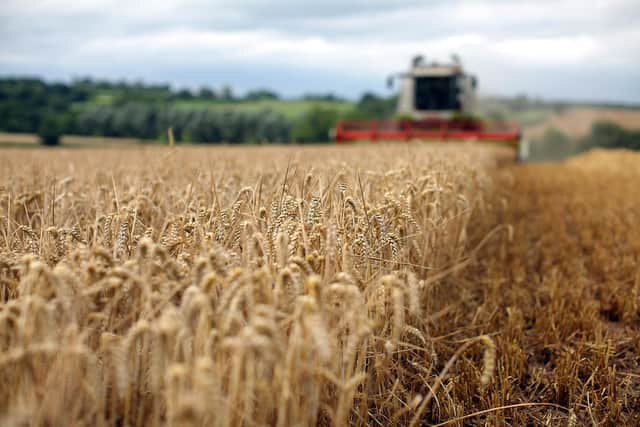

The plant has come to be regarded as a foundation of the UK’s renewable fuel sector and has taken more than one million tonnes of wheat annually from more than 4,000 UK farms. In addition, the facility also produces important co-products, such as high-protein animal feed.
It has been forecast some 4,500 jobs in the supply chain could be impacted by Vivergo closing, and in particular the farmers who grow the wheat.
Managing director Ben Hackett has written to wheat growers warning the plant could only honour existing contracts for wheat purchases while the uncertainty continued.
Mr Hackett said: "We have the site, the skills, the supply chain and the ambition to lead the way on sustainable aviation fuel.

"But without urgent government support for British bioethanol, the UK risks losing that opportunity, along with the jobs and billions of pounds in investment that depend on it."
The government has stated it is holding talks with Vivergo “to find a way forward”.
As farmers are being faced with unpredictable markets and small margins, the NFU is pressing Keir Starmer’s administration to help ensure UK-grown grain has a viable future beyond feed markets, and assurances that the bioethanol sector will form a key plank of Britain’s green energy revolution.
NFU Combinable Crops Board Chair Jamie Burrows said the abrupt suspension of operations at Vivergo threatened to destabilise what was an already volatile market.
“Not only are there huge implications for those growers that currently supply Vivergo, but this also has the potential to put further downward pressures on farmgate prices at a time when our arable farmers are already facing huge challenges including extreme weather and ongoing market volatility.”
Mr Burrows said the closure emphasised the urgent need for government to support the domestic biofuels industry by enabling increased use of crop-based biofuels in transport and aviation.
“In order to open up further market opportunities to incentivise UK wheat being used by UK biofuel plants, the NFU is calling for government to allow more biofuels from crops to be used in road transport and aviation.”
Meanwhile, it has emerged this week that a green jet fuel investment worth £1.25bn could be put in jeopardy if the plant is forced to close.
Chris Smith. the chief executive of Meld Energy, which signed an agreement with Vivergo Fuels earlier this year for a Sustainable Aviation Fuel facility at Saltend, said that without Vivergo at the site they may have to look overseas. Referring to the deal, he said: ""A bioethanol plant on site at Saltend is a critical part of that mix.”