
Gordale Scar Upper Fall: The jewel in the crown of the Yorkshire Dales which was visited by Charles Darwin
While custodians of the Yorkshire Dales have heralded Gordale Scar among the national park’s “jewels in the crown”, others have nominated it as being “perhaps the finest inland combination of rock and water in the British Isles”.
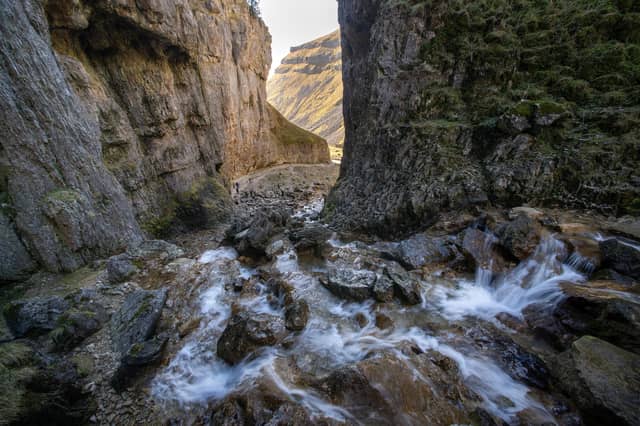

The carboniferous limestone scar, or cliff, was was cut by glacial meltwaters at the end of the Pleistocene Period, the most recent Ice Age.
It is believed the collapse of several caves has increased the depth of the ravine, which sits on the northern edge of the Craven Fault.
The gorge, which has a double waterfall at its head, is counted among the main features indicating underlying geological structures which define the Pennines and Yorkshire Dales.
To reach the upper waterfall, visitors must scramble past the lower waterfall.
The natural feature has attracted droves of tourists for centuries, including Romantic painters of the early 19th century and naturalist Charles Darwin, who is said to have visited Gordale Scar while studying the impact of sheep grazing on heather at the nearby Malham Tarn estate.