
Government announces review of policy on reservoirs to help farmers facing floods and droughts
An environment minister has announced the Government is reviewing its reservoirs policy amid mounting concerns that red tape is hampering farmers wanting to mitigate the impact of, and adapt to, heavy rainfall and droughts.

Speaking in the House of Lords, Baroness Hayman of Ullock said the Government needed to consider how to best make use of available water and future water storage needs in response to a question from Baroness McIntosh of Pickering, who served as MP for Thirsk and Malton from 2010 to 2015, having been the MP for Vale of York from 1997.
During a debate on changing weather patterns and floods, the Conservative peer highlighted issues that farmers have raised over their ability to store water on farmland, which she said could breach the de minimis rule of the Reservoirs Act 1975. Baroness McIntosh said: “Will she learn from Pickering’s Slowing the Flow and the work in Hull to use sustainable drains to store the water at source and save it for use in times of drought?”
Baroness Hayman said the Government wanted to focus efforts on actions that have multiple benefits. She added: “I am sure that, in referring to Hull, she is aware that the Minister for Water is a Hull MP and so is very aware of these issues. We are currently looking at our reservoir policy, because we need to consider how best to make use of the water that we have, future water storage needs and so on.”
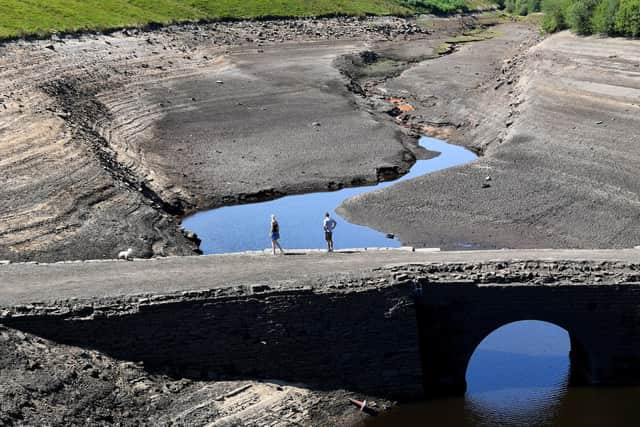

For farm storage and on-farm reservoirs, the threshold is set at 25,000 cubic metres of water stored above the natural level of the surrounding land. The development of more and higher capacity on-farm reservoirs is seen as a key requirement for many farm businesses in order to make food production more sustainable under conditions of drought or reduced water availability.
The debate heard agricultural land covers 70 per cent of the UK’s land area, meaning that the countryside is where most capacity for holding water rests. Peers said with heavier rainfall becoming more frequent, small-scale on-farm reservoirs could reduce downstream flooding and improve resilience and that farmers are willing to do that work, but need clear incentives and a stable funding framework.
However, development of on-farm reservoirs requires planning consent, an abstraction licence from the Environment Agency if it is being supplied with more than 20 m3 of water per day from ground or surface water sources. Further hurdles facing farmers include an absence of supporting schemes for investment in on-farm reservoirs.
At last year’s NFU water summit in West Yorkshire, Alan Lovell, chair of the Environment Agency, suggested changes to capital allowances for tax could enable reservoir investment to be more cost effective for these projects. An overriding message from attendees at the summit was the need for urgent investment in water infrastructure – as well as access to robust data and better planning systems that supports necessary infrastructure improvements on farms for slurry storage and on farm reservoirs.
As such, the NFU has recommended the area of permitted development for an on-farm reservoir be increased from one hectare and that planning authorities learn from best practice and are resourced to get surveys undertaken swiftly.