
Great Yorkshire Show: Rain doesn't dampen spirits as crowds flock for 165th show
The show must go on, so the saying goes, and it certainly did as the 165th Great Yorkshire Show got underway despite torrential rain.
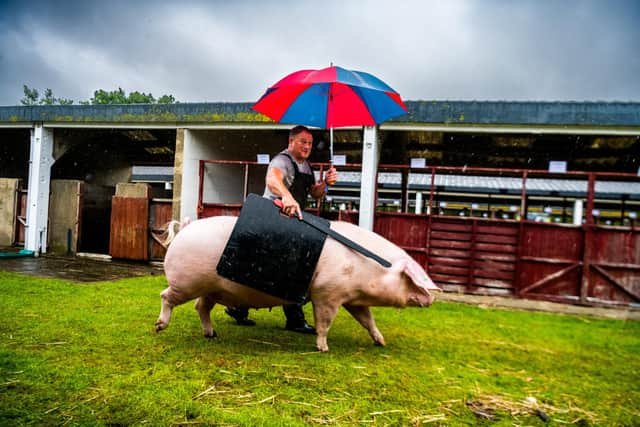
They donned some Yorkshire grit – as well as wellies and umbrellas – and poured through the gates early yesterday morning.
Charles Mills, who takes his role as show director for the last time this year, said: “The ground conditions are excellent, yes the weather is wet but people are resilient," he said. "We get a coat; we get on with it."From a farming perspective, this is some of the best livestock from anywhere in the country. Some of the biggest machines, the most wonderful displays of food."The show is a great place to come and meet old friends, people you might not see the other 12 months of the year."This annual farming event, the biggest agricultural showcase of its kind, is a celebration of industry excellence with hotly contested awards and exhibitions on a national scale.But it also provides a heavyweight political platform for key industry players intent on preserving and protecting this British scion of society.Among major conferences opening the show were from the National Farmers' Union (NFU), Country Land and Business Association (CLA).With a new Government, now is the time to pitch priorities, and the NFU was among those to firmly set out its stall.Farming and the sector contributes £2.4bn to Yorkshire's economy with rural tourism providing more than 30,000 jobs countywide, the NFU said.President Tom Bradshaw, in conference with Grow Yorkshire chair Madge Moore and Farm Stay regional director for the region, said we are at a "pivotal point" in politics.Agriculture is "hugely valuable" to Yorkshire's economy, he said, yet is too often "overlooked and taken for granted".It was crucial that this value was recognised and understood, he added, if the Government is to align its political actions with economic growth.Members spoke of building on 'brand Yorkshire' to attract tourism growth around food and farming, and a need for a period of stability with Mr Bradshaw adding he'd quite like a bit of "boring"."Economic growth can only be delivered if we have a thriving farming sector," he said. "I'd like a period of stability."And speaking to The Yorkshire Post afterwards, he added: "Nobody should overlook the value of food and farming to the Yorkshire economy."Mr Bradshaw spoke of challenges with transition payments for upland farmers, which he raised with the Secretary of State in a meeting on Monday, and welcomed a commitment in Labour's manifesto to build on food security. Urgent clarity is needed on budgets for agriculture, he added, to drive the confidence the industry needs."They need to find a way to match the ambition the farming industry has," added Mr Bradshaw.To Mr Mills such debates are essential to the industry.Organisations such as the NFU, CLA and Tenant Farmers' Association (TFA) are "so important" as the sector's political voice,"We rely on them to speak for the sector," he added. "We need to keep our finger on the pulse, especially when we have a change of government."It's important the politicians listen."
His sentiments were echoed by Victoria Vyvyan, the president of the CLA.

She told its members that there was nervousness following the change of government control for the first time in 14 years.
"The last time a Conservative government handed over to Labour, the first Harry Potter book had just been published, I did not have my full family of five and Steve Jobs had been taken on in an interim company called Apple.
"We need planning and consistency. We will be, with the NFU, lobbying for them to say what the budget for agriculture will be for the next parliament.”
The CLA’s panel featured Andrew Loftus, a livestock farmer and the AHDB chair for beef and lamb; Sally Ormiston, head of consulting at Rural Solutions and James Pavey, head of Rural Business and Estates at Irwin Mitchell.
It covered concerns over the possibility of farmers having to reduce livestock numbers or be taxed and how relaxations in planning laws will help farmers develop more secure and viable businesses.