
Harthill: The historic Yorkshire village which is fiercely proud of its independence
Just over a stone's throw from one of the busiest stretches of the M1 as it passes Woodall Service Station, Harthill lays claim to being the most southerly village in Yorkshire.

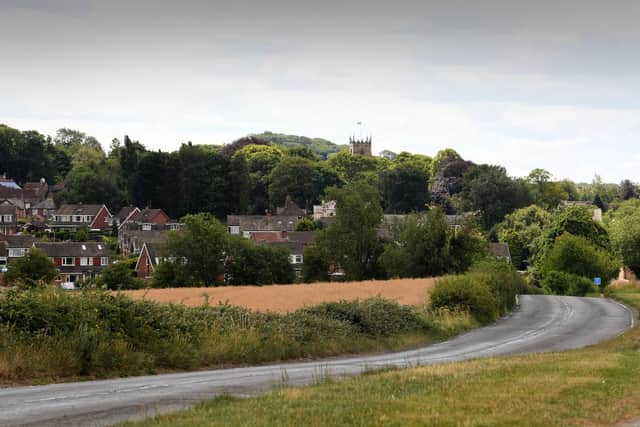
At about 110 metres above sea level, Harthill offers views across a sea of arable farmland, with the exception of Harthill Reservoir to the village's south-east.
The 33-acre reservoir, a popular fishing destination, stocked with carp, bream, roach and pike, as well as an open water swimming spot, was built in 1796 to supply and act as the water reserve for the 46-mile Chesterfield Canal.
It's also home to Rotherham Sailing Club, which has recently relaunched its Sunday and mid-week sailing sessions following a two-year hiatus as the body of water was emptied for the dam to be renovated.

There are four walks around the beauty spot which are particularly popular with local dog walkers and those seeking tranquility.
In the village evidence of the village's agricultural origins is never far away, such as mid to late-18th century farmhouses and a late 17th century threshing barn on Union Street.
There's precious little metropolitan about the Rotherham Metropolitan Borough settlement, so much so its parish council describes it as "a very self-contained village with two pubs and small parade of shops...".
Harthill boasts facilities other villages would be jealous of. There's both a GP surgery and a leisure centre. It also has a primary school which had its early years provision rated as outstanding by Ofsted in October.
However, increasing traffic and parking issues in the village centre has led to plans being approved to introduce double yellow lines - extending parking restrictions in the village - along Union Street, Hard Lane, Thorpe Road and Woodall Lane.
Moreover, following widespread concern in the village over plans to site a Harmony Energy battery storage facility on Hard Lane, north of the village, and the scaled-back but still large-scale Whitestone Solar Farm proposal nearby, community leaders have sounded the alarm, saying the replacement of the Green Belt by 'Grey Belt' in Harthill's hinterland is unacceptable.
Residents say they feel disenfranchised by the planning process as the Whitestone scheme is classified as a Nationally Significant Infrastructure Project, meaning the Bristol-based Planning Inspectorate will issue a decision based on National Planning Policy, with even Rotherham council relegated to the role of a consultee.
While the outcomes of the energy schemes are awaited, the intensity of feeling about conserving the village's rurality and heritage was reflected In villagers' delight over a decision to abandon plans for new homes near the reservoir earlier this year, following claims the development would threaten the lives of protected species such as crested newts and adders.
This environmental pride has seen Harthill invited to compete for the Yorkshire in Bloom Golden Rose Award, having previously bagged a Five Roses accolade.
Harthill's residents can proudly trace their history back to the Bronze Age.
Harthill with Woodall Archaeology Group three recent campaigns of archaeological investigations on farmland located on the outskirts of the village identified prehistoric features such as barrows, or earthen funerary monuments, dating from around 3000 BC.
Collectively, the monuments form part of a barrow cemetery or funerary complex of significant national archaeological interest.
Roman remnants have been unearthed in the area and it is thought possible it formed part a key route for centuries before the construction of the Church of All Hallows, which stands dominating an area of Union Street.
The place of worship dates to around 1200 and those who've added to it since have Florentine influences. The carved pulpit, lectern and screen is by Carlo Scarselli, while the south window is by Ulisse de Matteis, both of the Tuscan city.
Monuments in the church include a white marble tomb chest to Thomas Osborne, Duke of Leeds, who was Charles II's chief minister, the leading government figure for five years, in the mid-1670s before being impeached for treasonable communications with the French and imprisoned in the Tower of London.
Another historic property and community venue off Union Street is the restored 18th century Old Schoolroom, the foundation stone of which was laid in 1721, which overlooks the leafy churchyard.
Harthill's sense of independence is underlined by the array of cultural and sporting groups its 2,000-odd residents enjoy, such as the Harthill Tea Day Social Club, which aims to tackle isolation and loneliness, offering free transport to members.
The community-minded club, established in 1951, hosts regular tea days and buffet teas at the Village Hall while members are iassisted with Blue Badge applications, passport renewals and referrals for council, NHS and welfare support.
Other groups which use the Village Hall on Union Street, the village's main thoroughfare, include The Beehive Folk Club, which has been attracting of the genre's top performers over four decades.
Further along Union Street, a Portland stone war memorial stands in front of the high rectory wall to honour the 14 men from the village killed in the world wars, In May, the village's well-attended VE Day celebrations saw activities, including performances by Harthill Voices and Harthill Morris, centred around All Hallows Church and The Beehive Pub.
This year also marks the 70th anniversary of Harthill with Woodall Women’s Institute, which meets in the Blue Bell Inn near the church. The group is set to hold an event in October to celebrate the history of the village.