
Horse welfare campaigner Amanda Stoddart-West urges shows to take on Suitably Mounted stewards
The issue of horse welfare in equestrian sports has risen in the public’s conscience, but following double Olympic dressage champion Charlotte Dujardin’s withdrawal from the event Paris last summer, demand to demonstrate compassion has grown.

Leading horse welfare campaigner Amanda Stoddart-West, who has helped oversee numerous welfare-related improvements at the Great Yorkshire Show, where she works as its livestock and entries Coordinator, said the video clips of the dressage star excessively whipping a horse had triggered a wave of concern.
She said: "When it came to light, there were people lunging their horse in the field with a lunge line and lunging whip and people were stopping in their cars and shouting at people for lungeing. The public have really strong feelings about it now and we have to tidy up our act.
“I think the majority of people certainly seem to love their animals, they just forget sometimes what’s happening around them, who’s got their mobile phone at the ready, and maybe it’s just a snapshot in time, but everybody’s going to judge you on that snapshot. Overall, everybody’s going in the right direction, but there’ll always be a few people who shouldn’t have animals.”
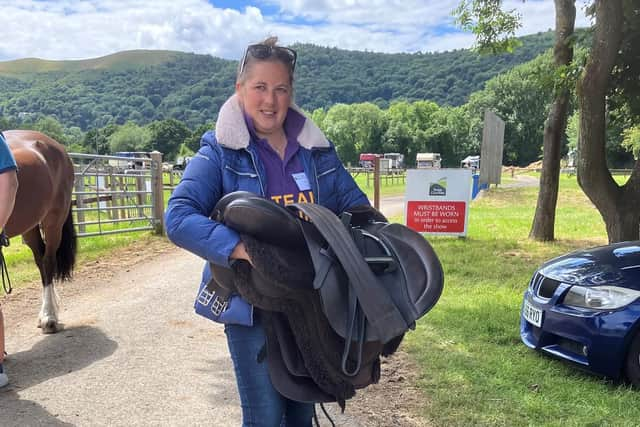

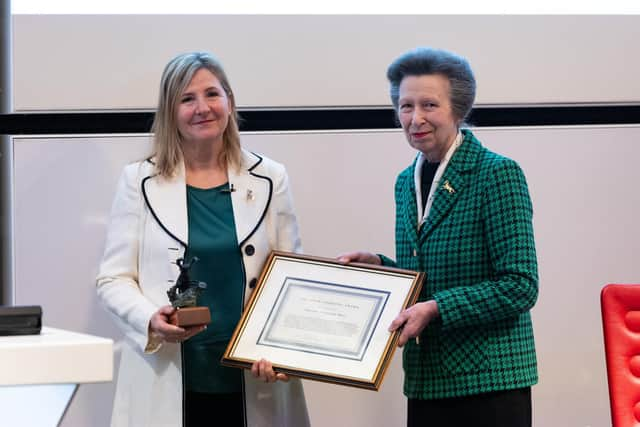
Amanda is well qualified to comment, having recently been presented with the National Equine Forum’s Sir Colin Spedding Award by Princess Anne in recognition of her pioneering equine welfare initiatives, such as those implemented at the Yorkshire Agricultural Society event. One of the changes has seen the Harrogate-based rural showcase enforcing a rule that horses and ponies must not carry more than 20 per cent of their body weight.
"We’re all a lot bigger than we used to be", said Amanda. “There’s an awful lot of people whio consider the mountain and moorland or the cob-type animal of being to carry anything. Quite often ponies and horses of all types are overweight and I don’t think people realise the animal struggles with its own weight before having a rider who’s possibly too big. It’s double whammy for some animals. People weigh themselves first thing in the morning with no clothes on, no boots, hat or body protector and are not taking into account how much all that stuff weighs, or maybe considering the horse’s age as well as changes in its rider’s physique over time.”
Amanda added while the introduction of scales at some events for riders to voluntarily weigh themselves was a "positive way forward”, she more shows were wanting to be seen to be doing the right thing for the horse. She said: “I’ve been at a couple of shows where we’ve instigated ‘suitably mounted’ awards. Those people who are really good combinations are being praised for that and hopefully that sends out the right signal to everybody else.”
She said while there was plenty of available information about healthy body weights, for both people and horses, it remained “quite an issue” in the sport, so the Suitably Mounted Group had been set up to tackle concerns in a positive way. While working as a welfare steward at the Royal Three Counties Show in Malvern, Amanda asked 12 riders to dismount after they were deemed too big for their animals. Some riders had to be asked to dismount more than once. She said: “Most of the people who were asked to dismount at that show were professionals. They just see it as they’re doing their job. That’s perhaps the hardest sector to go with the change. A lot of them will have done it forever, but that doesn’t make it right. We used to send children down the mines."
Some 50 Suitably Mounted volunteers, including vets and saddle-fitters, have now undertaken British Horse Society training covering topics, such as how to correctly fat-score and motivational interviewing, and last year covered 14 events to offer support to riders. A BHS spokesperson said: “With the ever-increasing spotlight on social licence to operate, and to help facilitate this support at equine competitions, we are pleased to have been given the opportunity to provide training to the volunteers who wish to fulfil the role of welfare steward.”
Amanda said the move had already made a significant impact on riders’ behaviour and urged shows to contact her to book welfare stewards, who would look at every aspect of equine welfare. She added: “The shows have to look after their own reputation. We were seeing about 13 a day asked to dismount, now there are very few. People are getting used to the idea that certain events they do look at these things. I would say to any event that has concerns, ask us to come along and we will be there as a support for the show, look after the welfare of the animals and hopefully be supportive to the exhibitors.”
sadads