
How I helped a horse called Trevor's legacy live on - Julian Norton
In his heyday, Trevor had been a superb stud, fathering several of the most handsome litters in the country.
But, like many older gents, his prostate was fizzling out and repeated bouts of illness, with only partially successful medical treatments, meant that he had to be neutered.
Whilst this procedure would be life-saving, it would clearly scupper any chances of one final fling. Or so we had thought.
After some detailed investigation, Angela, his owner, had discovered a way for Trevor’s genetic legacy to live on, while still saving his prostate from age and hormone-related illness.
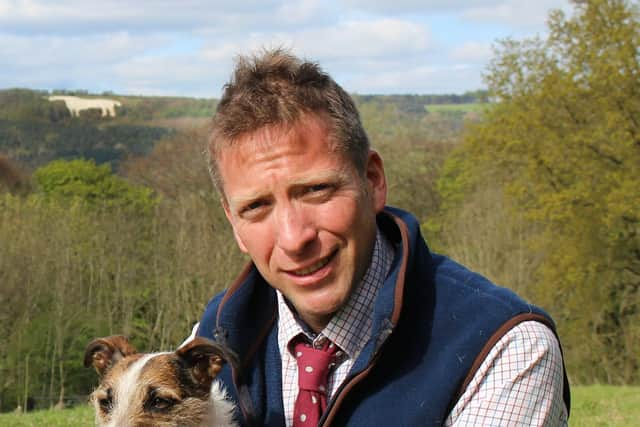

Angela explained the plan, which had been devised by a canine fertility expert who practised in Yorkshire, not too far away from the Thirsk.
It left us mere general practitioners wide-eyed and opened mouthed with surprise, because this was not a course of action that any of us had come across before. It went like this…
Trevor would be castrated at the practice in the normal manner. This is a routine operation that occurs several times every week in a typical veterinary surgery.
In Trevor’s case however, his otherwise redundant gonads, rather than being consigned to the clinical waste, were to be carefully ligated and packaged into a special container for Angela to transport post haste to the experts, who would extract the contents into straws for storage and future use.
We were given strict instructions to make sure the end of the spermatic cord was sutured tightly, “to make sure none of the precious sperms leaked out” [sic] during transit. I wasn’t sure it would make a vas deferens! The steps were written on the whiteboard in the prep room so that they could be followed precisely:
1. Tell Angela when Trevor is being anaesthetised.
2. Remove testicles, ligate the cord and rinse in warm saline solution.
3. Put in plastic bag.
4. Pack in Angela’s box.
5. Give to Angela to drive to Malton.
Angela was ready and waiting, engine revving in the carpark and, in both senses, the testicles were off!
We had news of their safe arrival before lunchtime and later, a more detailed report on the viability of the precious sperm.
The fertility guru was very complimentary about the neatness of the ligatures, which was nice.
Several aliquots of sperm from Trevor had been frozen and would be stored in perpetuity for the artificial insemination of a lucky recipient.
This technique has been used for decades in cattle and has resulted in some major advances in cattle breeding since its introduction.
Currently approximately three quarters of dairy cows become pregnant as a result of artificial insemination.
A small beef or dairy farmer can take advantage of some top-quality genetics from all over the world to improve his herd without the need to purchase an expensive bull.
The challenge is to identify exactly when the cow is in heat, so she can be inseminated at exactly the correct time to conceive.
But this challenge is easily overcome with a trained herdsman. The same is true for pig farmers, where the process is relatively more straight forwards, involving a catheter with a corkscrew end and plastic squeezy bottles.
Artificial insemination has been a saviour for many rare breeds too, since genetic material can be transported around the world with ease.
Where Trevor’s genes would finally end up, nobody yet knew. The first step of the process had, at least, gone smoothly, from Thirsk as far as Malton.
I hoped we’d find out in due course, and maybe even meet some of his future offspring.
For now, though, it was comfort enough to know that he was free of his recent and indolent illness; his prostate should shrink to normal proportions and he need not worry about fatherhood again.