
How the RSPB has turned the tables on raptor prosecutions
After years of frustration over the lack of successful raptor prosecutions, the RSPB has turned the tables. Stuart Minting reports.

When Racster Dingwall, a 35-year-old former head gamekeeper at the Conistone and Grassington Estate in the Yorkshire Dales, last month admitted plotting to kill a hen harrier, the conviction meant much more to the RSPB than the £1,520 fine he was handed.
Not only was the successful prosecution of an offence of encouraging or assisting bird of prey persecution, using the Serious Crime Act 2007, the first of its kind, the charity had finally passed the beyond all reasonable hurdle, and in an area where it had resigned from a raptor persecution partnership over a lack of progress.
Mark Thomas, the charity’s head of investigations, said: “We know hen harriers are regularly being killed on grouse moors, that was our starting point.
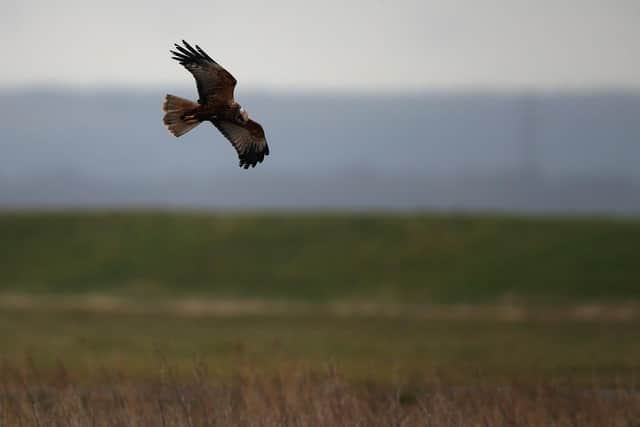

"Quite of a lot of the hen harriers we satelite tag and follow and if they die naturally the tag is still working and you know exactly where the bird is.”
Tagging data has shown there are times of the year when birds die on grouse moors in what the charity terms “a sudden stop with no malfunction”.
The RSPB has logged more than 100 either confirmed or suspected persecution incidents in the last five years with hen harriers, most of which have been in nothern England around grouse moors.
Many are known to be shot at roosts.
Last year RSPB officers visited a roost near Grassington and observed individuals visiting at dusk with guns, which led to a decision to install a covert camera and a listening device.
Three individuals on the footage captured can be heard intially speaking in code, before discussing shooting birds of prey.
When an RSPB tagged hen harier flew in, there’s talk over whether the bird had a tag box is audible on the footage, followed by Dingwall getting close to the bird and firing shots to scare it away.
Mark said: “When a second bird came in that was untagged the footage shows Dingwall getting up before a single shot is heard. Afterwards you hear a conversation which is very congratulatory in tone.”
Three individuals were interviewed by police, with two declining to utter a single word in interview. Only the estate's head gamekeeper, Dingwall, who was repeatedly referred to on the recording, waas charged.
Mark said despite the footage it had been decided there was insufficient evidence to prove the killing beyond all reasonable doubt, so Dingwall had been charged with having a gun with the purpose of killing a hen harrier alongside a conspiracy to commit the offence.
The former gamekeeper’s defence team included a King’s Counsel barrister, which command fees of more than £500 an hour.
The barrister put a recommendation to the court to exclude the RSPB’s covert surveillance footage on the basis that the RSPB is a public body, which need special permission for such operations.
Barristers representing gamekeepers have successfully used that argument numerous times.
Crucially, on this occasion the RSPB had deliberately not informed the police until it had the evidence, and York Magistrates Court found the RSPB was a charity rather than a public body.
Mark said: “Overall it was a huge, incredibly important win for us. It means that we can get covert surveillance and for that evidence to be legal and stand in cases like this.
"Even an eyewitness statement could be challenged on bad light grounds. You’ve got to have really good footage.”
The charity believes the court’s ruling led to Dingwall pleading guilty before the scheduled trial last month and another admission of guilt last month from gamekeeper Thomas Munday it had filmed on the Hovingham Estate beating aa buzzard to death with a stick.
Mark said: “You rarely get guilty pleas in these cases. The significant thing here is it allows us to demonstrate what’s going on.
"Most people are appalled by the footage and recording because it shows how relaxed they were and matter of fact the operation they mounted was.
"People can get hung up that it was only a £1,500 fine, but to the RSPB it’s about the evidence being accepted, telling this story of routiness and using that to lever government calling for policy change.
"We want each estate to be licensed – such a law came in in Scotland 18 months ago – for the purpose of game bird shooting and if a crime like this is found to have happened they could remove the licence for up to five years.
"All this is commerically driven. If you couldn’t operate your business that would really focus your mind.
“We think the ideal time for the government to be looking at licensing is now because they are looking at a welfare bill and this could fit in with that.
"The things we are detecting are the tip of the iceberg and the satelite data is backing that up.”