
How we tackle wildfires and, crucially, how we prevent them - Harriet Ranson
This week I attended the Wildfire26 Conference in Leeds, which comes at a pivotal moment, on the heels of the Prime Minister chairing the Wildfire Summit late October, following the country suffering over 1,354 wildfires in 2026.
After successive years of increasingly severe fires, the question is no longer whether the UK faces a growing wildfire threat, but how we tackle it and, crucially, how we prevent them.
The government’s recent decision to invest in additional training and resources for fire and rescue services is welcome.
It follows the CLA’s calls for greater support after our Freedom of Information requests exposed significant gaps in wildfire preparedness, and while improving emergency response is essential, we cannot rely on firefighting alone.
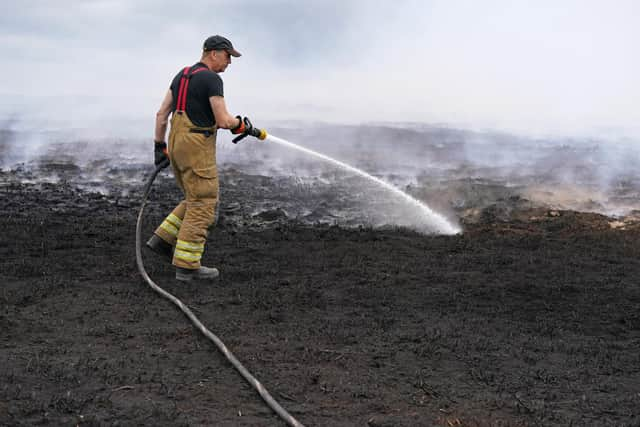

Prevention remains our strongest defence, The battle against wildfires starts months, even years, before the first spark.
It became clear to me during the Conference that the UK is not learning the lessons other countries have experienced fast enough to be in front of the impact of changing seasons.
Delegates from America, France, Portugal and Spain all seem to be on the front foot with policies which support fire prevention, such as flying herds being used to graze firebreaks around properties – and some even put a legal requirement on the property owner to control fuel loads on their land.
That is why effective prevention must begin with managing the land which we cannot do in an environment of ever increasing and punitive legislative restrictions.

There is no single solution. Rewetting peatlands, restoring habitats, ranger patrols and public education campaigns all have an important role to play.
Reducing vegetation fuel loads remains critical through grazing, mowing, cutting vegetation, creating fire breaks and, where appropriate, controlled burning – which has been reintroduced in several countries that had banned it due to the fires they subsequently experienced.
Controlled burning has become a contentious issue in policy, stakeholder and community circles in recent years, but it is an established land management tool that has been used for generations.
When carried out correctly, cool burns remove older vegetation that can act as fuel for wildfires without damaging the underlying peat.
It is done in small patches, on 10+ year rotations, creating a rich mosaic of habitat, with vegetation at different stages of growth which subsequently supports more invertebrates and other species.
It complements other management techniques and help create more resilient landscapes and must be retained as a tool at least until the much glorified, and so far over promised, ‘rewetting’ process has had chance to truly establish, in the areas where it is topographically possible to rewet – which is not across every moor.
Recent regulatory changes have made this work increasingly difficult.
Land managers in England’s uplands now face a complex and burdensome licensing system involving multiple permissions from Natural England and DEFRA, lengthy delays and significant uncertainty. Many view this as a de facto ban on controlled burning.
At a time when fire danger is increasing, we should be making it easier, not harder, to take sensible measures that reduce fuel loads before fires start, as other countries demonstrated at this week’s Conference.
The risk to human life and nationally critical defence systems, such as that which came within ½ mile of being destroyed at RAF Fylingdales, must not be lost in the current morass of bureaucracy and litigative fear.
The CLA is therefore urging Ministers to take control and responsibility of the wildfire threat across the UK, beginning with removing the licensing system which saw only 2/24 applications granted last year – tripling the area upon which fuel load management did not take place, as many landowners were unable to get through the process to submit an application at all.
Prevention is better than cure, or consequence.
It was only the determination of our rural communities, fighting hand in glove alongside the fire services that prevented loss of life during Fylingdales – what none of them could prevent is the estimated 25k tonne of carbon lost from the burnt peat.
Alongside grazing, mowing and vegetation removal, controlled burning is one of the tools available to reduce wildfire risk and ease pressure on fire and rescue services.
I must note that land management is only part of the solution.
Over 90% of wildfires are caused by people, intentionally or accidentally and areas that attract high public access are more likely to suffer wildfires.
Discarded cigarettes, unattended barbecues, campfires, fireworks and lanterns continue to put lives, livelihoods and at risk and much more needs to be done to raise awareness to the consequences of such carelessness with today’s society.
If we are serious about protecting rural communities, wildlife, carbon-rich habitats and public health, we need a balanced approach that combines effectively resourced and trained emergency response, evidence-led land management and greater public responsibility.
Agile policy and clear eyed decision making that is not influenced by short term political cycles or popularity contests needs to be established.
The countryside’s first line of defence against wildfires is prevention, and every one of us has a role to play.
Harriet Ranson, CLA Director North