
Industry is ‘worse off’ after Brexit, farm conference hears
Delegates attending the inaugural Yorkshire Farming Conference issued a unequivocal message to the Government to review policies, after a vote saw an overwhelming majority underline they believed British agriculture was worse off following Brexit.

Polls taken by Farmers Weekly following the referendum in 2016 found 53 per cent of farmers voted to leave and 45 per cent voted to remain and that a majority of farmers in Yorkshire had voted to remain.
By the end of the debate, 26 delgates voted that Brexit had been positive for British agriculture and 115 that it had been damaging.
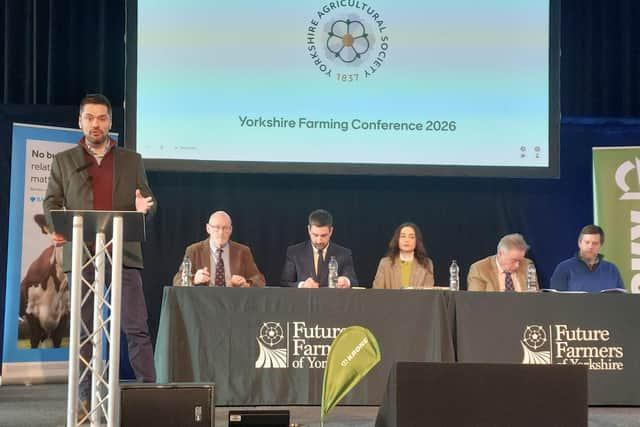
Opening the conference, Yorkshire Agricultural Society chief executive Allister Nixon told the 700-plus delegates attending the event that it was being held in response to members’ “clear desire for more knowledge exchange opportunities”.
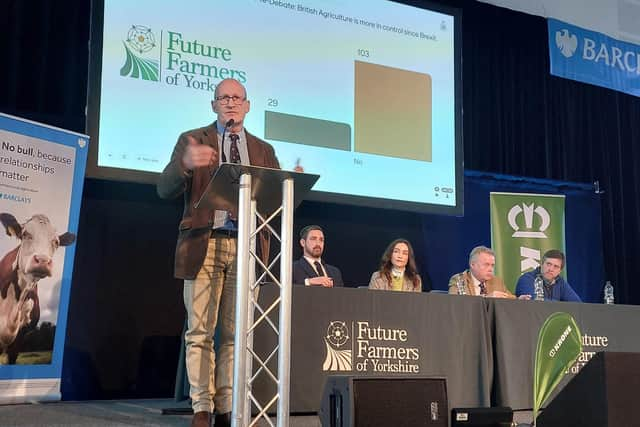

Introducing the day’s first debate, Chair of Future Farmers of Yorkshire, Youtuber and farmer Joe Seels said seven years after Brexit and ten years after the referendum sufficient time had elapsed to review whether the farmers were better or worse off without the European Union. Delegates were asked to consider whether farming was in a better place, whether there had been “a bonfire of red tape that we were promised” or “lucrative trade deals that were just there waiting to be clinched”.
Selby farm worker and vegetable grower Sam Dilcock told the conference that in 2020, when the country remained part of the European Union, the UK was contributing more than £12.6bn, or about eight per cent of the budget, into the organisation.
He said: "When over 50 per cent of the European Union’s economic output came from around three per cent of its farm holdings who would the budget really be skewed to favour in the long run?
“We now have our hand on the tiller when it comes to making our farming systems work for the British environment, and, ultimately, we have steered the next generation of farmers onto a more resilient, dynamic and sustainable course.”
However, Professor David Rose, of Harper Adams University, related how ahead of Brexit, the Farming Minister had insisted EU regulations made it “harder for farmers”, but Defra’s latest farming opinion tracker, which had 1,400 farmer responses, found just seven per cent said they fully understood Defra’s future vision for farming. He said: “Political decisions determine how in control UK farmers can feel, they determine the rules of the game.
Farm business consultant James Severn told delegates the agricultural industry was changing at a faster pace than ever before and in many respects for the better. He said direct EU support was driving decisions for the wrong reasons.
He said: “It does feel, throughout my career to date, that we have been price-takers and support-takers in one form or another. That is changing, thank goodness, and it needs to change. Post-Brexit as a nation and a farming sector we are no longer so bound by those EU rules and regulations.”
Yorkshire vegetable farmer Guy Poskitt said while he agreed farmers needed to live without subsidies this was impossible as competitors of the UK’s farmers were subsidised and the replacement schemes had hit many farmers’ incomes and made support unpredictable.
He said: “If we’re all playing on the same level playing field and we’re uneconomic in what we’re doing, being growing vegetables or fattening cattle, fair enough, but we are not playing on the same playing field.”