
'It is extraordinary' - Chain of issues affecting farmers 'another nail in the coffin' for the industry
The chain of issues affecting farmers have been branded ‘another nail in the coffin’ as the industry warns farmers are 'at their wits’ end’ with mental health ‘at breaking point. Emma Ryan reports.

The sun beats down, grass swords flutter in a gentle breeze which carries the few clouds that are like candy floss across a bright blue sky. Temperatures in recent weeks have topped the 20s on a regular basis.
Lambs, having now filled out nicely, bleat away, still not too far from their mothers, newly born calves start to fill the fields, it is heading towards the time for the first crops of the year to be harvested and summer show season is just around the corner.
Not bad for Yorkshire, and farming must be a dream right now you would be forgiven for thinking.
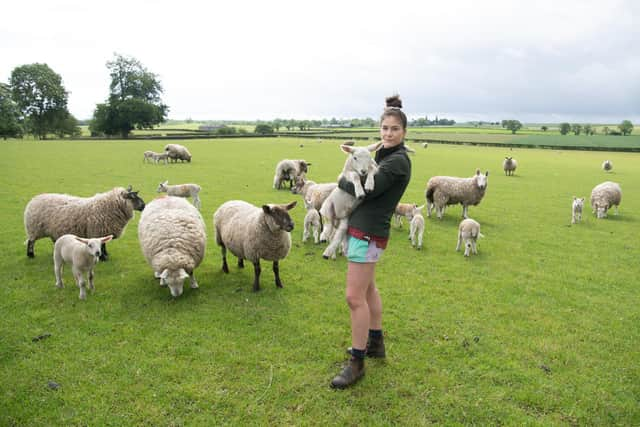

However, rural reality is far from this.
Dry weather through spring has led to drought-like conditions and fears of mass crop failures, increasing numbers of sheep and lambs have been killed following attacks by dogs, avian flu saw nearly two million birds culled in three months, payment schemes to replace previous payment schemes were halted overnight and blue-tongue outbreaks threaten entire herds of cattle.
In the autumn the future of farming families was plunged into doubt with Chancellor Rachel Reeves’s plans to reform Inheritance Tax, and it is expected that further payments for environmentally friendly farming will be scrapped in next week’s government spending review.
Then there was last month’s trade deal between the UK and US which could force the UK’s largest bioethanol plant, Vivergo in Hull, to close as it can’t compete with subsidised American products.
Wheat purchases made from thousands of farms across the UK will end as a result.
Rebecca Wilson, an arable and sheep farmer, from Marton Cum Grafton, said: “Every time you see something, it is another nail in the coffin. Farmers are going to struggle to stand this.”
It comes as repeated warnings have been made to the government over environmental and farming decisions made since Labour regained control almost a year ago.
The NFU’s annual survey revealed earlier this year, farmer confidence was at an all time low.
Given recent developments with SFI, ELMs and trade deals the truer figure is set to be much lower.
Ms Wilson, 29, added: “Nobody can say the Tories were brilliant for farming but Labour seem to have lost their minds.
“We are at our wits end, all of these things, it feels like people are sitting in government making decisions that are an attack.
“That is not an exaggeration, that is exactly how it feels.”
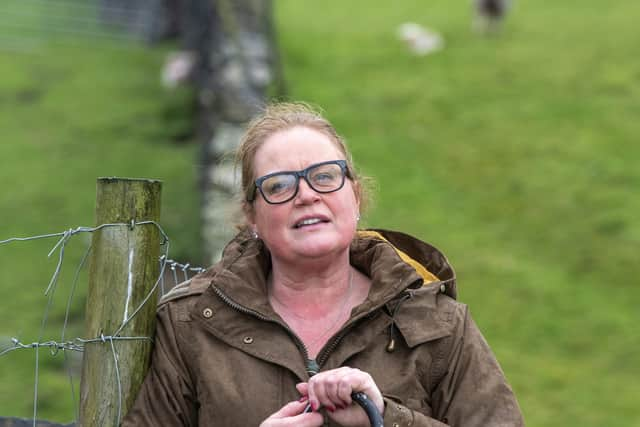
The NFU’s vice-president, beef and sheep farmer, Rachel Hallos from Ripponden, West Yorkshire, said the government had a “massive mountain to climb” to regain any sort of farmer trust.
In an exclusive interview with The Yorkshire Post she said: “It is extraordinary what is going on right now. There is on the ground stuff, so much globally, a new government. Everything is coming at once.”
She said the industry can’t move on until after the Spending Review next week
Ms Hallos said: “This is a long game. We have to work with whoever is there in front of us. They are not going anywhere for the foreseeable future.
“My job is to sit down and say ‘if you do that, the consequences are going to be this’. We challenged them on SFI.
“There are things that can be done but we need to get over this spending review and know where we are at.”
The government had announced a “record” £5bn spending over two years on sustainable farming. It is a promise that looks like it will be reneged on with funding threatened by looming departmental cuts.
The NFU warns farmers will be forced to choose between environmentally friendly or intensive farming just to make a living if they are put under more pressure.
Ms Wilson agrees.
“It seems massively short-sighted to not give farmers a mechanism to produce food and look after the environment, “ she said. “Soil health, cover crops, herbal leys - we do all that. In theory, we are doing the right things, but not making money.
“We are struggling to make it work. Farms will go out of business, we will be forced to be less sympathetic to margins for wildflowers, forced to pull out hedgerows. We might have to look at bottom line gains.”
The other factor playing havoc with farming operations, profits and losses is weather.
Last year saw one of the wettest springs on record. This year is set to be the driest on record and the consequences of both reverberate around the region’s farmyards.
The Wilsons are down on lambs this year because the lack of grass and stress caused by prolonged wet weather last year led to fewer pregnancies - and now they are running out of grass for the ones they did get to feed on due to lack of rain this year.
She explained: “We have been extremely dry for the last three months. It has just rained but it is too late and too little.
“For arable, we are envisaging yields down massively. On the sheep side, we are low on grass for them to graze and down on what we are producing for winter. Usually we have more fields with sheep shut out to be growing but have only got one field shut.
“There will be no straw next winter because arable crops are so short. We are dealing with so many things out of our control.”
Policy makers are struggling to grasp the complex nature of the farming industry, warned Ms Hallos.
“We are in a time where things are so polarised - weather, politics. We have to try and find middle ground.
“The ebb and the flow of the industry is so nuanced and is difficult for policy makers to understand. What we do is complicated. It is nuanced on one farm, never mind between farms. One field is different to another, one animal is different to another animal, one crop is different to another.”
She sees the solution being businesses navigating their way through the current crisis.
Ms Hallos added: “Ultimately this is about farm businesses. People drilling down, saying ‘how can we mitigate things we can’t control and what can I really control on my farm’.
“That is where this gets interesting. There will be people using it to create their results. People have spoken to me and said ‘we are looking at this and that, it made us do this and we are changing things’.
“There are other people where changes and results are not as easy for different reasons and they are really under the cosh.”