
Kirkburton: The prosperous Yorkshire village attracting celebrities and TV chefs
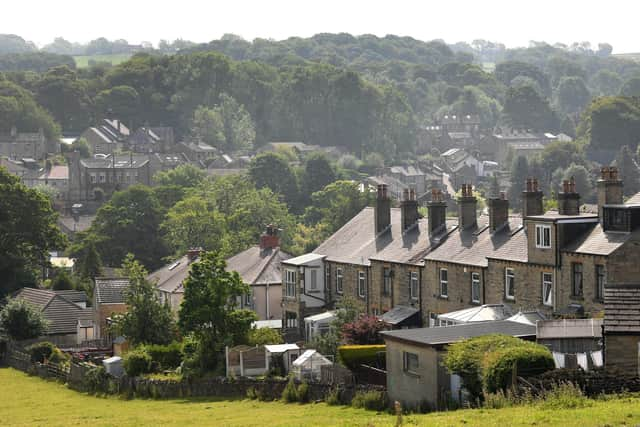
Built on coal mining, leather tanning and cloth manufacture, Kirkburton, five miles south-east of Huddersfield, remains among the most prosperous areas of Kirklees.

The village has about half the proportion of Universal Credit claimants and almost half the proportion of children claiming free school meals elsewhere in the district. Kirkburton includes a significant amount of upmarket housing.
In 2022, a seven-bed mansion in Slant Gate, with a carved marble staircase and entrance hall featuring 24 windows, was marketed at £3.4m.
The following year, with house prices averaging at £648,000, Northfield Lane was named among the Huddersfield area's most expensive streets.

With such a potential clintele, sommelier Oliver Roberts and chef Will Webster have launched Norman's Neighbourhood Kitchen, a novel bistro in a former car showroom on North Road.
Food critics say the venture is "creating quite a stir". So much so in May actor Stephen Graham turned up for lunch with rock star Bruce Springsteen.
The Good Food Guide's review of the restaurant states: "Creativity comes in the form of tatty sauce, pickled onion Monster Munch beurre blanc, bisque custard and parsnip parfait, but there are zero gimmicks..."
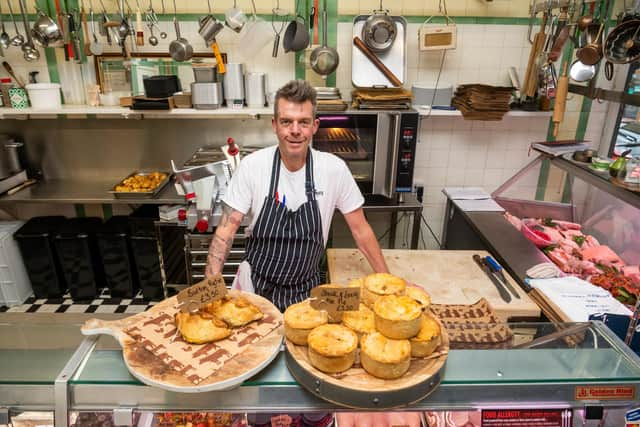
It's not Kirkburton's only gastronomic hotspot. Also on North Road, celebrity chef Tim Bilton runs The Butcher's Larder, which has developed a reputation for its fine cuts and sausage rolls.
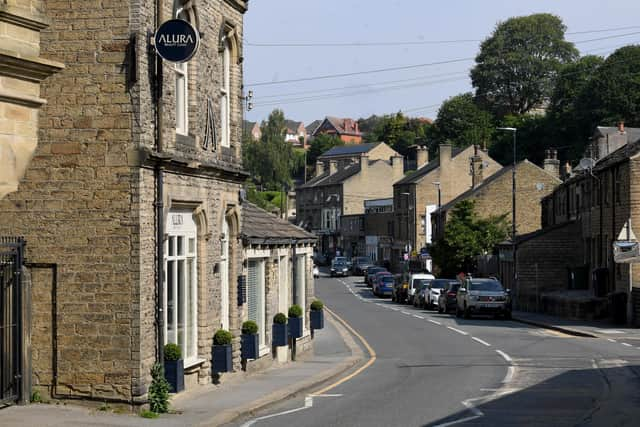
The village centre has a number of distinctive buildings.
The mock Tudor Kirkburton Masonic Hall, stands opposite the church and police station on George Street, parallel to which and at the junction with School Hill is the grade II listed Old Forge, an 18th century cottage and stable which has served as a shop and blacksmiths.
Another mock Tudor building, the Foxglove Hotel on Penistone Road, has been recognised as having one of the best beer gardens in the UK.
It was built as the Railway Junction Inn in the 1860s, following a proposal to build a railway branch line to the village from Barnsley.
Nevertheless, the coming of the railway is credited with profound changes to the village, bringing in many people to live there from far and wide.
The Huddersfield to Kirkburton branch railway line, built by the London and North Western Railway in 1867, helped cement the village's economic success, but just 60 years after opening the passenger service was axed.
The transportation of goods on the line continued until the mid-1960s.
Developed around cultivated land, the village, the population of which in the mid-18th century was less than a quarter of the 3,800 recorded in the 2021 census.
However, Kirkburton was largely founded on leather tanneries, which had all close by the 1830s, about 30 coal pits, the last of which closed in the 1950s, and woollen cloth manufacture, with eight mills at work in Kirkburton township by the late 19th century.
Some of the former industrial properties have been repurposed. The former Whitley Willows Textile site on Penistone Road has been given a new lease of life as a bottled water plant.
Just to the south of the village is Burton Dean Park, a nature reserve boasting meadows and a mix of ash, sycamore, elm, willow and elder trees on the site of Carter Mill, which was bulldozed in the 1970s following 130 years of wollen manufacturing.
It is more than 20 years since Burton Environment Group sought to start improving the green space, landing a Heritage Lottery Fund grant in 2006 and increasing accessibility, building a boules park, renovating bridge crossings, repairing historic stone walls and adding dry stone walls.
The Burton Dean valley through the village follows Dean Bottom Dike from Dean End at the village centre near All Hallows Church.
The impressive grade I listed place of worship on Huddersfield Road dates back more than eight centuries and boasts a list of serving clergy that goes back as far as 1230.
It features numerous stained glass windows including an art deco-style one by Christopher Whall, which is considered among the finest modern stained glass windows in Yorkshire.
The church also features a gilded medieval ceiling over the nave and pre-Reformation pews.
Equally impressive is its churchyard, which has been awarded the Green Flag Community Award, the benchmark international standard for publicly accessible parks and green spaces, for many consecutive years.
A small group of volunteers from the church started a project to renovate the churchyard in 2000 and have recently introduced an Adopt-A-Grave project, to ensure neglected graves are given attention.
The churchyard has also seen the introduction of a burial ground management system that has involved mapping out all of their burial grounds and churchyards using laser scanning techniques.
In June, at Trinity Field next to the church, Hade Edge Band and the HD8 Voices choir performed at the Great Kirkburton Sing, a tradition dating back more than 200 years, which was revived after a 55-year break last year.
Nearby on the Huddersfield Road there's an interpretation board about Kirkburton's Drill Hall, which was built before the Forst World War built for the local Company of Territorials to practise drills.
However, the building, which also featured a firing range beneath the main hall, was soon transformed into the Kirkburton Auxiliary Military Hospital, treating some 765 soldiers before closing in December 1918.
It was used as a Royal Corps of Signals base during the Second World War and later served as the village's GP surgery before being demolished in 2005 to make way for a purpose built health centre.
Alongside a number of shops, the village has a primary school rated as good by Ofsted as well as Kirkburton Middle School, one of the last remaining schools for children aged ten to 13, in England.